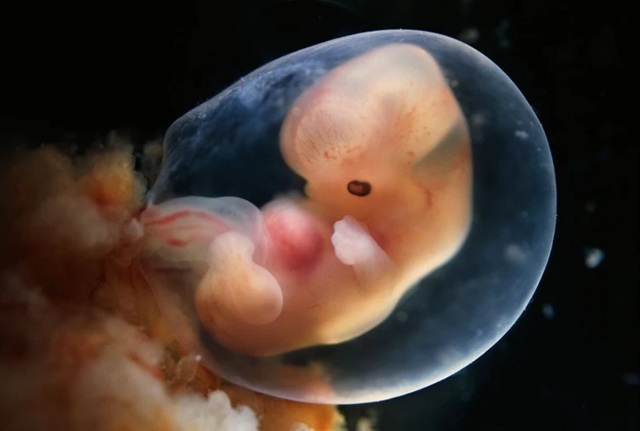
Researchers at the Francis Crick Institute in London have successfully coaxed embryonic stem cells to self-organize into fluid-filled amniotic sacs that resemble those seen at around four weeks of human gestation. The findings, published in Cell, mark a leap forward in our ability to model early stages of pregnancy, particularly the development of the amnion — the protective membrane that surrounds and cushions a growing embryo.
Using a carefully timed sequence of signalling molecules over two days, stem-cell biologist Borzo Gharibi and his team initiated the transformation of embryonic stem cells into miniature sacs. Over a period of three months, the sacs grew to approximately two centimetres in diameter — comparable in size to their natural counterparts during the early stages of pregnancy.
“It’s quite remarkable, the self-organization properties of these cells,” said study co-author Silvia Santos, also of the Francis Crick Institute. The sacs formed a two-layer membrane structure and were filled with fluid rich in proteins and metabolites essential for fetal health. A yolk sac-like structure, which appears in early pregnancy to nourish the embryo, was also briefly observed before disappearing after two weeks — mirroring natural development.
Janet Rossant, a developmental and stem-cell biologist at the Hospital for Sick Children in Toronto, Canada, praised the study in Nature, noting the model’s scale and reproducibility: “The major advantage is it’s big and reproducible. It’s a neat paper.”
The ability to extract and analyze fluid from the sacs adds significant value, offering insights into the biochemical environment of the early gestational sac. The composition of the fluid was found to be similar to that of human amniotic fluid collected from later stages of pregnancy, making it a promising model for further investigation.
However, the current models represent only an early stage of amniotic development. Rossant cautioned that to study pregnancy complications linked to damage in the amniotic sac — such as early miscarriage or preterm rupture — researchers will need models that more closely mimic later stages of development. “The impact of the amnion is in its relationship with the embryo itself. So as a free-standing amniotic sac, it doesn’t have a whole lot of significance,” she explained.
To address this, the researchers aim to scale up the sacs further and introduce embryonic-like cells into the fluid. This could provide a more complete picture of how the amnion interacts with an embryo, offering insights into pregnancy health and complications that are otherwise difficult to observe in real human embryos.
As highlighted by Nature, the study not only pushes the boundaries of developmental biology but also underscores the power of stem-cell models to unravel mysteries of human reproduction.