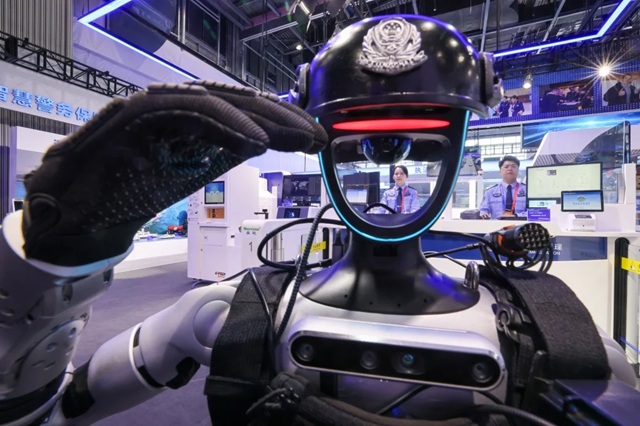
China has unveiled its latest generation of AI-driven surveillance technologies, explicitly designed to monitor users of encrypted messaging platforms like Telegram and detect virtual private network (VPN) activity, as part of an intensified domestic security campaign showcased at the 12th China International Exhibition on Police Equipment.
The event, held this week in Beijing, offered a rare glimpse into the country’s rapidly evolving policing infrastructure and law enforcement priorities. It brought together state research institutes and private defense contractors, all vying for procurement deals from public security departments across the nation.
Among the most closely watched exhibits was a suite of surveillance and forensic tools developed by the Third Research Institute of the Ministry of Public Security. These included a system capable of monitoring Telegram accounts registered with Chinese mobile numbers—linked to China’s stringent real-name registration system. According to the institute, the tool has already collected over 30 billion messages and surveilled 70 million accounts and 390,000 public channels and groups.
In a promotional video, the institute demonstrated how the tool could monitor drug transactions and political discussions in Telegram group chats, leveraging compromised accounts tied to Chinese phone numbers. The developers specifically cited the app’s role during the 2019 Hong Kong protests as a key motivator for the system’s creation.
Also showcased was technology capable of detecting VPN usage, critical for identifying citizens attempting to circumvent China’s heavily controlled internet. VPNs are essential for accessing banned platforms like Telegram and foreign media websites, including the South China Morning Post.
The new surveillance systems are part of a broader AI-driven effort to pre-empt “individual extreme incidents” or so-called “lone wolf” attacks, which Beijing views as a growing threat to public stability. One such attack last November, in which an SUV plowed into a crowd in Zhuhai, killed 35 people and injured over 40. The perpetrator was executed earlier this year, prompting the central government to double down on predictive policing tools.
One of the most advanced systems on display analyzes digital footprints—shopping habits, search histories, and social media behavior—to flag individuals deemed high-risk. These systems are reportedly built using LLM-based platforms like those developed by Dify, a Chinese open-source AI startup.
In addition to surveillance, other technologies on display included AI-assisted forensic tools, drone-jamming systems, fugitive tracking platforms, and even robotic patrol units, including humanoid and spherical robots deployed in demonstration drills.
Security and confidentiality were recurring themes throughout the expo. Attendees were required to register with real-name credentials and undergo background checks before entry. Many booths demanded police ID to view restricted equipment, and some exhibitors allowed only uniformed personnel to photograph products or access user manuals.
In line with China’s newly expanded state secrets law, several companies promoted software designed to track police equipment usage and prevent unauthorized leaks of classified information. These tools are incentivized under a new regulatory framework that rewards technological contributions to national security infrastructure.
Slogans such as “Without cybersecurity, there is no national security” were prominently displayed, underscoring Beijing’s narrative that digital surveillance is not just a policing tool but a pillar of national stability.
Major Chinese tech firms including Huawei, iFlyTek, and Hikvision were also present, promoting AI models tailored for law enforcement. One Beijing-based company claimed its AI tool could conduct real-time psychological profiling during suspect interrogations, helping officers “break through psychological defenses.”
The growing integration of AI into domestic policing illustrates how China is rapidly expanding the scope and depth of its surveillance apparatus under the banner of social stability. While the expo provided a platform for technological innovation, it also spotlighted the state’s increasing reliance on intrusive monitoring tools in an environment where dissent and privacy are tightly controlled.