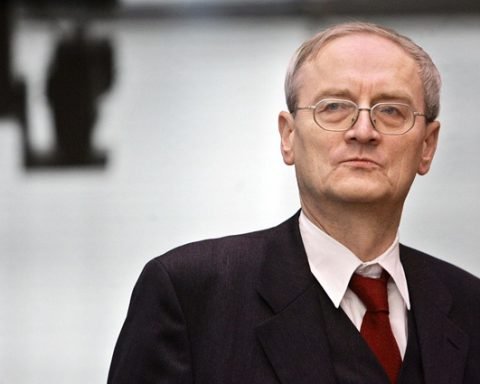
China’s sweeping anti-corruption campaign has claimed another high-profile figure with the surrender of Zhang Jianhua, a senior former official in the agency that oversees the country’s powerful defense industry. Zhang, 64, is now under investigation for “serious violations of discipline and law,” according to the Central Commission for Discipline Inspection, the Communist Party’s top graft watchdog—a phrase routinely used in corruption cases.
Zhang’s career spans more than three decades in China’s defense science and technology sector. Most notably, he served as deputy director of the State Administration of Science, Technology and Industry for National Defence (SASTIND), the agency responsible for critical programs in nuclear technology, aerospace, aviation, and naval systems. He also held a concurrent role as deputy director of the China Atomic Energy Authority from 2018 until his departure in 2021.
The allegations come at a time of intensified scrutiny within China’s defense and military establishment. Dozens of generals and executives have been purged in recent years, with investigations reaching deep into major state-owned defense contractors. These include giants such as the China Aerospace Science and Technology Corporation and the China National Nuclear Corporation, reflecting a broader push to root out systemic corruption in industries considered vital to national security.
Zhang’s long-standing role as a gatekeeper between research and production made him a powerful figure. Between 2005 and 2009, he led SASTIND’s center for military-civil project review, a critical post responsible for linking scientific innovation to weapons manufacturing. In 2018, he publicly advocated for greater civilian applications of nuclear technology and remained active in promoting military-civilian tech transfers up until his last public appearance on May 7.
His surrender is part of a trend that has swept aside numerous senior officials in recent months. Two of Zhang’s former superiors—SASTIND Director Zhang Kejian and Industry Minister Jin Zhuanglong—have also vanished from the public eye and been quietly removed from their posts, though it remains unclear whether they are under formal investigation.
The campaign has not spared the highest ranks of the military either. Two former defense ministers, Li Shangfu and Wei Fenghe, have been dismissed without explanation, reinforcing suspicions of deep-rooted corruption at the top of the Chinese armed forces.
Zhang’s downfall marks another step in a relentless purge reshaping the leadership of China’s defense-industrial complex. As the crackdown expands, it is sending a clear message: even those at the core of China’s strategic and military machine are not beyond the reach of the party’s disciplinary grip.