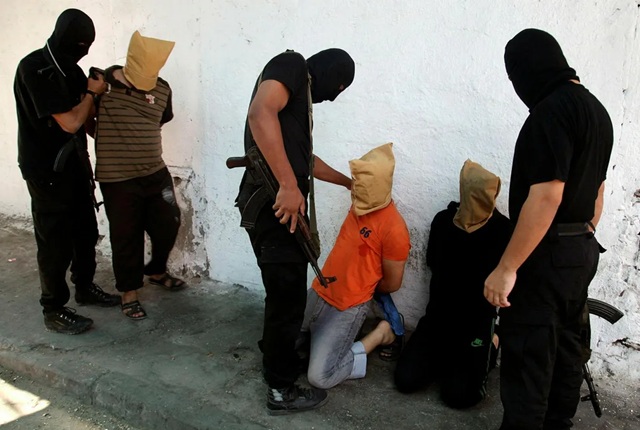
Haaretz has reported that Prime Minister Benjamin Netanyahu approved the covert training and arming of a Palestinian militia in Gaza with known links to ISIS. The operation, designed to secure humanitarian aid deliveries in war-torn Gaza, was kept secret from the public and much of the Israeli government.
The militia is led by Yasser Abu Shabab, a controversial figure from Rafah with a criminal background and alleged affiliations with extremist elements, including ISIS. His armed group, composed largely of former Fatah supporters, escaped prisoners, and local clansmen, was trained by Israel’s internal security service, the Shin Bet, and provided with weapons seized from Hamas during the current conflict.
According to Haaretz, the idea for the militia was born from Israel’s pressing need to establish local forces in Gaza following the Israeli military’s dismantling of Hamas’s governance structures. The vacuum left behind, compounded by the government’s refusal to allow moderate Arab forces or the Palestinian Authority (PA) to assume administrative roles in the Strip, led Defense Minister Yoav Gallant to propose a controversial alternative: rule by local militias.
This “rule of clans” policy, which had previously failed in earlier attempts in February 2024 and again in central Gaza, was revived after the IDF took control of Rafah. The third and most serious attempt saw the Shin Bet assume operational control, with support from senior defense and intelligence officials, including IDF Chief of Staff Herzl Halevi, Military Intelligence head Maj. Gen. Shlomi Binder, and Netanyahu’s military secretary, Maj. Gen. Roman Gofman.
Despite denials from official channels, Haaretz has confirmed that Shin Bet operatives provided training to the Abu Shabab fighters and that their salaries are funded through confiscated cash and a shadowy Swiss-based NGO. Former finance minister Avigdor Lieberman exposed this funding channel, claiming the Mossad is behind the Swiss front and that American-Jewish donors with right-wing ties may also be involved.
Prime Minister Netanyahu’s offhand response to the revelation—”What’s wrong with that?”—has sparked backlash, with critics accusing him of undermining Israel’s strategic credibility. By confirming the operation, Netanyahu effectively validated a state secret, potentially damaging the Shin Bet’s long-term intelligence capabilities and recruitment efforts.
Former Military Intelligence chief Tamir Hayman acknowledged the tactical logic behind the move but warned that its success hinges on maintaining secrecy. “The whole power of this idea lay in the covertness… to make it look authentic and grassroots,” he told Haaretz.
Critics, including respected analysts like Michael Milshtein from Tel Aviv University, expressed serious concerns. Milshtein called the move a “doomed experiment,” likening it to Israel’s failed efforts in Lebanon in the 1980s and other colonial-era tactics where militias eventually turned against their patrons. “Gaza could become another Somalia,” he warned, if Israel fills the void with unstable armed groups like Abu Shabab’s.
This development also raises legal and ethical questions. According to Haaretz, the Israeli Finance Ministry covertly allocated around 700 million shekels (roughly $190 million) for the operation while circumventing transparency laws and public procurement procedures.
The goal of the militia is ostensibly to protect humanitarian convoys from Hamas raids. With UNRWA sidelined due to accusations of ties with Hamas and international NGOs reluctant to operate in Israeli-controlled Gaza, Israel had few partners willing to coordinate aid distribution. However, this workaround, orchestrated through a murky network of NGOs and private contractors, has only deepened domestic and international mistrust.
The Prime Minister’s Office declined to respond to Haaretz’s inquiries. Both the IDF and Shin Bet refused to comment on operational details.
As the war in Gaza drags on and pressure from international allies, particularly the U.S., intensifies, Israel’s controversial militia strategy risks backfiring. With Netanyahu’s government already facing widespread criticism over the war’s handling and the fate of Israeli hostages, this latest revelation could fuel further domestic unrest and diplomatic fallout.