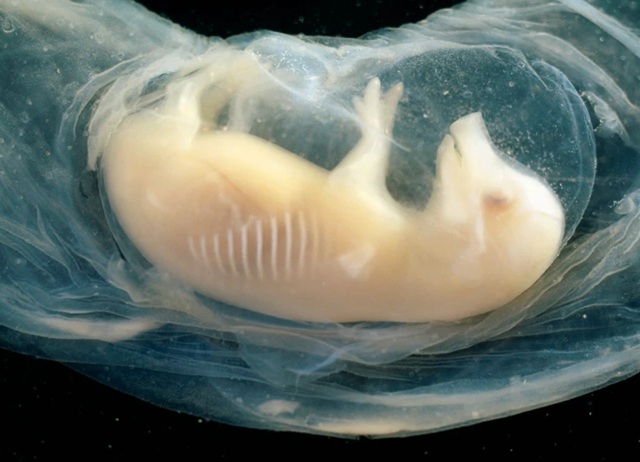
In a groundbreaking experiment reported by Nature, researchers have successfully grown beating heart tissue containing human cells inside pig embryos — a major milestone in the emerging field of human–animal chimaera research. The embryos, developed through cutting-edge genetic engineering and stem-cell techniques, survived for 21 days, during which the tiny hearts began to beat, suggesting early functionality and a possible path forward for generating human organs in animals.
The findings were presented this week at the annual meeting of the International Society for Stem Cell Research in Hong Kong and mark the first known instance of partially human hearts growing in another species.
Led by Lai Liangxue, a developmental biologist at the Guangzhou Institutes of Biomedicine and Health under the Chinese Academy of Sciences, the study reflects years of incremental progress in cross-species organ development. Lai and his team had previously grown early-stage human kidneys in pig embryos, which survived for up to a month in surrogate sows. With this new study, the researchers turned their attention to the heart — one of the most complex and essential human organs.
To create the human–pig chimaeras, the team first used genetic editing to knock out two key genes responsible for pig heart development. This genetic gap left a developmental niche that human cells could fill. Researchers then reprogrammed human stem cells to boost their survival and growth potential within a pig host by inserting genes that prevent cell death and promote proliferation. These engineered human cells were injected into pig embryos at the morula stage — a very early developmental phase when the embryo consists of only about a dozen cells.
The modified embryos were implanted into surrogate pigs and allowed to develop for three weeks. After 21 days, the embryos were retrieved and studied. According to Lai, the developing hearts had reached the size expected for human hearts at the same embryonic stage — roughly the size of a fingertip — and they were beating. Human cells within the hearts were tagged with a fluorescent biomarker, making them identifiable under analysis.
Despite these promising signs, the embryos did not survive beyond 21 days. Lai suggests that the human cells might have disrupted the overall development of the pig heart, leading to the embryo’s demise. Further studies will be needed to refine the integration process and prolong embryo viability.
The researchers did not specify how much of the heart tissue was composed of human cells. In their previous kidney experiments, between 40% and 60% of the organ tissue was human-derived, with the remainder being pig cells. A similar or higher proportion will be necessary for the successful creation of transplant-ready human organs in future applications.
However, skepticism remains. Hiromitsu Nakauchi, a leading stem-cell biologist at Stanford University who attended the presentation, cautioned that further analysis is required to confirm whether the heart tissue is indeed of human origin. Cross-species cell contamination is a known issue in chimaera studies. Similarly, Hideki Masaki of the Institute of Science in Tokyo noted that the glowing human cells appeared concentrated in limited parts of the heart, raising questions about how well they integrated with pig cells.
Experts agree that for human organs grown in animals to be viable for transplantation, they will need to consist entirely of human cells to avoid immune rejection. The partial integration seen in this study, while significant, still leaves much work to be done.
Nonetheless, the research, first reported by Nature, represents a critical step toward addressing the global organ shortage crisis. By using pigs — whose organs are similar in size and function to those of humans — as biological incubators, scientists hope to one day grow organs tailored for human patients, reducing wait times and saving lives.
As the field continues to push the boundaries of synthetic biology and regenerative medicine, Lai and his team’s work underscores both the promise and the complex challenges of building human-compatible organs in animal hosts.