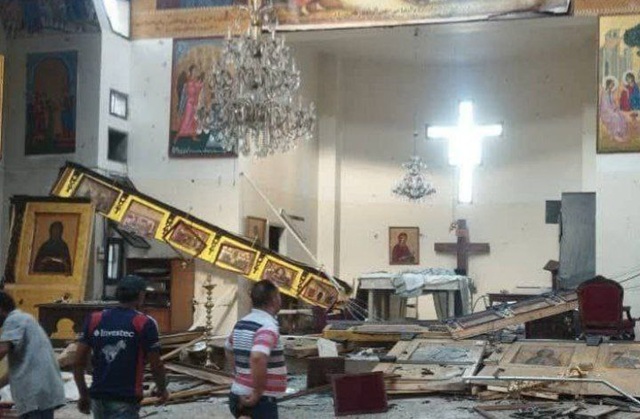
At least 20 people were killed and more than 50 injured when a suicide bomber detonated an explosive vest inside a packed church in Damascus on Sunday evening, marking the first major security incident in the Syrian capital since the regime of Bashar al-Assad was toppled last December, the Financial Times reports.
The attack took place during evening prayers at the Mar Elias Greek Orthodox church in the Dweil’a neighbourhood, adjacent to Damascus’ Christian quarter. According to the Syrian government, the suicide bomber was a member of the Islamic State (ISIS) jihadi group. The attacker reportedly opened fire before detonating the vest inside the church. While no group has formally claimed responsibility, two witnesses told the Financial Times there was at least one other assailant involved who threw grenades and fired guns before entering the building.
The Syrian government condemned the attack as a “desperate attempt to undermine national coexistence and destabilise the country.”
Videos reviewed by the Financial Times show the devastating aftermath inside the church, with destroyed wooden pews, shattered masonry, and bloodstained walls and floors. Syria’s state news agency, Sana, citing the health ministry, reported a preliminary death toll of 20 with 52 people wounded, including several children.
This marks Syria’s first major terror attack in years and comes at a time when interim president Ahmed al-Sharaa is struggling to consolidate control over a deeply fragmented nation. Recent sectarian violence and clashes have raised concerns about the government’s ability to protect minority communities and restore security.
While the Syrian defence ministry is gradually rebuilding its armed forces, much of the country remains insecure. A patchwork of rebel factions, some formerly allied with Sharaa’s Islamist group Hayat Tahrir al-Sham which ousted Assad, continue to maintain influence. Rising crime in cities outside Damascus has led to the formation of neighbourhood watch groups, some armed by the government, reflecting the weakness of formal security forces.
Security officials have expressed growing alarm over ISIS attempting to regroup despite losing control of territory in Syria. Multiple attempted plots attributed to the group have reportedly been foiled in recent months. ISIS has a history of targeting religious minorities in Syria, including Christians, Shia, and Druze communities. One of its most notorious attacks occurred in 2016 at a Shia pilgrimage site in Damascus, killing dozens during Assad’s rule.
The Christian community in Damascus remains anxious about their safety under the new Islamist-led government, despite outreach efforts by Sharaa and other officials to church leaders. Yohanna, a local resident who requested only his first name for security reasons, said, “Christians need urgent protection, we are not safe here. All those poor people were doing is praying, and now they’re all in pieces.”