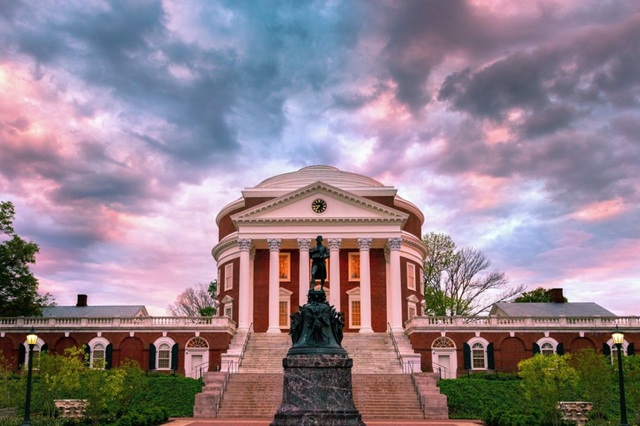
James Ryan, president of the University of Virginia, resigned on Friday following mounting pressure from the Trump administration, marking a significant escalation in the federal government’s crackdown on public universities over diversity, equity, and inclusion (DEI) initiatives.
Ryan’s departure comes after the U.S. Department of Justice demanded he step down to resolve an investigation into the university’s diversity policies. According to The New York Times, the resignation was a condition set by the federal government in what it claims is an effort to bring the university into compliance with civil rights laws.
“I am inclined to fight for what I believe in, and I believe deeply in this University,” Ryan wrote in a message to the UVA community. “But I cannot make a unilateral decision to fight the federal government in order to save my own job.”
The resignation follows a broader pattern of pressure from conservative political figures on higher education institutions. Over the past 18 months, the presidents of Harvard, Columbia, and the University of Pennsylvania have all stepped down amid scrutiny from Republicans over campus antisemitism and controversial DEI practices.
The Trump administration has sharpened its focus on public universities, expanding a campaign that has already targeted elite private institutions. While negotiations for settlements reportedly continue with schools like Columbia and Harvard, the demand for Ryan’s resignation signals a harder line against state-funded universities.
The conservative legal organization America First Legal, founded by former Trump advisor Stephen Miller, had recently accused the University of Virginia of running programs “based on race, sex, ethnicity, national origin, and other impermissible, immutable characteristics under the pretext of ‘diversity, equity, and inclusion’… in open defiance of federal civil rights law.”
The academic community reacted with alarm. Joan Scott of the American Association of University Professors called the move “worse than the McCarthy period,” warning that the administration’s campaign is aimed not at individuals, but entire institutions. “The agenda is really to take down higher education,” she said.
Siva Vaidhyanathan, a UVA media studies professor, echoed that concern, accusing the White House of operating “like a criminal mob, by instilling fear, threatening vague punishments and making an example of people who step out of line.”
Virginia Governor Glenn Youngkin, a Republican who appoints members to UVA’s Board of Visitors, voiced his support for the board and its next steps. “The Board of Visitors has my complete confidence as they swiftly appoint a strong interim steward and undertake the national search for a transformational leader that can take Mr. Jefferson’s university into the next decade and beyond,” he said.
The resignation of Ryan, a widely respected legal scholar and university leader, raises significant questions about academic independence, the role of federal oversight, and the future of DEI programs in American higher education. As political tensions continue to engulf university governance, Friday’s resignation may not be the last in a growing standoff between academia and the federal government.