
After the Pahalgam attack, the entire world was condemning the terrorist violence and urging India and Pakistan to de-escalate tensions in the interest of peace and stability. But the main regional body tasked with fostering South Asian solidarity — SAARC — maintained a deafening silence. While billions languish in poverty and inter-state hostilities sharpen, this organisation continues to consume public resources on ceremonial, hollow events that eventually serve as content for social media feeds. It is SAARC — the undead regional body, more apparition than actor. A diplomatic relic still drawing breath through token communiqués and photo-ops, it neither accounts for itself nor explains its own institutional processes. We do not know how it recruits, who it answers to, or why it continues to exist. It is time we stopped embalming this corpse. The funeral is overdue.
Established in 1985 with grandiloquent aspirations of “collective self-reliance,” SAARC has, over four decades, evolved into little more than a regional pantomime — a pageant of platitudes layered over paralysing dysfunction. No other multilateral body has so audaciously failed at such scale. Despite comprising nearly a quarter of humanity, SAARC is functionally inert, intellectually bankrupt, and politically poisoned.
At the heart of its rot lies the India–Pakistan conflict — an unending feud that has metastasised into every procedural crevice of the SAARC mechanism. The charter’s insistence on consensus decision-making has become its institutional suicide note. Any member can veto any initiative, and Pakistan has weaponised this veto to derail everything from trade protocols to anti-terror mechanisms. India, in turn, has chosen to sideline SAARC in favour of BIMSTEC and BBIN, retreating into subregionalism while maintaining the polite fiction that SAARC is still worth saving. This is not multilateral diplomacy — this is hostage-taking with the veneer of diplomacy.
When the 2016 summit was cancelled after the Uri terror attack, and again when the Pahalgam tragedy occurred, SAARC did not just fail to intervene; it disappeared. No emergency dialogue. No mediation. No moral clarity. Just bureaucratic inertia wrapped in diplomatic euphemism. The Kathmandu-based Secretariat, which ought to serve as a nerve centre of coordination, has devolved into a sclerotic archive for obsolete declarations and forgotten working groups. What remains is an institution of ritual, not relevance.
One might think SAARC’s failure is merely political. It is not. Its administrative machinery is equally farcical. The organisation lacks a supranational legal authority, any binding enforcement framework, or even an effective dispute resolution system. Its secretariat is bereft of real power or independent budgetary authority, operating more like a diplomatic holding tank than a body of strategic consequence. Its recruitment mechanisms remain opaque — often guided by quota systems rather than merit or vision. The result is a permanent bureaucracy that manages inactivity with remarkable efficiency.
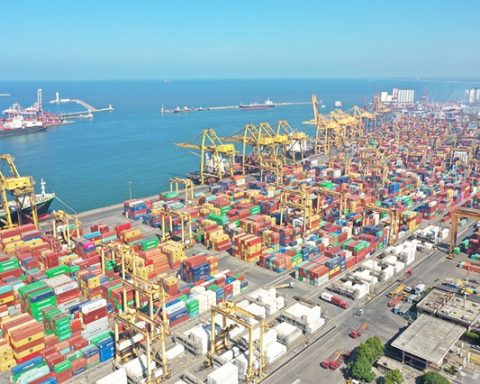
Economically, SAARC is a global anomaly. Intra-regional trade in South Asia is the lowest of any major regional bloc, stagnating below 5%, compared to 25% in ASEAN and over 60% in the EU. The South Asian Free Trade Area (SAFTA), once heralded as a milestone, has been smothered under exemptions, non-tariff barriers, and mutual suspicion. Pakistan refuses to extend Most-Favoured Nation status to India. India circumvents Pakistan in regional connectivity. And the SAARC Motor Vehicles and Railways Agreements — which could have revolutionised trade and mobility — have remained frozen since 2014. Regional economic integration, the lifeblood of any bloc, is not just absent — it is institutionally precluded.
And what of SAARC’s engagement with global crises? When the COVID-19 pandemic devastated economies and healthcare systems across South Asia, SAARC’s response was pitiful. India proposed an emergency COVID fund — a rare flash of leadership — but the initiative was quickly consumed by the usual Indo-Pakistan friction, with Pakistan objecting to the fund’s administration. The pandemic thus exposed what was already apparent: SAARC cannot even perform symbolic unity, let alone substantive collaboration, in the face of shared existential threats.
To understand how profound this failure is, one need only look eastward. ASEAN, once burdened by its own geopolitical schisms, has managed to develop functional institutions, a collective security doctrine, and a robust intra-bloc trade ecosystem. The EU has not only survived currency crises and Brexit but continues to operate with supranational courts, regulatory frameworks, and political accountability. SAARC, by contrast, has not produced a single regional treaty of consequence. It has no regional university of repute, no joint defence doctrine, no shared climate strategy, and no meaningful human rights architecture.
Even the few mechanisms it has birthed — like the SAARC Development Fund — are largely performative, funding inconsequential workshops and low-impact research. Its outputs are more suited to the pages of conference compendiums than to the lives of the 1.9 billion people it claims to serve. To date, SAARC has not helped resolve a single inter-state dispute, mitigate a single refugee crisis, or alleviate a single regional famine. It is a diplomatic mausoleum preserved only by the sentimental inertia of its founding myth.
To pretend that SAARC can be reformed is to indulge in wilful delusion. Its architecture is flawed by design. Its political centre of gravity is split by irreconcilable nationalisms. Its decision-making processes reward inaction. And its legitimacy, such as it ever had, has now withered into irrelevance. There is no resurrection here — only taxidermy.
What, then, is to be done? The most honest course would be to declare the project dead, with dignity, and to build anew. The region can no longer afford the false comfort of a phantom institution. Instead, we must look towards functional subregionalism — toward BIMSTEC, which bypasses the Indo-Pak binary; toward BBIN, which privileges pragmatic connectivity over political theatre; and perhaps even toward a South Asian Commission led not by heads of state, but by technocrats, civil society, and independent legal scholars. Regionalism must be decoupled from state ego and recoupled to the realities of climate migration, AI governance, transboundary water crises, and public health.
It is often said that institutions do not fail, people do. But in SAARC’s case, both have failed — profoundly, repeatedly, and irreparably. If the goal was to provide a platform for peace, it has failed. If the purpose was to build economic synergy, it has failed. If the vision was to nurture a South Asian identity, it has spectacularly failed.
To prolong its life now is not diplomatic prudence — it is necrophilic policy. SAARC is no longer a mechanism for change. It is an alibi for inaction.
Let it die.
Let it be mourned with honesty, not with more summits and circulars. In its passing, we may find the clarity to build something that can actually serve South Asia’s people — not its photo opportunities.