Scientists have sequenced proteins from fossils over 20 million years old, dramatically extending the molecular fossil record—and potentially opening the door to studying dinosaurs at the molecular level. As reported by Nature, the findings could revolutionize how researchers explore ancient lineages, evolutionary relationships, and biological traits long thought unrecoverable.
Two independent studies, published in Nature this week, analyzed protein fragments extracted from fossilized teeth belonging to extinct relatives of rhinos, elephants, and hippos. The results not only rewrote the rhino family tree but also challenged assumptions about how long proteins can survive, even in extreme environments.
“You’re just opening up a whole new set of questions that palaeontologists never thought they could get near,” said Matthew Collins, a palaeoproteomics expert at the University of Cambridge and University of Copenhagen.
A Deep Freeze Surprise in the Arctic
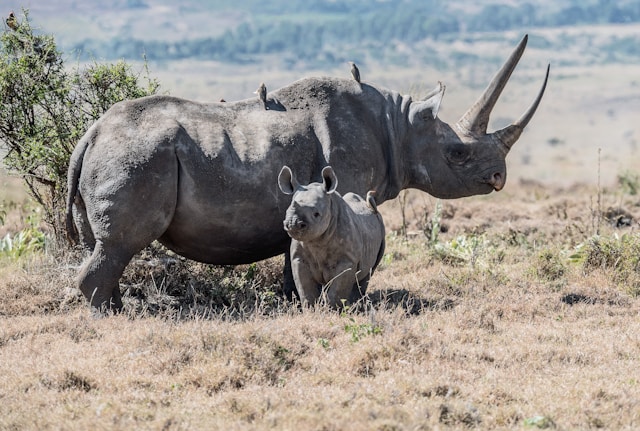
In the first study, a team led by researchers from the University of Copenhagen examined enamel proteins from a 23-million-year-old fossil found in Canada’s High Arctic. The specimen, now attributed to a newly proposed extinct rhino species, Epiaceratherium itjilik, yielded partial sequences of seven enamel proteins, comprising at least 251 amino acids.
Using mass spectrometry, the team reconstructed evolutionary links and discovered that this ancient rhino branched off earlier than any other known lineage — between 41 and 25 million years ago — contradicting previous assumptions that placed it closer to modern rhinos.
“It really does change the way we have to think about the evolution of rhinos,” said Ryan Paterson, co-lead author and biomolecular palaeontologist at the University of Copenhagen.
Heat-Tolerant Proteins in Kenya
In a second study, researchers extracted enamel proteins from fossils found in Kenya’s Turkana Basin, one of the hottest regions on Earth. Despite ground surface temperatures reaching 70°C, the team sequenced proteins from 18-million-year-old teeth belonging to extinct relatives of elephants, rhinos, and hippos.
The preservation of proteins under such extreme conditions offers a hopeful sign for future research in similarly harsh climates. The findings also validated long-standing fossil classifications based on skeletal anatomy and opened new possibilities for uncovering evolutionary puzzles — including the still-mysterious origins of hippopotamuses.
“Being able to show that we can get back to 18 million years in this kind of really hot, harsh environment really shows that the world is open for working on palaeoproteomics,” said Timothy Cleland of the Smithsonian Museum Science Conservation Institute, who co-led the Kenyan study.
Could Dinosaurs Be Next?
The prospect of using ancient proteins to study dinosaurs is now more tangible—though still scientifically daunting. Earlier claims of dinosaur protein recovery from fossils dated to 68 and 80 million years ago remain controversial. But advances in detection, such as the use of mass spectrometry and improved understanding of enamel preservation, are fueling renewed optimism.
Still, challenges persist. Dinosaur enamel is often extremely thin, making protein recovery more difficult. But researchers remain hopeful. “What can you do with it? Everything. It’s like, wow!” said Collins, pointing to the potential for discovering data on biological sex, diet, and ecological roles using isotopic and amino acid analysis.
Caution and Excitement
Despite the excitement, scientists urge caution. Proteins can degrade or yield misleading interpretations, and researchers must ensure their results offer meaningful evolutionary insights, not just record-breaking age claims.
“As we go further back, we need to focus not just on how old these proteins are, but what they can tell us about the history of life,” said Deng Tao, a palaeontologist at the Chinese Academy of Sciences.
Both studies mark significant technical achievements and suggest that the future of palaeoproteomics — the study of ancient proteins — may be far more promising than once believed.