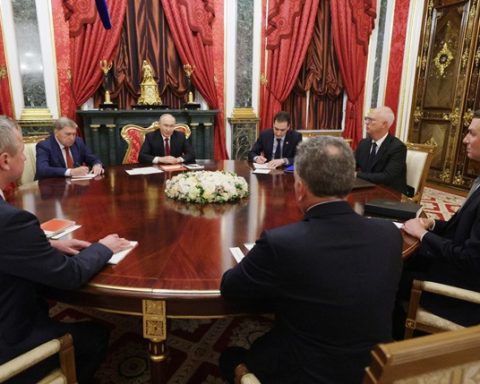
Chinese President Xi Jinping has openly questioned the widespread push by local governments to invest in the same set of trendy industries — a move that underscores growing concern within Beijing over industrial overcapacity, intensifying deflationary pressures, and rising global trade tensions. Xi’s comments, made during a high-level meeting in Beijing earlier this week, were prominently featured on the front page of the People’s Daily on Thursday, signaling a clear message to officials across the country.
“When it comes to launching new projects, it’s always the same few things: artificial intelligence, computing power, new-energy vehicles,” Xi said, before posing a pointed question: “Should every province in the country be developing industries in these areas?” The remark is a rare instance of blunt criticism from the Chinese leader, aimed at a longstanding but increasingly problematic feature of the country’s economic planning — the tendency of regional governments to mimic each other’s industrial strategies in pursuit of political favor or short-term growth.
The comments reflect a shift in tone from top Chinese policymakers, who are now grappling with the consequences of years of overinvestment in select high-tech and green sectors. Analysts say the duplication of industrial efforts has led to a glut in production, price wars among domestic firms, and intensifying scrutiny from foreign trade partners. China’s booming electric vehicle (EV) industry — long seen as a national champion — has drawn particular attention, with Europe and the United States accusing Beijing of flooding global markets with subsidized products.
In a related development, a State Council meeting chaired by Premier Li Qiang on Wednesday vowed to tackle “irrational competition” in the EV sector. The meeting marked one of the clearest signs yet that Chinese authorities are prepared to rein in the aggressive industrial policies that have defined much of the past decade. Earlier this month, the Communist Party’s top economic body also pledged to regulate how local governments promote and attract investment, hinting at deeper structural reforms in the pipeline.
Xi’s remarks also touched on another sensitive area: urbanization. He cautioned against overly aggressive development strategies, saying that “promoting urbanization should be a gradual process that unfolds naturally.” He warned that such efforts “must align with the laws of economic and social development and should not be divorced from reality or driven by a rush for quick success.”
These statements come as China faces a complicated economic outlook marked by sluggish domestic demand, persistent deflationary trends, and a still-ailing property sector. Xi’s focus on moderation and realism in economic planning appears to be an attempt to recalibrate the country’s development model — one that has long been driven by top-down targets and local governments competing for Beijing’s approval through massive industrial bets.
As the central government begins to push back against redundant investment and overcapacity, local officials may be forced to rethink their approach to economic growth. The leadership’s emphasis on curbing excess, improving coordination, and embracing more organic development models could signal a turning point for China’s economy — one that favors sustainability and balance over speed and spectacle.