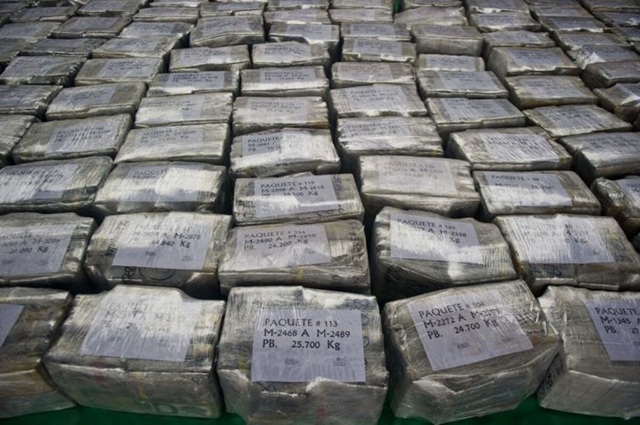
In the world of media and politics, narratives can be powerful, shaping public perception and international relations. But when those narratives are built on half-truths, exaggerations, and outright fabrications, they not only mislead the masses but also distort diplomatic realities. Recently, Indian media has propagated a story about an alleged nexus between Pakistan’s Inter-Services Intelligence (ISI) and Khalistani activists, supposedly controlling a “billion-dollar narco-cartel” with links to Mexican cocaine. If this sounds like the plot of a gripping Bollywood thriller, that’s because it likely is.
The claims are eyebrow-raising. They suggest that the ISI is orchestrating drug smuggling operations from Canada, collaborating with the Khalistani movement to funnel Afghan heroin and Mexican cocaine into international markets. At the heart of India’s accusations lies the concept of a “narco pipeline,” an exaggerated term that conjures images of elaborate criminal networks, shadowy cartels, and global conspiracies. Indian media outlets have thrown around phrases like “cartel franchises” and “drug lords” to paint a sinister picture of the ISI and Khalistani activists collaborating in the international drug trade.
Let’s start with the facts. Khalistani activists, particularly those in Canada, have been organizing peaceful rallies advocating for the rights of the Sikh community and promoting the idea of an independent Khalistan. While their political stance is controversial and has sparked tensions in both India and Canada, there is little evidence to support the claim that these activists are engaged in the type of organized criminal enterprise Indian media suggests. In fact, peaceful activism is the core of their actions, not involvement in drug trafficking or violence.
The attempt to link Khalistan activism with international drug smuggling is nothing more than a diversion. The narrative suggests that the Khalistani movement, which advocates for a political cause, has somehow morphed into a criminal syndicate controlling a billion-dollar narcotics empire. This is not just a stretch—it’s an outright fabrication. Canadian authorities have consistently stated that the Khalistani diaspora, while politically active, is not involved in the types of criminal activities suggested by Indian media reports.
This manufactured connection to Mexican cocaine is especially perplexing. The very idea that Khalistani activists in Canada are colluding with Mexican cartels to smuggle drugs into the global market sounds more like a plotline straight out of a Netflix crime drama than a reality grounded in fact. Mexican cartels have been notorious for their transnational drug trade for decades, but they have no known links to Khalistani movements or activists, especially in a distant country like Canada. Such claims are not only unfounded but also dangerous, as they risk demonizing entire communities based on fabricated conspiracy theories.
The timing of these sensational stories is not coincidental. India’s aggressive media campaign against the supposed ISI-Khalistan nexus comes at a time when Pakistan has been making significant strides in global diplomacy. Since the May 2025 fallout between India and Pakistan, the latter has strengthened its relationships with key international players, while India seems increasingly isolated. Amid this geopolitical shift, India’s failure to gain global support for its position on Kashmir and its controversial handling of the situation in Punjab has been glaring.
Rather than address its own domestic and international issues, India has chosen to create an external enemy—one it can blame for its own political and diplomatic failures. The alleged “cartel” serves as a convenient scapegoat for India’s lack of progress on issues such as the ongoing unrest in Punjab and Kashmir, especially following the Pahalgam incident, where Indian authorities faced embarrassment after their failed response to the situation.
India’s strategy of misdirection is not new. Historically, the country has used sensational media reports and fabricated narratives to distract from its internal challenges. By focusing global attention on the supposed “ISI-Khalistan nexus,” India hopes to deflect scrutiny from its own human rights violations in Kashmir and its inability to manage separatist movements within its borders. If India can point the finger at Pakistan and Khalistani activists, it might convince the world to ignore the increasingly volatile situation in its own territories.
One of the more outlandish claims to emerge from the Indian media narrative is the notion of a “billion-dollar ISI-Khalistan cartel.” This sounds straight out of a spy thriller, complete with shadowy figures operating in the dark corners of international drug trade. The sheer scale of the supposed operation is designed to shock and awe, giving the story the flair of an international conspiracy.
However, this claim crumbles when examined through the lens of basic factual scrutiny. There is no concrete evidence to support the idea of a billion-dollar cartel run by ISI and Khalistani activists. While drug trafficking is a global issue that involves various players, there is no proven connection between Pakistan’s intelligence agency and the Khalistani movement in Canada or anywhere else in the world. The accusation is simply a rhetorical device, intended to inflate the significance of a peaceful political movement by associating it with criminal activity.
This unfounded narrative also reflects India’s broader frustration with Pakistan’s growing diplomatic influence. In contrast to India’s increasingly isolated position, Pakistan has successfully expanded its alliances and has managed to strengthen its diplomatic relationships with a range of global actors. By creating a bogeyman in the form of the ISI-Khalistan drug cartel, India hopes to damage Pakistan’s reputation and distract from its own diplomatic failures.
The most important element of this entire narrative is the fact that it serves as a smokescreen to divert attention from India’s internal problems. The issues in Punjab and Kashmir have been festering for years, and the Pahalgam incident in 2025 was a significant blow to India’s image. The Indian government’s mishandling of these situations, coupled with its human rights record, has placed it under increasing international scrutiny.
Rather than engage in constructive dialogue and address the concerns of its minorities and separatist movements, India has opted for a strategy of diversion. By linking Khalistani activism to drug cartels and Pakistani intelligence, India is attempting to shift the narrative away from its internal struggles and project an image of itself as a victim of external conspiracies.
As this narrative continues to unfold, it is crucial for both media outlets and international policymakers to approach these claims with skepticism. The ISI-Khalistan drug cartel theory is an invention, designed to serve India’s geopolitical interests, not a reflection of reality. If India is genuinely interested in improving its global image, it would do well to focus on addressing its internal issues rather than inventing conspiracies.
For the sake of diplomatic integrity and journalistic accountability, it is essential that media outlets, both in India and abroad, fact-check these sensational claims. Spreading misinformation only weakens trust in the media and international diplomatic processes. Rather than concocting stories of billion-dollar cartels and shadowy conspiracies, it’s time for India to confront its internal challenges head-on without resorting to diversionary tactics that only harm its credibility on the world stage.
The ISI-Khalistan drug cartel narrative is just another example of political misdirection at its finest. While it may have captured the attention of those eager for dramatic headlines, the real story lies in the failure of India to address its internal issues and its increasing isolation in global diplomatic circles. The world deserves better than to be swept up in fabricated conspiracies it’s time to focus on facts and the bigger picture.