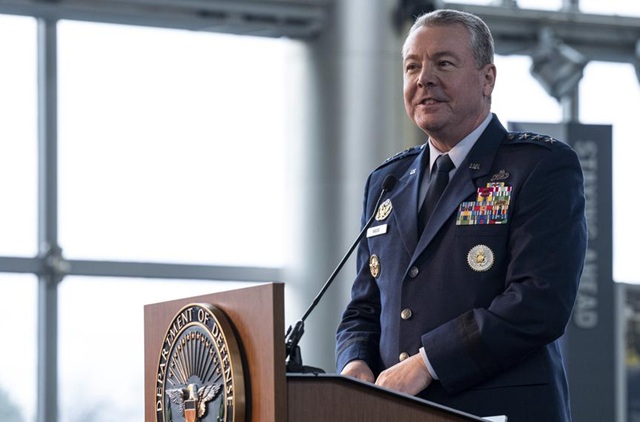
U.S. Defense Secretary Pete Hegseth has dismissed the head of the Defense Intelligence Agency (DIA), Lieutenant General Jeffrey Kruse, after the agency’s initial analysis of recent U.S. strikes on Iranian nuclear sites contradicted President Donald Trump’s claims of total success, officials confirmed Friday.
According to two people familiar with the decision, Kruse was informed he would no longer lead the DIA, a move also confirmed by a White House official. The officials spoke to the Associated Press on condition of anonymity because they were not authorized to discuss the matter publicly.
Two other senior officers—Vice Admiral Nancy Lacore, chief of the Navy Reserve, and Rear Admiral Milton Sands, commander of the Naval Special Warfare Command—are also leaving their posts, a U.S. official said separately.
Kruse, who has served as DIA director since early 2024, oversaw the agency’s preliminary report assessing that June’s large-scale U.S. air and missile strikes on three Iranian nuclear facilities had delayed Tehran’s program by only a few months. That assessment, widely cited in American media, clashed with Trump’s assertion that the operation had “obliterated” the sites.
The discrepancy sparked frustration inside the White House, where Trump and senior aides accused the agency of undermining the president’s message. “This was leaked because someone had an agenda to muddy the waters and make it look like this historic strike wasn’t successful,” Hegseth said, denouncing what he described as “fawning coverage of a preliminary assessment.”
The June operation involved more than 125 U.S. aircraft and a guided missile submarine, in what Trump hailed as a “spectacular military success.” His administration has since aggressively pushed back against reporting that questioned the strike’s effectiveness.
Kruse, a veteran intelligence officer, previously served as the top military adviser to the director of national intelligence and as director of intelligence for the coalition against the Islamic State group.
Broader purge of military leadership
The shake-up comes amid a sweeping reshuffle of top military officials during Trump’s second term. Earlier this year, the president dismissed Chairman of the Joint Chiefs of Staff Gen. Charles “CQ” Brown without explanation, and has since removed or accepted the resignations of multiple senior commanders across the Navy, Air Force, Coast Guard, and intelligence community.
Trump has repeatedly clashed with career officials over data and analysis he disputes. Earlier this month, he fired a senior economic official following the release of a jobs report showing weak hiring. His administration has also curtailed the publication of climate data, canceled vaccine access studies, and removed gender identity information from federal websites.
Democratic lawmakers have warned that the dismissals risk politicizing the military and eroding its long-standing neutrality. Hegseth has defended the moves, insisting the president is simply “choosing the leaders he wants.”