The U.S. capture of Venezuelan strongman Nicolás Maduro has delivered a significant blow to Cuba’s intelligence services, long regarded as among the most effective in the developing world, according to reporting by the Wall Street Journal. The weekend operation not only ended Maduro’s rule but also exposed vulnerabilities in the Cuban security apparatus that had been tasked with protecting one of Havana’s most important allies.
For decades, Cuban intelligence officers built a formidable reputation during the Cold War, dismantling assassination plots against Fidel Castro, recruiting senior foreign officials and safeguarding allied leaders across Latin America and Africa. That aura of invincibility was punctured early Saturday when U.S. elite forces stormed Maduro’s compound in Caracas around 2 a.m., capturing him and his wife before they could reach a safe room, according to U.S. officials cited by the Wall Street Journal.
Cuba said 32 officers from its Revolutionary Armed Forces and Interior Ministry were killed while assigned to Maduro’s security detail. The deaths prompted Havana to declare two days of national mourning, with Cuban President Miguel Díaz-Canel accusing U.S. forces of killing officers “confronting terrorists in imperial uniform.”
Analysts said the loss underscores a broader failure. “It’s a defeat for Cuba and denotes its weakening, highlighting vulnerabilities in its security procedures,” María Werlau, author of a book on Cuba’s role in Venezuela, told the Wall Street Journal. Former intelligence officials estimate that roughly 140 Cuban officers were assigned to protect Maduro, with dozens more injured during the raid.
The operation marked the first direct, unilateral U.S. military intervention in South America and followed months of planning by U.S. intelligence agencies. Gen. Dan Caine, chairman of the Joint Chiefs of Staff, said the mission relied on detailed intelligence about Maduro’s daily movements, habits and security routines, including information from at least one informant inside the Venezuelan government. No U.S. personnel were killed, and no American equipment was lost, officials said.
Cuba’s intelligence services had been deeply embedded in Venezuela for years, overseeing large parts of the country’s security apparatus and helping suppress opposition movements. After the collapse of the Soviet Union, Venezuela’s oil wealth became a critical economic lifeline for Cuba, making Maduro’s protection a strategic priority for Havana. The failure to defend him now raises questions about whether Cuba can maintain that relationship as Venezuela’s political landscape shifts.
The setback could also reverberate inside Cuba, where the Communist government relies heavily on its security services to contain dissent amid a severe economic crisis. “The people can go hungry, but the repressive apparatus must have privileges,” said Enrique Garcia, a former Cuban intelligence officer who defected to the U.S., in comments reported by the Wall Street Journal. A loss of Venezuelan support, including subsidized oil, could strain the regime’s ability to sustain that apparatus.
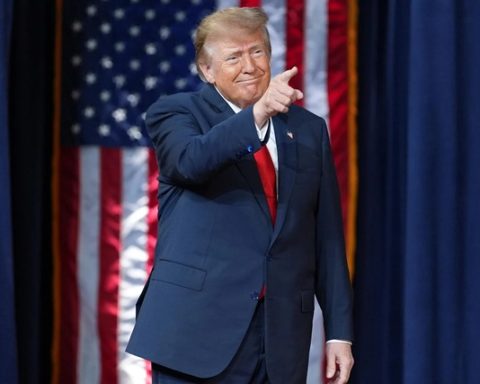
U.S. officials have seized on the moment to increase pressure on Havana. President Donald Trump said Sunday that Cuba was “ready to fall,” while Secretary of State Marco Rubio argued that Venezuela’s future depends on breaking free from Cuban influence. “This poor island took over Venezuela,” Rubio said alongside Trump.
Despite its vast size for a country of just 10 million people—estimated at about 100,000 officers—Cuba’s intelligence system failed to detect or deter the U.S. operation, analysts said. Former officials noted that while Cuban services remain effective at monitoring citizens, shutting down protests and surveilling communications, they appeared unable to adapt to the scale and sophistication of the U.S. military incursion.
“Intelligence is absolutely critical to protect VIPs,” Cedric Leighton, a former U.S. military intelligence officer, told the Wall Street Journal. He said rigid assumptions and predictable routines can leave even heavily guarded leaders exposed. In Maduro’s case, those vulnerabilities proved decisive, ending both his rule and a key chapter in Cuba’s intelligence legacy.