by Nil
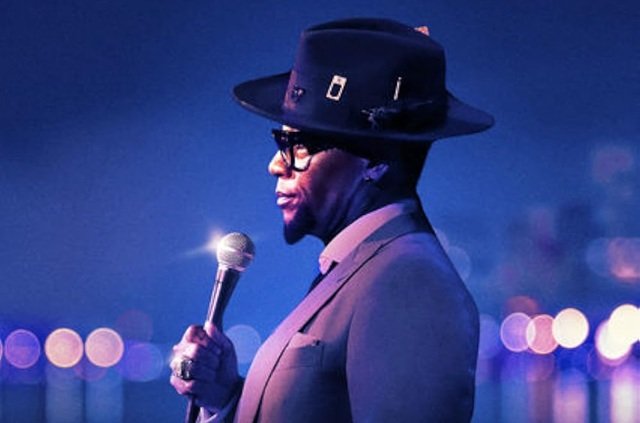
A man can spend his entire life trying to prove that he is not his father, only to discover, decades later, that he has inherited more of him than he ever wanted. In Charlie’s Boy: A Memoir, D. L. Hughley confronts this unsettling possibility through a life shaped by racial humiliation, domestic instability, violence, comedy, celebrity and the complicated business of becoming a father himself. Yet the book’s deepest conflict is not between poverty and success, or even between an absent biological father and a devoted stepfather. It lies between the identities a wounded child constructs to survive and the truths an adult must eventually confront to live honestly. Hughley’s account is at its most compelling when it dismantles the mythology of the self-made man, revealing that the qualities celebrated as resilience—aggression, emotional withdrawal, relentless ambition and an almost pathological need for recognition—can also become instruments of self-destruction. His memoir asks an uncomfortable question: what happens when the armour that saves a child becomes the prison of the man?
Hughley’s childhood is governed by a paradox that extends throughout the book: the desperate desire to understand the world collides with an environment in which asking questions can be dangerous. His mother’s warning, “Don’t ask questions you don’t want the answers to. So you better learn to listen. And keep your mouth shut” (p. 2), is more than an expression of parental impatience. It establishes silence as a mechanism of domestic power. The child who questions is not necessarily curious in an innocent sense; he is attempting to make an unpredictable environment intelligible. Yet Hughley learns that understanding may threaten the fragile arrangements on which his emotional security depends. His description of the silent treatment as “the Tomahawk missile in her arsenal” (p. 5) conveys the destructive force of withholding affection, while his recollection of falling ill exposes an even more troubling economy of love. “When I got sick—really sick—my mother would crawl into bed with me” (p. 9). The revelation that he “felt chosen” in these moments (p. 10) is heartbreaking because it suggests that care became most accessible when he was physically vulnerable. He was not simply seeking his mother’s attention; he was learning to associate suffering with the possibility of being loved. The memoir’s psychological force rests on this distinction between receiving affection and feeling secure enough to expect it.
Charlie Hughley provides an alternative model of fatherhood, one founded on consistency rather than emotional display. “We lived Charlie paycheck to Charlie paycheck” (p. 14) captures the economic precarity of a working-class household without romanticising its deprivation. Charlie’s value, however, exceeds his role as provider. Hughley remembers loving him “the way you can love a rock in the middle of a raging river” (p. 15), an image that transforms apparent immobility into a form of protection. In a household where emotional conditions could change without warning, Charlie’s predictability offered something approaching refuge. “He didn’t raise his hand at us. He didn’t threaten. He just . . . let us be” (p. 23). Such restraint is presented as a powerful form of paternal authority: Charlie protects without demanding that his children continually demonstrate their worthiness of protection. Yet the memoir’s admiration for this quiet masculinity also invites scrutiny. Charlie’s silence may provide safety, but it does not necessarily produce emotional intimacy or open communication. Hughley recalls hearing him laugh only “four times, maybe five” throughout his childhood (p. 16). The boy consequently imagines that he might become “the funny thing that cracked him open” (p. 17). Here, comedy begins as more than an emerging talent. It becomes a strategy for reaching a man whose affection is dependable but whose emotional interior remains largely inaccessible.
The revelation that Charlie is not Hughley’s biological father threatens to destabilise this carefully constructed identity. “You know Charlie ain’t your real daddy, right?” (p. 29) is devastating precisely because the statement reduces fatherhood to a biological distinction that the boy’s experience has never required. Hughley immediately interprets his difference as contamination: “I was a symbol, a stain, a scar, a love gone wrong” (p. 31). The language exposes how readily children absorb adult secrets as judgements about their own worth. But the memoir eventually moves beyond the assumption that biological truth must settle the question of familial belonging. “Charlie Hughley wasn’t a real Hughley. I wasn’t a real Hughley. And yet . . . we were all Hughleys” (p. 151). The apparent contradiction contains the book’s most important challenge to conventional ideas of inheritance. Families are not merely collections of biological facts; they are relationships sustained through responsibility, loyalty, memory and time. Yet Hughley also recognises that he has organised his emotional life around an idealised opposition: “I wanted Jerry to be the monster,” while Charlie remained “the saint” (p. 174). This admission complicates the memoir’s moral landscape. The absent father had to be condemned so that the present one could be worshipped. What looks like certainty was, in part, a defence against ambiguity.
That defence develops within a racial and social environment where vulnerability can carry immediate consequences. Hughley’s South Central Los Angeles neighbourhood is rendered through “choppers overhead, pit bulls barking, boom boxes battling from open windows” (p. 36), a compressed portrait of a world in which noise, danger and vigilance become ordinary features of existence. The racist declaration “We don’t serve niggers” (p. 39) places personal humiliation within a broader system of exclusion. Hughley responds with a declaration of self-determination: “You are only what you answer to. Not what somebody else decides to call you” (p. 40). The statement is both psychologically necessary and politically suggestive. Refusing an imposed identity can be an act of resistance, especially when racial power depends on defining others as inferior. Yet the memoir’s celebration of individual defiance occasionally approaches a familiar American mythology in which determination becomes the principal answer to structural injustice. Hughley’s ability to survive his circumstances demonstrates his resourcefulness, not the fairness of the circumstances themselves. The distinction matters because resilience is often celebrated most enthusiastically by societies that prefer not to examine why resilience is necessary in the first place.
The violence that surrounds Hughley gradually becomes an education in masculine identity. “A coward ain’t someone who’s scared,” he declares. “It’s someone who stays scared” (p. 48). The distinction transforms fear from a human response into a potential moral failure. His stepfather reinforces this lesson by making physical retaliation a condition of belonging: “You want to eat in this house? You want to call yourself a man?” (p. 49). Survival is no longer simply about avoiding injury; it becomes a test of whether Hughley deserves recognition as a man. His later description of using unconventional tactics against stronger opponents is strikingly candid: “My goal wasn’t to win. Winning was for boys with muscles and backup. I just wanted to make it so damn miserable that they didn’t want to fight me anymore” (p. 55). The intelligence is undeniable, but so is the cost. A child who learns to neutralise threats through calculation, intimidation and pre-emptive aggression may find it difficult to distinguish danger from disagreement in adulthood. Hughley’s recollection that he had “bricks, jokes, and rage” (p. 56) suggests that violence and comedy are not opposing forces in his development. They are different instruments serving the same urgent purpose: ensuring that he will never again occupy the position of helpless prey.
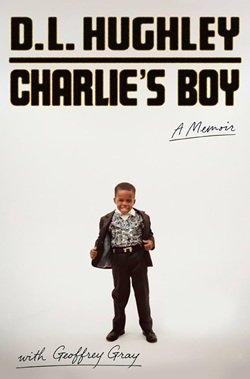
Comedy eventually offers the possibility of transforming that defensive intelligence into something more creative. Hughley recalls wanting the preacher’s ability to command attention “not with fists. Not with fury. Just with his voice” (p. 43). The stage promises a form of authority that does not require physical domination, although it retains the power to expose, unsettle and humiliate. “A joke could be more than humor,” he explains. “It was body armor. Could be a spell. Could be a sword and a shield” (p. 46). The metaphor is revealing: comedy protects him because it allows him to control the terms on which others encounter him. His ambition, however, gradually develops beyond self-defence. “It wasn’t about telling jokes,” he writes, “it was about seeing the world and the people in it as I saw it and saying it clearly” (p. 99). This is a persuasive account of comedy as social interpretation, particularly when the comedian challenges racial stereotypes and the hierarchies governing American public life. But the memoir leaves a productive tension unresolved. Can humour dismantle the structures of humiliation when it also derives its power from the ability to humiliate? Hughley’s understanding of comedy as political intervention is compelling, but a comedian’s confidence in speaking truth does not automatically establish that his perspective is complete, impartial or innocent of the power it criticises.
Professional success introduces a more insidious danger: the possibility that liberation from one form of dependence will create another. Hughley’s pride in wearing his McDonald’s uniform reflects the dignity of earning money through his own labour: “For the first time in my life, I had something to be truly proud of” (p. 77). His subsequent rise in comedy brings recognition, financial independence and the authority to challenge those who attempt to dictate his voice. “You don’t need permission to sound like yourself,” he declares (p. 124). Yet the entertainment industry rewards individuality only within commercial limits. Hughley’s observation that Hollywood is “a world to visit, but a hard one to live in” (p. 119) captures the contradiction between gaining access and possessing genuine autonomy. His achievements do not remove the need for approval; they change the people from whom approval is sought. The commercial transformation of the Kings of Comedy into a successful brand sharpens the dilemma. “Before we were a brand, we were a brotherhood” (p. 145), Hughley observes. The distinction exposes the pressure exerted by markets on relationships and collective identity. What begins as shared cultural expression can become a commodity whose value depends on sustaining the very recognisability that artistic independence might require one to challenge.
The memoir becomes morally more demanding when Hughley confronts the consequences of his own conduct. Faced with an unexpected pregnancy resulting from infidelity, he recognises the instinct to abandon responsibility: “Run, boy. Pretend it’s not real” (p. 137). He associates that voice with his biological father, the man whose absence has shaped his determination never to repeat the same abandonment. The irony is painful. In attempting to distinguish himself from the man who left, Hughley discovers that the possibility of repeating his behaviour has not disappeared. “I had to decide what kind of man I was going to be” (p. 138). This is the point at which the memoir’s account of masculinity becomes more convincing than its earlier celebration of toughness. Manhood cannot be secured through retaliation, income, celebrity or sexual conquest. It must be demonstrated through responsibility, particularly when responsibility threatens the life one has worked to construct. Hughley’s question about fatherhood is therefore central: “How do you fight to understand your child when you’ve spent your whole life fighting just to understand yourself?” (p. 115). It captures the danger of treating personal trauma as a permanent exemption from the demands of intimacy. Understanding one’s wounds may explain the difficulty of loving others, but it cannot substitute for the work of doing so.
Hughley’s reflections on his son Kyle, his family’s fractures and Charlie’s ageing deepen the memoir’s challenge to self-mastery. “You did this. You passed it down,” he recalls thinking after learning of his son’s diagnosis (p. 114). The reaction reveals the father’s fear that the very difficulties he has spent his life trying to overcome might somehow be inherited. Yet his language of transmission also exposes the limits of a worldview in which every problem must be traced to a personal cause and conquered through willpower. His recognition that “You can love your family and still watch the space between you grow, one gig at a time” (p. 117) is more unsettling than any triumphant account of professional success. Love does not guarantee understanding, and provision does not guarantee presence. The later admission that memory preserves the past “in the shape we need” (p. 173) brings these concerns together. Hughley must reconsider not only his parents but the stories through which he has made himself intelligible. Charlie’s imperfections do not cancel the care he provided; Jerry’s biological connection does not create a relationship that never had time to develop. The truth is neither as comforting nor as destructive as the identities Hughley constructed around it.
The memoir’s final movement towards silence offers a fitting, if not entirely conclusive, resolution. “I thought volume meant wisdom. I thought being the loudest meant I was right” (p. 193), Hughley admits. The confession revises his lifelong pursuit of a voice powerful enough to command attention. His closing assertion that “the silence isn’t empty” but “full of someone else’s turn” (p. 196) proposes listening as an alternative to the compulsive self-assertion that has shaped his survival. It is an important insight, although the memoir cannot establish that recognising inherited patterns means escaping them. Its greatest achievement is not the suggestion that suffering inevitably produces wisdom, or that success can redeem a damaged childhood. It is the recognition that survival strategies can become destructive precisely because they once worked. Hughley’s life demonstrates the necessity of resistance in a world structured by racial exclusion and personal insecurity, but also the danger of carrying the logic of combat into every relationship. Charlie’s Boy is ultimately a study of the difficult distance between becoming invulnerable and becoming whole. Its most uncomfortable lesson is that a man may spend decades mastering the art of never being hurt again before discovering that the same armour has made it harder for anyone to reach him.