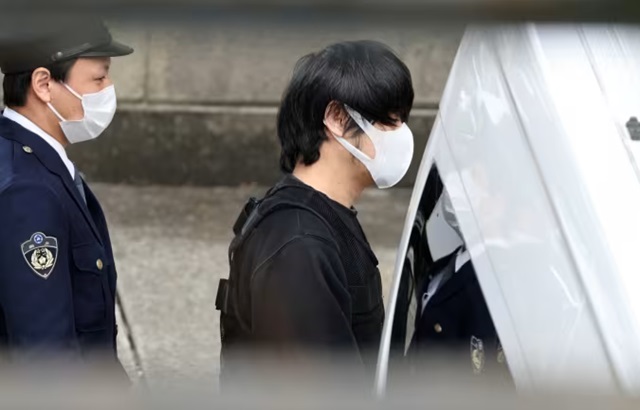
A Japanese district court on Wednesday sentenced the man convicted of assassinating former Prime Minister Shinzo Abe to life in prison, bringing to a close one of the most closely watched criminal trials in recent Japanese history. The ruling came more than three years after Abe was fatally shot during an election campaign speech, a killing that stunned the country and reverberated far beyond its borders.
The assassination took place at around 11:30 a.m. on July 8, 2022, in a public square near Yamato-Saidaiji railway station in the western city of Nara. Abe, Japan’s longest-serving prime minister in the postwar era, was campaigning for a Liberal Democratic Party candidate in an upper house election when he was attacked. He served as prime minister from 2006 to 2007 and again from 2012 to 2020.
The defendant, Tetsuya Yamagami, now 45, was arrested at the scene after shooting Abe with a homemade gun. He was charged with murder and other related crimes and has admitted to carrying out the attack. The central issue in the lay judge trial at the Nara District Court was the severity of the sentence. Prosecutors sought life imprisonment, while the defense argued for a prison term of no more than 20 years, citing Yamagami’s troubled upbringing and personal history.
Court proceedings spanned 15 sessions beginning in October 2025 and featured testimony from family members, including Yamagami’s mother and younger sister. Yamagami himself spent more than 10 hours on the witness stand over five hearings, offering detailed explanations of his motives and background.
The trial cast renewed scrutiny on the religious group formerly known as the Unification Church, now called the Family Federation for World Peace and Unification. Yamagami’s mother joined the group when he was in elementary school and later donated about 100 million yen, roughly $630,000, according to court testimony. The donations devastated the family financially and contributed to years of domestic turmoil. In 2015, Yamagami’s elder brother, who also harbored resentment toward the organization, died by suicide.
Yamagami told the court that he initially planned to attack leaders of the church but shifted his focus to Abe after the former prime minister appeared in a video message for an event linked to a church-affiliated organization in September 2021. He said he feared Abe’s participation could legitimize the group, which has faced long-standing accusations of coercive fundraising practices and cultivating close relationships with politicians.
“I was worried it might be perceived as an organization with no problems,” Yamagami said during the trial, referring to the church. He described himself as a victim of the group and said he acted out of despair and a sense of crisis, while insisting he bore no personal anger toward Abe.
Prosecutors rejected that explanation, calling it a “leap in logic.” They emphasized the extreme danger posed by the homemade firearm and the risk to bystanders in the crowded public space, arguing that the crime’s gravity and potential for mass casualties warranted the harshest penalty short of death.
Defense lawyers urged the court to give priority to Yamagami’s personal circumstances, arguing that the collapse of his family, the financial ruin caused by his mother’s donations, and his brother’s suicide were directly linked to the crime and should weigh heavily in sentencing.
The case unfolded against a broader reckoning over the Unification Church’s influence in Japan. In March last year, the Tokyo District Court ordered the dissolution of the organization, citing unprecedented harm caused by its donation practices. The church has appealed the decision, and the Tokyo High Court is expected to rule on the matter in the coming months.
Wednesday’s life sentence closes a chapter in a case that not only ended the life of one of Japan’s most prominent political figures but also forced the country to confront uncomfortable questions about religious influence, political accountability, and the roots of violent extremism.