India on Monday opened a major international artificial intelligence summit in New Delhi, a high-profile effort by Prime Minister Narendra Modi to reinforce the country’s status as a global technology powerhouse and define its role in the rapidly evolving AI economy.
The five-day event is designed to showcase the government’s long-term strategy for harnessing AI as a driver of economic growth and social inclusion for a population of nearly 1.4 billion. Since taking office in 2014, Modi has prioritized expanding the technology sector through startup funding programs, regulatory reforms, and incentives aimed at attracting high-tech manufacturing, including smartphone and semiconductor production.
Officials describe the gathering as the first global AI summit hosted in the Global South, positioning it as a platform for presenting a distinctly Indian approach to artificial intelligence. Policymakers say they aim to balance innovation with safeguards, promoting what they call responsible deployment that encourages inclusive development while addressing risks such as workforce disruption and ethical oversight.
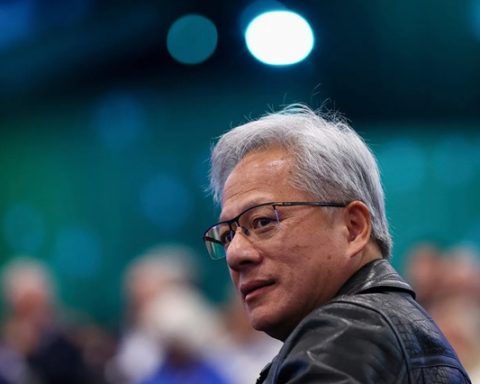
Hundreds of global technology leaders are attending, reflecting the summit’s geopolitical and economic significance. Participants include Alexandr Wang of Meta, Arthur Mensch of Mistral AI, Bill Gates and Brad Smith from Microsoft, Dario Amodei of Anthropic, Jensen Huang of Nvidia, Sam Altman of OpenAI, and Sundar Pichai of Google, with discussions spanning employment, sovereign AI capabilities, and global governance.
The summit comes as the country accelerates public investment in artificial intelligence infrastructure. The government’s India AI Mission, launched in 2024, has committed more than 103 billion rupees over five years, funding computing capacity, research, and skills development. Authorities say they have already secured tens of thousands of graphics processing units, the specialized chips essential for AI workloads, and are offering subsidized computing power to startups and researchers at rates below global averages.
Despite these advances, analysts note that the country still trails the United States and China in both funding scale and access to high-quality datasets. Researchers warn that fragmented data-sharing frameworks and a shortage of advanced AI specialists, compounded by ongoing brain drain, could limit competitiveness in cutting-edge research unless addressed through sustained investment and policy reform.
A central question shaping debate at the summit is whether the nation should build its own large language models or focus instead on applying existing systems to local challenges. Tech leaders such as Nandan Nilekani of Infosys have argued that practical deployment across healthcare, agriculture, and governance may deliver greater economic value than attempting to replicate frontier models developed elsewhere.
Domestic startups are nonetheless pushing ahead with homegrown innovation. Firms including Sarvam AI are developing Indic-language foundational models and multimodal systems tailored to the country’s linguistic diversity, reflecting a broader ambition to establish sovereign AI capabilities rooted in local data and use cases.
Global corporations are also deepening their presence, expanding research, cloud, and engineering operations. Companies such as IBM, Accenture, Kyndryl, AstraZeneca, Mercedes-Benz India, and Amazon Web Services are scaling AI-related investments, while Google has announced plans for an AI hub in Visakhapatnam featuring data centers and digital infrastructure.
Security and logistics preparations in the capital underscore the summit’s prominence. Authorities have deployed thousands of police officers around Bharat Mandapam, the venue hosting the event, while hotel prices across the city have surged due to the influx of delegates and executives.
As the conference unfolds, the country is attempting to position itself not merely as a vast consumer market for artificial intelligence but as a rule-shaper and application powerhouse, seeking to demonstrate that AI can be adapted at scale to drive development while navigating the economic and social disruptions the technology may bring.