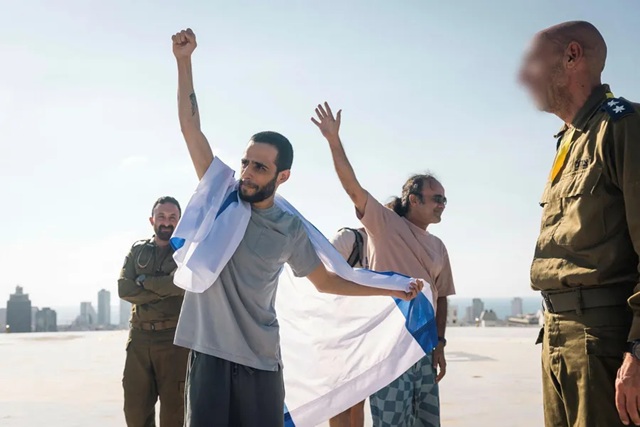
For the first time, Israeli soldier Nimrod Cohen has shared the full account of his two-year captivity by Hamas, offering a rare glimpse into the psychological, physical, and emotional trials endured by hostages in Gaza. In an interview with Haaretz, Cohen recounted the terrifying events of October 7, 2023, when he and three fellow Golani Brigade tank crew members were ambushed at the Gaza border.
Cohen described the morning as routine, waking just before dawn for a security alert, only to be immediately thrust into chaos. Mortar explosions and urgent radio warnings signaled an attack, and by the time Cohen and his crew reached the border fence, their tank had overheated. “We planned to find a place to stop, but just then we took a hit. It came head-on with a boom, and I was sure it was an RPG,” he recalled. His driver, Shaked Dahan, was wounded and unconscious, and despite the crew’s attempt to execute a rescue drill, the tank was immobilized. Soon after, militants climbed onto the vehicle. Cohen realized he had two choices: fight and likely die, or surrender and hope to survive.
Cohen was pulled from the tank, witnessing his comrades being killed or severely injured. He described a surreal detachment from the violence around him, noting, “I was there physically, but in my head I was somewhere else.” Captors subjected him to physical abuse before transporting him to Gaza, where he was stripped naked, bound, and taken into the network of tunnels where he would spend much of his captivity. Cohen described the early days as a process of understanding both the captors and fellow hostages, carefully negotiating small roles and responsibilities to survive.
One notable encounter came early on when Hamas leader Yahya Sinwar visited the captives. “He sat with us for 10 minutes and told us that we have to wait, that we would suffer a little more ‘until they bring you back home,’” Cohen recalled. Despite Sinwar’s role in a murderous organization, Cohen described him as unexpectedly “charming,” highlighting the dissonance between appearances and reality in captivity.
Throughout his ordeal, Cohen and other hostages relied on dark humor to cope. Small jokes about the guards and whispered games helped maintain their sanity. “Yarden Bibas once told me, ‘It’s hard for a person to hate someone who makes him laugh,’” Cohen said. These moments of levity contrasted sharply with the constant threats, interrogations, and psychological manipulations the captives endured. Captors often lied about conditions outside, claimed disasters in Israel, and sought to instill fear, particularly when Israeli military activity occurred nearby.
Cohen also reflected on the harsh daily routines imposed by Hamas. Hostages were moved frequently, sometimes through partially destroyed tunnels that required crawling, while limited food, sleeping arrangements, and hygiene demands became exercises in endurance. He noted that even the captors themselves were flawed and inconsistent, often hiding resources or information from each other and behaving with the same humanity and pettiness as any ordinary person.
The captivity also highlighted stark generational and societal contrasts. Cohen observed the deep indoctrination of Gaza’s youth, who were raised on hatred and conditioned to see Israelis as monsters, compared to older residents who had experience working with Israelis and could show relative moderation. These observations, Cohen said, revealed the broader context of intergenerational conflict and the challenges of long-term peace.
Despite his youth—he was only 19 at the time of abduction—Cohen quickly assumed responsibilities within the group, taking turns handling interactions with captors and managing limited resources. Over time, he developed routines, tracked the passage of days through the timing of prayers, and invented mental games to maintain cognitive engagement. Yet even with these coping strategies, moments of sheer terror were inescapable, particularly during military raids or tunnel bombardments. “There were times when every few days we moved to a new place in the tunnels… You ask yourself: ‘What dwarfs built this thing?’” he said.
Cohen’s reflections also emphasized the complex interpersonal bonds formed under duress. He described the hostages as a family of sorts, sharing food, comfort, and conversation. These connections were critical to psychological survival, providing a sense of humanity amid the constant dehumanization imposed by captors. At the same time, he deliberately avoided forming any personal connection with the Hamas guards, leaving communication to his fellow hostages while observing the guards’ behaviors carefully.
Through the ordeal, Cohen’s thoughts often turned to home: the simple routines he missed, from family meals to walking the dog, and the life he had hoped to lead after his military service. His account underscores not only the physical danger of captivity but also the profound psychological strain of waiting, uncertainty, and isolation. “In the hardest moments I was most optimistic. When there were no negotiations, for example, I knew that it could never be worse than this. But every time we heard that a deal was cooking, I would get the most pessimistic,” he recalled.
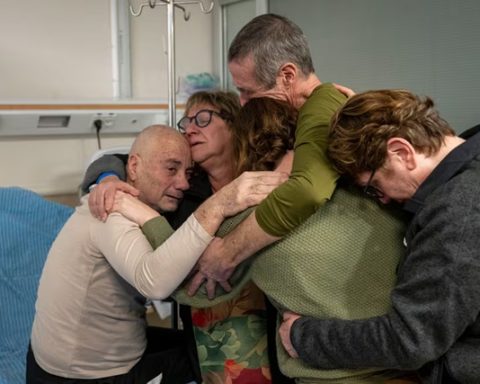
Cohen was finally released in 2025, returning to a world dramatically changed from the one he had left behind. Today, he reflects on his experiences as both a testament to resilience and a reminder of the brutal realities of conflict in Gaza. His story, reported by Haaretz, provides an intimate and unflinching perspective on the lived experience of hostages, the complex human dynamics within captivity, and the courage required to survive when the odds seem insurmountable.