


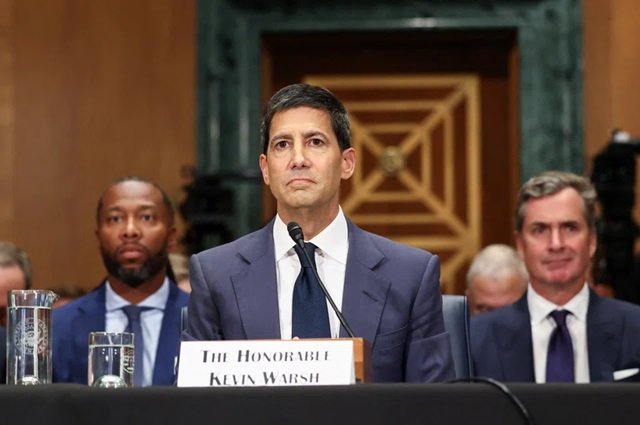
Federal Reserve chief nominee Kevin Warsh has called for what he described as “regime change” at the US central bank, proposing a major overhaul of its inflation strategy, policy framework, and public communications. Speaking during a contentious Senate Banking Committee confirmation hearing, Warsh blamed the Federal Reserve’s past decisions for contributing to post-pandemic inflation that he says continues to burden American households.
Warsh, a former Fed governor and lawyer-financier, argued that “fatal policy errors” made over the past several years had lasting economic consequences. He said the central bank now requires a “new and different inflation framework,” asserting that inflation should be treated as a policy failure that demands stronger accountability. He also suggested that the Fed’s communication tools, including its widely watched quarterly projections on economic outlook and interest rates, may need to be significantly restructured.
The hearing quickly became politically charged as lawmakers pressed Warsh on both monetary policy and his independence from President Donald Trump, who nominated him for the position. Democratic senators questioned his refusal to directly acknowledge Trump’s 2020 election loss, a point raised as a test of impartiality. Warsh also confirmed plans to divest more than $100 million in assets but declined to provide detailed disclosures, saying proceeds would be moved into “plain vanilla” investments.
On monetary policy, Warsh signaled alignment with Trump’s preference for lower interest rates, though he framed it as a common presidential stance rather than a directive influence. He also argued that technological advances, particularly in artificial intelligence, could improve productivity and potentially justify lower rates over time, a view not universally shared among central bankers who caution against near-term policy shifts based on long-term projections.
Warsh emphasized that monetary policy independence remains essential but suggested it is not undermined when elected officials publicly express views on interest rates. He also reiterated a traditional conservative position that the Fed should focus narrowly on price stability, saying it should “stay in its lane” and avoid broader social or economic policy debates.
His nomination comes at a politically sensitive time for the Federal Reserve, which has struggled to maintain its 2 per cent inflation target for more than five years. Inflation pressures have been driven first by the pandemic shock and later by factors including tariffs and elevated global energy prices linked to geopolitical conflict. The Fed’s handling of inflation has become a central issue in US economic and political debate, particularly ahead of upcoming elections.
Warsh’s confirmation process remains uncertain, with delays possible due to ongoing political disputes and a Justice Department review involving current Fed leadership. Even if confirmed, the transition of power may be complicated by timing issues, legal questions, and the possibility of outgoing Fed Chair Jerome Powell remaining in a policymaking role beyond his formal term.
Democratic lawmakers have raised additional concerns about Warsh’s previous tenure during the financial crisis and his role in major banking bailouts, while Republicans have largely supported his nomination. The outcome of the confirmation process could significantly shape the future direction of US monetary policy, particularly at a time of heightened economic uncertainty and institutional scrutiny.












