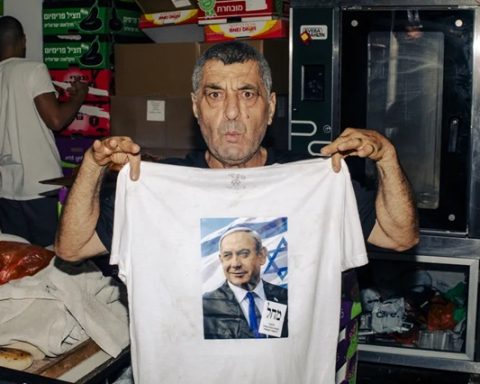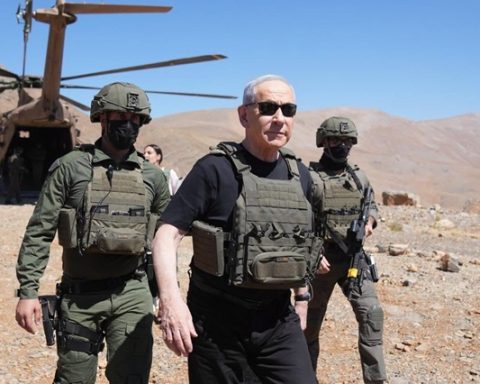
Israel’s upcoming election is being framed as one of the most consequential in its recent history, not only for the country itself but for political dynamics stretching far beyond its borders. As Haaretz notes in its analysis of the moment, every major political shift in Israel now carries amplified symbolic weight, particularly in the context of the ongoing war in Gaza and its global reverberations. The contest over Prime Minister Benjamin Netanyahu’s leadership has therefore become entangled with broader ideological battles shaping democracies across Europe and the United States.
Since the Hamas-led attacks of October 7 and Israel’s subsequent military campaign in Gaza, Israel has become a central flashpoint in international political discourse. The war has not remained contained within diplomatic channels or regional debates; instead, it has spilled into public squares, parliamentary chambers, and electoral campaigns across the Western world. What might once have been a foreign policy issue is now a domestic political pressure point in multiple countries simultaneously.
In Europe, the war has triggered large-scale demonstrations in cities such as Paris, Berlin, London, Rome, and Amsterdam. These protests have reshaped political energy, particularly on the left, where long-standing fragmentation has given way to renewed activism around human rights, anti-war positions, and criticism of Western military alliances. For many European centrists, however, the unrest has created anxiety about social cohesion, public order, and political stability.
The result has been a sharpening of Europe’s internal divides. On one side, progressive movements see Gaza as evidence of systemic failures in international accountability and humanitarian governance. On the other, right-wing and populist parties have used images of protests and sporadic violence to reinforce narratives about immigration, cultural integration, and the need for stricter security policies. Israel, in this sense, has become a symbolic arena in which Europe’s own identity struggles are being contested.
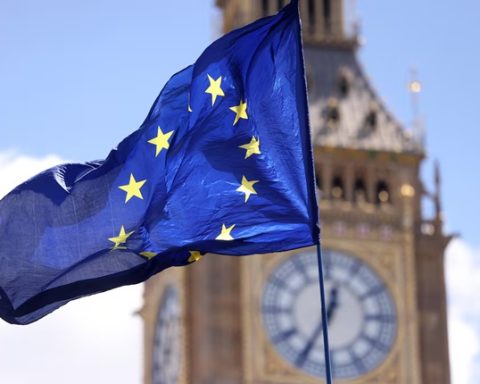
European centrist leaders are increasingly caught between these pressures. In capitals such as Berlin, Paris, Rome, and London, there is a quiet but discernible hope that a political shift in Israel could help ease tensions at home. Many policymakers view Netanyahu as a polarizing figure whose leadership has intensified the visibility of the Gaza conflict in domestic politics. A change in Israeli leadership, they hope, could reduce public pressure and allow the issue to recede from daily political confrontation.
The United States has experienced a similar, though institutionally distinct, transformation. Israel is no longer a uniformly bipartisan issue. Instead, it has become a source of internal division within both major parties. Congressional debates over military aid, arms transfers, and accountability measures have intensified, and recent primary elections have seen candidates openly challenge long-standing assumptions about unconditional support for Israel.
In this shifting landscape, positions once considered politically marginal—such as conditioning aid or restricting arms transfers—are gaining traction. Even within mainstream Democratic politics, candidates are increasingly compelled to define their stance on Israel more explicitly than in previous election cycles. The issue has moved from the periphery of foreign policy into the center of electoral identity.
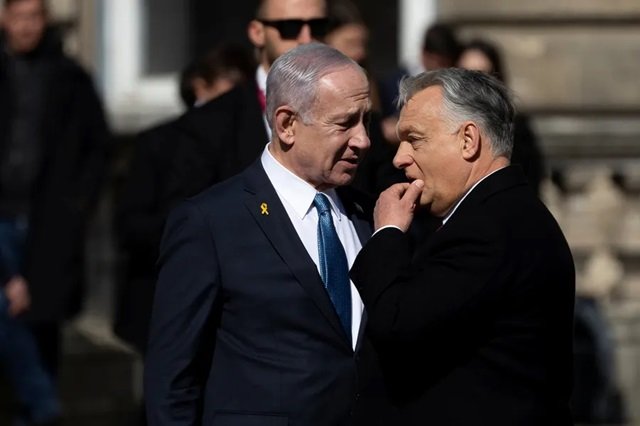
At the heart of these global reverberations is Netanyahu himself. For critics in Europe and the United States, he has come to symbolize a broader global trend toward right-wing populism and illiberal governance. He is frequently mentioned alongside figures such as Donald Trump, Vladimir Putin, Narendra Modi, and Viktor Orbán as part of what some analysts describe as a transnational alignment of strongman politics. In this framing, Netanyahu is not merely an Israeli leader but a representative of a wider political current challenging liberal democratic norms.
This personalization of Israel’s political identity has amplified the stakes of the upcoming election. If Netanyahu were to be defeated, many observers would likely interpret the outcome as more than a domestic political shift. It could be read as a signal that the global populist wave is weakening, or at least encountering limits. Such a perception could have consequences for political movements across multiple continents, affecting morale, strategy, and electoral narratives.
At the same time, Netanyahu’s potential departure would also reshape the political tools available to his opponents. On the left, he has become a central figure of critique—often serving as a focal point for broader arguments about occupation, militarism, and democratic erosion. Without him, progressive movements might lose a unifying symbol that has helped consolidate disparate critiques of Israeli and Western policy into a more coherent narrative.
Yet the implications of leadership change in Israel are not purely symbolic. The Haaretz analysis emphasizes that policy outcomes are heavily shaped by political composition and individual leadership decisions. The current government’s trajectory, particularly after October 7, has been influenced by its reliance on far-right coalition partners and ministers with hardline security positions. These internal dynamics have had direct consequences for how the war in Gaza has been conducted and how domestic and international pressures have been managed.
This suggests that even if the underlying structural forces remain unchanged, leadership transitions could still produce meaningful shifts in policy direction. Figures such as Naftali Bennett or Gadi Eisenkot, who are often discussed as potential successors, would likely approach governance with different political calculations, coalition strategies, and diplomatic priorities. While none of these alternatives promise a dramatic transformation, they would almost certainly bring a different tone and set of constraints to Israeli decision-making.
The broader implication is that Israel’s political system is now deeply embedded in global ideological competition. Domestic electoral outcomes are interpreted internationally almost in real time, filtered through the lenses of polarization in Europe and the United States. As Haaretz observes, Netanyahu’s leadership has come to carry a significance that extends well beyond Israel’s borders, making his political survival or defeat a matter of international attention.
As the election approaches, the sense of interconnectedness between Israeli politics and global political currents continues to intensify. What happens at the ballot box will not only determine the direction of Israeli policy in the coming years but will also be read as part of a wider story about the state of democracy, the resilience of populism, and the evolving nature of political conflict across the world.