India’s largest conglomerate is entering a potentially decisive period of transition. Tata Sons, the holding company behind businesses spanning steel, power, aviation, automobiles and technology, is preparing for a change at the top just as it confronts a series of strategic challenges and an increasingly public dispute over who should determine the group’s future direction.
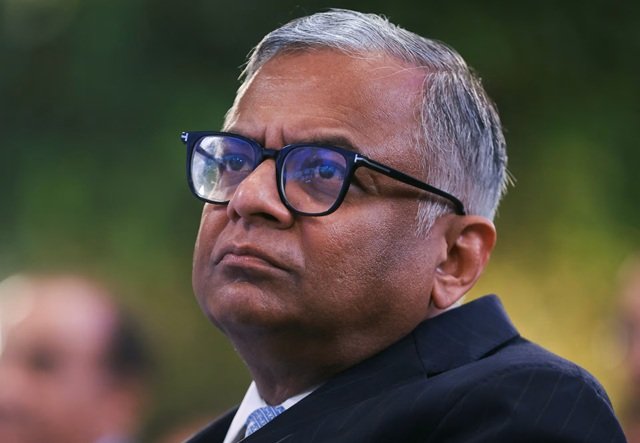
N Chandrasekaran’s surprise announcement that he would step down in February from running the $280bn group marked a significant development in the struggle for influence at the conglomerate. It also represented a victory for Noel Tata, the 69-year-old head of the charitable trusts that control Tata Sons and the leading representative of the Tata family within the business.
The Financial Times, which reported the developments, described the change as the beginning of a possible “Noel Tata era”. Saurabh Mukherjea, founder of Mumbai-based Marcellus Investment Managers, which holds shares in Tata’s clothing retailer Trent, said: “This is very much the beginning of the Noel Tata era.”
Chandrasekaran and Noel Tata had clashed repeatedly in recent months over strategy and the possible role of the next generation of the Tata family in the business. The disagreement became sufficiently serious to attract the attention of New Delhi, with the home affairs and finance ministers meeting both men to address concerns about the conglomerate’s stability.
Noel Tata now has until February to find a successor capable of overseeing a sprawling business empire that employs more than a million people, making Tata the biggest private-sector employer in India. Its interests include Tata Steel, power businesses, Jaguar Land Rover, Air India and Tata Consultancy Services, India’s largest IT services company.
The succession process is complicated by the absence of a deputy to Chandrasekaran and a formal succession plan. Tata’s five-member selection committee is expected to convene soon to begin the search. The task will be unusually demanding because of the breadth of the businesses under Tata Sons. “You may not find a candidate that can encompass all the various businesses that we’re in,” a source close to Tata management told the Financial Times, adding that the person chosen would also need to embrace the idea of keeping the holding company private.
Tata Steel chief executive TV Narendran is among those considered a possible candidate, although external candidates are also being examined.
The question of who leads Tata Sons is inseparable from the distinctive ownership structure of the group. Unlike other major Indian family-run and owned conglomerates, including Mukesh Ambani’s Reliance and the Adani Group headed by Gautam Adani, Tata Sons is controlled by Tata charitable trusts. Those trusts own a majority stake in the holding company and remain central to the group’s founding ethos and its stated desire to serve India. At the same time, 26 Tata businesses, including Tata Consultancy Services, are publicly listed.
Noel Tata occupies an unusual position within this structure. The son of a Swiss mother and half-brother of the late former Tata chief Ratan Tata, he is the family’s leading representative in the 150-year-old business. He developed his career in Tata’s retail operations and later ran its international division before taking control of the trusts following Ratan Tata’s death in 2024.
Kavil Ramachandran, a former professor of family business and entrepreneurship at the Indian School of Business, said Tata Sons was not necessarily a family business, but members of the family “feel proud of the heritage — that they are the stewards”.
One of the most significant disputes between Noel Tata and Chandrasekaran concerned whether Tata Sons should be listed on the stock market. Chandrasekaran had initially opposed a listing, while people familiar with Noel Tata’s position said he believed statements from some board members supporting a public flotation were backed by the Tata Sons chair.
The issue emerged after India’s central bank classified Tata Sons in 2022 as one of the country’s largest shadow banks and instructed it to go public within three years to increase transparency. Tata has asked the Reserve Bank of India to reconsider the classification after reducing its debt and is awaiting a decision.
People who know Noel Tata said he opposed pressure to list, arguing that remaining private gave the group greater freedom to make long-term strategic investments. Critics, however, have argued that private ownership also gives Noel Tata greater control over the conglomerate.
His influence has nevertheless faced questions. Some stakeholders and observers believe Noel Tata has yet to acquire the stature enjoyed by Ratan Tata, who died in 2024. Ratan Tata had risen through the group’s corporate hierarchy to lead Tata Sons and subsequently the Tata Trusts, appointing many of the business heads who went on to run the group’s companies.
“There was a chain of command when [Ratan] was there, which you see in family-run businesses in India,” said the head of a close business ally. “Noel believes he has inherited that — but not many others around him believe so.”
The leadership transition comes at a particularly consequential moment for Tata. Air India is undergoing a $70bn fleet renewal despite suffering losses of nearly $3bn in the last financial year. Tata Consultancy Services is confronting the implications of artificial intelligence for its business, while Tata is also pursuing an $11bn semiconductor plant in partnership with Taiwan’s Powerchip Semiconductor Manufacturing Company.
The financing of these projects has been another source of tension. In February, Noel Tata asked Chandrasekaran how the projects were being funded, given central bank rules preventing the holding company from raising debt if it wanted to remain private. He was also concerned about the absence of a clear long-term strategy for the group, according to the source close to management.
Chandrasekaran did not identify Noel Tata in announcing his departure, but said his proposed third five-year term had not been approved because one board member “did not support it”. A source close to Chandrasekaran said he had considered leaving for “some time”, as the friction with Noel Tata was “not going anywhere” and “there is so much animosity, nothing is moving”. Yet, the source added, he did not want to “leave the group in shambles”.
The timing has prompted concern among some business allies. One warned that the departure could “damage the halo around Tata Group’s corporate governance — there can be an impact on access to capital”. Others remain more optimistic, pointing to the independent governance structures of Tata’s individual companies. Shriram Subramanian of Bengaluru-based proxy advisory InGovern Research Services said the boardroom turmoil had had limited impact on the operations of various independently governed Tata Group companies. Chandrasekaran’s successor, he added, would need to be “aligned to the trusts . . . that is critical”.
The current dispute also echoes an earlier and highly consequential Tata succession battle. Ratan Tata had clashed with his successor Cyrus Mistry, who represented the group’s largest minority shareholder, the Shapoorji Pallonji Group, which owns an 18 per cent stake in Tata Sons and is linked to the Tata family. Mistry was ousted in 2016, and India’s Supreme Court ruled in Tata Group’s favour five years later, allowing Ratan Tata and Chandrasekaran to lead the trusts and holding company respectively.
Attention is now turning towards the next generation. Critics of Noel Tata say he is preparing his 33-year-old son Neville to eventually become chair. People close to Noel Tata dispute that interpretation, saying Neville is too young for the role. Others believe that succession is ultimately Noel Tata’s objective, meaning Chandrasekaran’s successor “will have to sign up for that”, according to a person who works closely with the group.
Mukherjea of Marcellus Investments believes the transition has been long in the making. Noel Tata, he said, was “putting himself in pole position to run the group in the mould of the late Ratan Tata — this was a long time coming”. He added that Neville Tata had “been groomed very carefully. I don’t think these guys will let go of this opportunity.”
The choice of Chandrasekaran’s successor will therefore extend beyond the replacement of a corporate chairman. It will help determine how the Tata group balances professional management, family stewardship, charitable ownership and the demands of a vast collection of businesses at a moment when some of its largest strategic undertakings are still unfolding. For a conglomerate whose identity has long been intertwined with the Tata family’s stewardship, the succession will be a defining test of who controls its next chapter.