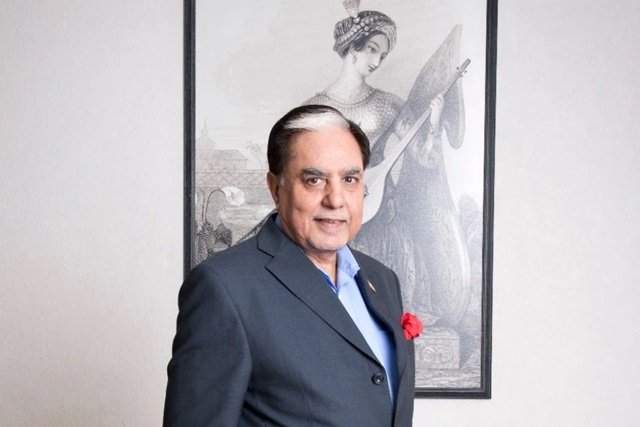
India’s insolvency tribunal has granted Essel Group chair Subhash Chandra a major reprieve, allowing him to settle claims arising from personal guarantees on his group’s borrowings for just Rs65mn ($683,000), representing a 99.9 per cent reduction from the Rs220bn that his companies have defaulted on.
The decision has renewed scrutiny of India’s personal guarantee framework, which is intended to give lenders recourse beyond the borrowing company. In this case, however, the tribunal concluded that creditors would recover even less if bankruptcy proceedings were pursued against Chandra.
Ten banks and lenders supported the settlement proposal. Several dissenting lenders, including HDFC Bank, LIC Housing Finance and Canara Bank, opposed it because of the limited recovery available to them, but together they represented less than 20 per cent of the vote share.
The dissenting lenders have also called for further investigation into Chandra’s declared net worth. Certified figures put his net worth at Rs406bn in 2018 and Rs459bn in 2017, figures that formed the basis for the guarantees extended to lenders. By 2024, however, the declared figure had fallen to Rs320mn.
In its order, the tribunal said Chandra’s estate “comprises very few assets with negligible value”. Some dissenting lenders are challenging the decision, with a higher tribunal due to hear an urgent appeal today.
The ruling concerns a businessman whose fortunes once placed him among India’s most influential corporate figures. Chandra built interests spanning India’s largest listed TV network, packaging, infrastructure and direct-to-home television, and also served as an independent member of the Rajya Sabha, the upper house of India’s parliament, backed by Prime Minister Narendra Modi’s Bharatiya Janata Party.
His business empire began to unravel after the 2018 marketwide liquidity crisis, which followed the collapse of infrastructure lender IL&FS. The crisis left his highly leveraged group struggling to raise additional funds.
Much of Essel’s debt was secured against pledged shares. As share prices fell sharply, margin calls triggered further liquidation at depressed prices, deepening the financial pressure on the group. Some companies were eventually sold, while others entered insolvency proceedings.
The tribunal’s decision has also opened an unusually public dispute involving some of India’s most prominent business interests. Chandra released two videos accusing Network18, a media group owned by Mukesh Ambani’s Reliance Industries, of misrepresenting the scale of claims against him.
Chandra puts the personal guarantee claims at Rs39.9bn rather than the headline Rs220bn, arguing that the larger figure relates to claims against the underlying corporate borrowers rather than directly against him.
In a second video, Chandra also accused Ambani of attempting to acquire his media enterprise Zee on terms that he said were favourable to his family but not minority shareholders. According to Chandra, the offer was rejected on those grounds.
Reliance Industries denied the allegations in a statement to stock exchanges, saying it “noted with dismay the baseless remarks”. It also said its media brands “have never been used to attack anyone, nor will they ever”.
Such public disputes are unusual among India’s major business houses, which generally have powerful commercial interests and reputations to protect. Beyond the personal and corporate confrontation, however, the case raises a broader question over whether personal guarantees provide lenders with the level of protection they are intended to offer.
The immediate outcome will depend partly on the higher tribunal’s consideration of the dissenting lenders’ appeal. Whatever its final result, the case has exposed the tensions between creditor recovery, insolvency law and the protection of guarantors when the fortunes of heavily indebted business groups collapse.