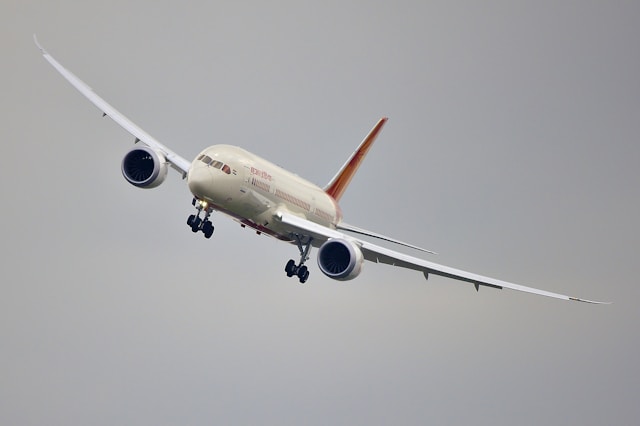
Air India has terminated the employment of the pilot-in-command of an Airbus A320 flight involved in a sudden altitude loss after the Aircraft Accident Investigation Bureau (AAIB) flagged and confirmed a positive test for a psychoactive substance.
The airline announced the termination on Friday evening, shortly after the AAIB released its preliminary report into the August 4 incident involving Air India aircraft VT-EXO, which was operating from Phuket to Delhi.
“Safety remains Air India’s highest priority. The Pilot-in-Command of the Phuket-Delhi flight tested positive for a psychoactive substance. In line with Air India’s zero-tolerance approach to violation of safety, fitness or regulatory requirements, the pilot’s employment has been terminated with immediate effect,” an Air India spokesperson said.
According to sources, the pilot tested positive for marijuana. Neither Air India nor the AAIB identified the pilot, who was 34 years old and had more than 5,000 hours of flying experience, all on the A320 aircraft type.
The AAIB’s preliminary report did not establish a definitive likely cause of the incident and did not state whether the pilot’s alleged drug use was directly connected to the aircraft’s sudden altitude loss. However, it highlighted both a brief triple hydraulic system failure and the pilot’s positive confirmatory drug test as significant aspects of the ongoing investigation.
The report said the pilot had been found “non-negative for psycho-active substance” in a confirmatory test and described the confirmation of psychoactive substance use as a serious concern. It recommended that the Directorate General of Civil Aviation (DGCA) take appropriate action as a priority to prevent the abuse of psychoactive substances.
The investigation is continuing, with technical and other aspects still under examination. Airbus and France’s aircraft accident investigation body, BEA, are assisting the AAIB investigation. A central question for investigators is whether the aircraft’s three hydraulic systems genuinely failed and, if so, what caused the rare simultaneous failure, or whether the indications resulted from spurious signals.
The incident occurred while the aircraft was cruising at 36,000 feet over Odisha at 09:32:43 am India time. The flight control system detected the loss of the green hydraulic system, followed about four seconds later by the loss of the blue and yellow systems. The autopilot then disengaged and a stall warning was triggered for two seconds.
The co-pilot, who was the Pilot Flying, initially responded to the situation before the pilot-in-command took control. During the event, the aircraft gained 372 feet and subsequently fell 292 feet from its assigned flight level of 360.
The hydraulic systems began recovering within seconds. At around 04:02:52 UTC, equivalent to 09:32:52 India time, the blue system recovered, followed shortly by the yellow and green systems. The flight control surfaces consequently recovered and the aircraft returned to normal operation.
The aircraft was carrying 137 passengers, six cabin crew members and two pilots. The sudden altitude change resulted in injuries to 20 passengers and four cabin crew members. The aircraft cabin also sustained damage, including to ceiling panels, overhead bins and handrails.
Because the seatbelt signs were off when the incident occurred, several passengers and cabin crew members were injured. The flight crew assessed the cabin and decided to continue to Delhi rather than divert to the nearest en-route airport. The crew later requested medical priority from Delhi air traffic control, which provided assistance. The aircraft landed safely at Delhi’s Indira Gandhi International Airport at 05:30 UTC.
Investigators are examining a series of snags involving the aircraft’s hydraulic systems and flight control surfaces. Hydraulic components and samples from VT-EXO have been collected for further analysis after an inspection by Airbus technical experts. The AAIB has also obtained the aircraft’s maintenance records, digital flight data recorder and cockpit voice recorder data, along with other evidence from Air India, airport authorities and air traffic control.
The case has also intensified scrutiny of drug testing among pilots. The DGCA is consulting stakeholders on expanding random testing, with Civil Aviation Minister K Rammohan Naidu saying the Ministry of Civil Aviation has proposed annual random drug testing for all pilots, compared with the current requirement under which 10% of pilots are tested each year.
Air India said it had begun voluntary testing of 100% of its pilots following the incident. The airline said its pilots undergo rigorous training, proficiency checks, medical examinations and other regulatory assessments, and reiterated that it maintains zero tolerance for breaches of safety, fitness or regulatory requirements.
The AAIB has yet to determine the underlying cause of the hydraulic failure. Its final report is expected to provide further clarity on the technical circumstances of the incident and the evidence examined during the investigation.