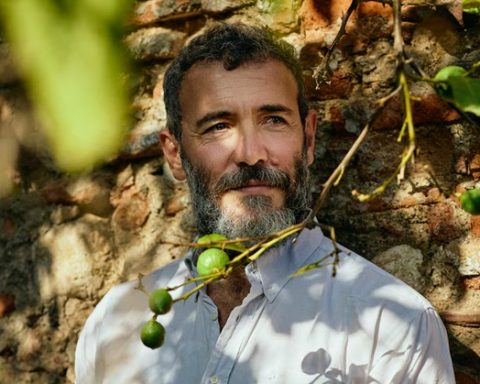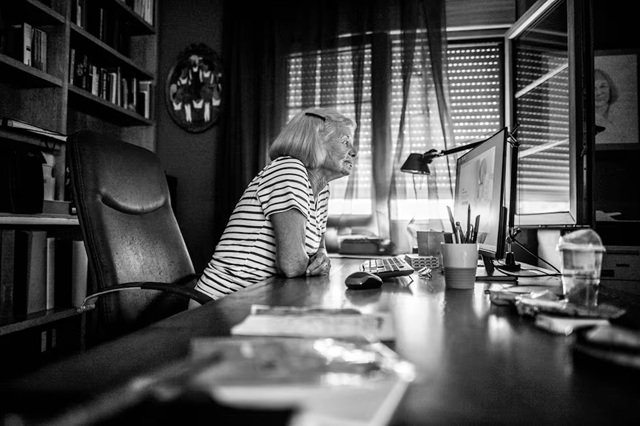
Thirty years after Alicia Giménez Bartlett created Petra Delicado, the Spanish author is marking the anniversary with Bajo el cielo infernal, the thirteenth novel in the detective series and a story that places its protagonist in the aftermath of profound personal grief.
Published by Destino, the novel returns to many of the elements that have defined the series since its debut in 1996 with Ritos de muerte: an unconventional female police inspector, difficult investigations, sharp dialogue, humour and an insistence that crime fiction can also aspire to literary quality.
In an interview published by El País, Giménez Bartlett, 75, reflects on the character who has accompanied her for three decades. Petra Delicado is combative, sarcastic, argumentative and troublesome, but in the new novel she is also mourning the death of the man she loved. The connection between author and character is particularly close in this book. Giménez Bartlett lost her second husband, Carlos, three years ago after four decades together, and the experience of grief enters the novel through Petra’s response to the death of Marcos, her third husband.
“I am still angry, and that shows how insensitive and brutal I am,” Giménez Bartlett tells El País. She describes the anger that followed her husband’s death, including the distress of watching someone realise that he was dying. “He did not deserve it,” she says. Although she acknowledges that dying from cancer at the age of 73 is not, in itself, an injustice, she says the experience provoked the same response that has accompanied her throughout her life: rebellion and opposition.
That instinct for resistance dates back to her childhood. The daughter of a railway worker persecuted under Franco, Giménez Bartlett says writing has always been central to her existence. “I have always written. Writing is a way of living without which my mental balance would suffer considerably,” she says. When asked at school what she wanted to become, she remembers answering simply: “A writer.” She says she never considered another possibility.
Her path towards crime fiction was initially influenced by Virginia Woolf. After studying English Philology and spending years working on Woolf’s writing, Giménez Bartlett came across a passage in which the British author suggested that a book could be written about the relationship between herself and her servant. Giménez Bartlett developed the idea into Una habitación ajena, which won the Premio Femenino Lumen in 1997.
The academic demands of that project eventually made her want to write something less restrictive. “And I said, well, I am going to do something that entertains me. And why not a crime novel? It was as simple as that,” she recalls.
Her decision to make a woman the central police protagonist was deliberate. Giménez Bartlett had grown tired of seeing female characters in crime fiction restricted to the roles of assistants, victims or police officers’ wives. Creating a woman investigator appealed to her, although she says she never imagined the series would become successful.
Petra Delicado subsequently became an important female figure in Spanish-language crime fiction and, according to the source, the first female police inspector in European crime fiction. The series eventually developed an international readership, beginning in Germany, where Giménez Bartlett was amused to discover readers responding enthusiastically to Petra’s jokes. Italy later became a particularly important market through her relationship with the publisher Sellerio.
The author has also received major literary and crime-fiction awards, including the Nadal Prize in 2011, the Planeta Prize in 2015, the Pepe Carvalho Award from BCNegra in 2015 and Italy’s Raymond Chandler Award in 2008.
Petra’s long partnership with Fermín Garzón remains central to the series. A traditional but fundamentally decent police officer from Salamanca, Garzón accompanies Delicado through investigations that frequently unfold in Barcelona, a city that has changed alongside the novels. Their cases bring danger, frustration and arguments, but also humour and the refuge of the Jarra de Oro bar.
Giménez Bartlett says her dialogue is shaped by her habit of listening rather than observing. “I am more auditory than visual,” she says. “Have you ever seen a description in one of my novels? Faces slip away from me, whereas the voices of people I have spoken to stay with me.”
She is equally direct about the crime-fiction market. Giménez Bartlett rejects the idea that the genre is inferior literature but criticises what she considers a decline in standards. “A lot of rubbish is being written,” she says, arguing that crime fiction must be carefully constructed. She is also critical of excessive violence and graphic descriptions of torture. “A murder is fine. But why torture a victim?”
Her own novels, she argues, inevitably contain social criticism through their language, settings and characters. She is more cautious about describing Petra as a feminist. “I think these are novels starring a woman with courage. No more and no less. If that is feminist, then they are feminist,” she says.
Her interest in women working in policing was strengthened by her friendship with Margarita, a retired police commissioner who became an important source for understanding a professional environment that had previously been unfamiliar to her.
Despite the closeness between writer and detective, Giménez Bartlett insists that they are not the same. “Petra and I have one basic difference. I would never have been a police officer,” she says, explaining that she does not consider herself brave enough to confront reality in the way police work requires. Petra, by contrast, remains deeply committed to her investigations and refuses to leave unresolved questions behind.
That determination drives Bajo el cielo infernal, in which Petra investigates the murder of a Jesuit while the Catholic Church uses its influence to obstruct the inquiry. Her response is not withdrawal but renewed determination.
Humour remains another means of preventing the darkness of crime from becoming absolute. “I impose this on myself. Do not destroy them. Give them a way out, even if you have shown them hell,” Giménez Bartlett says of her readers and characters.
The author has continued to write beyond Petra Delicado, including La presidenta, published by Alfaguara five years ago. For now, however, she says she cannot return to that kind of story because the emotional circumstances that enabled her to write it have changed. Her joking alternative is a convent, which she describes as a surprisingly attractive form of retirement.
For an author who has spent three decades refusing to make her detective conform to established formulas, Bajo el cielo infernal marks another stage in the relationship between writer and character, with Petra Delicado still at the centre of Giménez Bartlett’s literary life.