Pakistan’s strikes inside Afghanistan are the latest stage of a conflict that diplomacy failed to contain. Before resorting to force, Islamabad spent years pursuing religious mediation, tribal engagement, ministerial talks, trade incentives and third-party diplomacy aimed at stopping attacks from Afghan territory.
When the Taliban returned to power in August 2021, Pakistan kept its embassy in Kabul open while many foreign missions evacuated. Islamabad says it helped facilitate the evacuation of more than 90,000 diplomats, international personnel and others while urging continued international engagement with Afghanistan.
Pakistan initially treated the Taliban’s return as an opportunity for stability rather than confrontation.
What followed was a prolonged diplomatic effort to address the threat from Tehrik-e-Taliban Pakistan.
Diplomacy Before Deterrence
In July 2022, an eight-member delegation of religious scholars led by Mufti Taqi Usmani travelled to Kabul. A 17-member tribal jirga followed. In February 2023, Defence Minister Khawaja Asif and intelligence chief Lieutenant General Nadeem Anjum led another senior mission focused on security.
The cumulative record is substantial.
Pakistani officials say engagement eventually included four foreign-minister visits, two missions involving the defence minister and intelligence leadership, five special-representative visits, five secretary-level meetings, eight Joint Coordination Committee sessions, 225 border flag meetings, 836 protest notes and 13 formal demarches. These are Pakistani government figures, but they illustrate the scale of Islamabad’s effort to keep dialogue alive.
The relationship was not limited to security demands. Islamabad also pursued trade and economic incentives, including tariff concessions under the Early Harvest Programme.
Even after serious clashes in October 2025, Pakistan accepted mediation by Qatar and Turkiye. Doha and Istanbul hosted follow-up negotiations aimed at containing cross-border violence.
When those efforts faltered, China again brought the two sides together in Urumqi in 2026.
Pakistan’s central demand remained consistent: Kabul should prevent terrorist organizations from using Afghan territory, dismantle their infrastructure and provide verifiable evidence of action.
Yet the security problem continued to grow.
United Nations reporting has repeatedly identified Tehrik-e-Taliban Pakistan as a major terrorist presence in Afghanistan and described its relationship with the Taliban authorities as increasingly permissive. Islamabad argues that this environment has enabled cross-border attacks.
Pakistan has also tried to demonstrate a human connection between Afghan territory and terrorist activity inside Pakistan.
In January 2025, Pakistani forces killed Badruddin, also known as Yusuf, during an operation in Kulachi, Dera Ismail Khan. Pakistani reporting identified him as the son of the Taliban-appointed deputy governor of Afghanistan’s Badghis province and said he was affiliated with the Pakistani Taliban.
Pakistani security reporting has gone further, claiming that authorities have identified around 260 Afghan nationals killed while participating in terrorist activity inside Pakistan. Officials also claim that Afghan nationals constitute a large proportion of some infiltration groups. These figures come largely from Pakistani government and security sources and require independent scrutiny, but they form an important part of Islamabad’s case.
When Diplomacy Gives Way to Force
September 2026 marked another turning point.
On September 18, terrorists attacked the Old Police Lines complex in Kohat, detonating explosives near a mosque before storming the compound. At least 21 people were killed and more than 100 wounded.
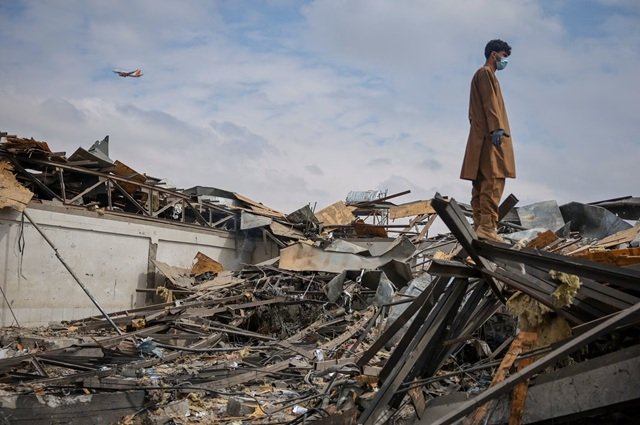
Three days later, Pakistan struck targets inside Afghanistan. Islamabad said it had hit terrorist training facilities and killed more than 28 terrorists. Afghan authorities disputed that account and reported civilian casualties.
The confrontation escalated again after Pakistani security sources said eight drones entered Pakistani airspace from Afghanistan near Kohat and Torkham on September 23. Pakistan said it intercepted them. The Taliban denied responsibility.
On September 24, Pakistan struck 10 locations inside Afghanistan that it said had been used to launch or store the drones. Islamabad described the action as deliberate and limited to identified targets. Kabul again reported civilian casualties.
The competing accounts underline the danger of the current trajectory.
Pakistan argues that repeated terrorist attacks, Afghan-based sanctuaries and failed diplomatic assurances have left it with diminishing alternatives. It increasingly frames cross-border strikes as an exercise of self-defence against identifiable threats.
The Taliban rejects Pakistan’s central premise. Kabul denies sheltering terrorists responsible for attacks in Pakistan and accuses Islamabad of violating Afghan sovereignty.
Pakistan cannot indefinitely absorb terrorist attacks while relying on assurances that produce no verifiable change. But cross-border force also carries serious risks, including civilian deaths, retaliation and a cycle of escalation that makes diplomacy harder.
The way forward therefore requires more than ceasefire announcements.
Pakistan needs verifiable mechanisms for dismantling terrorist infrastructure, investigating cross-border attacks and monitoring commitments. Third-party involvement by China, Qatar, Türkiye or other regional states could provide credibility that bilateral assurances have failed to generate.
The Taliban, meanwhile, must recognize that denying the problem cannot substitute for preventing Afghan territory from being used against a neighbour.
Pakistan did not arrive at its present policy overnight. It kept its embassy open, pursued religious and tribal mediation, sent repeated senior delegations, expanded trade, accepted third-party mediation and lodged hundreds of formal protests.
What changed was not Pakistan’s stated preference for diplomacy. It was Islamabad’s assessment that diplomacy without verification had stopped deterring the threat.
The danger now is that both sides enter a cycle in which terrorism triggers strikes, strikes trigger retaliation and each round makes diplomacy harder.
Pakistan’s core demand remains simple: Afghan territory must not serve as a launchpad for terrorism against Pakistan.
But for that principle to produce lasting security, self-defence must ultimately lead back to enforceable diplomacy-not become a substitute for it.