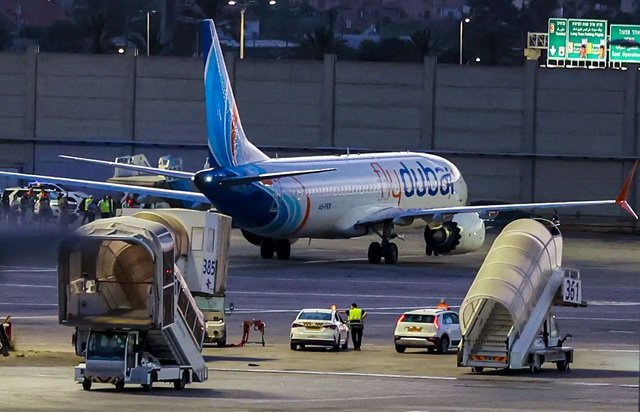
The Flydubai co-pilot accused of trying to hijack a flight to Tel Aviv had spent years expressing misogynistic views online, engaging with the so-called “manosphere” and, according to people familiar with the investigation, accessing extremist Islamist material while studying in Australia.
The Financial Times reviewed more than 3,000 posts written by Hamam al-Hammami on Twitter between November 2021 and October 2022. Although his account has since been deleted, the posts remain available through an internet archive. The material provides an unusually detailed record of the online views of the Omani-Syrian aviator, whose private history has otherwise been difficult to establish.
Hammami’s posts ranged from discussions of fitness, nutrition and aviation to angry exchanges with other users. He described flying as the “safest means of transportation” and frequently posted dozens of times a day. Alongside conservative interpretations of Islam, however, his online activity included language associated with the “manosphere”, a misogynistic online movement that attacks feminism and promotes rigid gender roles. He also wrote that he did not listen to music.
It remains unknown when or how Hammami was radicalised. Emirati investigators are examining whether he acted alone when, on September 30, he used an emergency axe to attack the pilot and attempted to take control of the aircraft. The United Arab Emirates has described the incident as a terrorist act. Israeli investigators, according to people briefed on the matter, are convinced that Hammami was a lone actor.
That conclusion has not ended criticism in Israel over alleged security failures. Media reports have said Hammami had previously been identified by his former employer, Oman Air, as having radical views and had been moved to a desk position. Oman Air did not respond to a request for comment on his employment. Emirati authorities have also maintained tight control over information obtained during their interrogation of Hammami, according to diplomats.
The details reviewed by the Financial Times show a young man whose life had crossed several countries and educational systems before he returned to the Middle East. Hammami said on Twitter that his Omani father married his Syrian mother, who belonged to the Shamar tribe of southern Syria, in 1993. He wrote that his mother had “raised us on religion, morals, and virtue”. Media reports say he grew up partly in the United Arab Emirates before moving to Syria in 2011. A person familiar with the matter said he lived there for four years as the country descended into civil war, a conflict that produced and sustained numerous Islamist militant groups.
Hammami later travelled to Australia, where he studied aviation from 2015 to 2017 and said he had lived with two local families, although he did not graduate. In 2018 and 2019, he spent six months studying at a flying school in New Zealand. New Zealand officials said the school was subsequently taken over by a British company. Hammami also completed an online course with a British university without entering Britain. One of his posts said his five years in the West had been the “golden years of my religious commitment”, although he said his religious observance weakened after his return to the Middle East.
Investigators examining his private online search history found that he had accessed extremist Islamist content while living in Australia, according to two people familiar with the investigation. The Financial Times matched information contained in his Twitter posts with biographical details and his now-deleted LinkedIn profile.
Instead of completing his pilot qualifications abroad, Hammami returned to Oman and joined the state-owned Oman Air, a decision he later described online as the “best decision I ever made”. Around 2019, he also became involved in spot trading and cryptocurrency speculation. He later described the decision as a temptation by “the devil” and said he had lost “120,000”. He did not identify the currency; if the figure referred to Omani rials, the loss would have exceeded $300,000.
By 2022, when he was 25, Hammami was living with his lawyer father and homemaker mother in an affluent area of Muscat. He wrote that he would not consider leaving his family home while unmarried. His Twitter activity also showed an intense preoccupation with marriage. “I’m 25 and I want to get married today, before tomorrow!” he wrote in January 2022.
He specified that he wanted an 18- to 23-year-old religious Saudi woman from a tribal background who would wear a niqab, not work outside the home and agree to live abroad. After failing to find a wife through an online Muslim matchmaking platform, he became increasingly hostile towards women, claiming that most “care primarily about money” and were “skilled at pretence”.
His posts repeatedly used sexual insults and referred approvingly to violence against women. In one post he wrote, “Her only obligation is to lift her legs”. In another, discussing a woman seeking a divorce following a dispute over photographs posted online, he said that “she needs a good thrashing”. He also repeatedly used manosphere terminology such as “simp” and “Alpha”, while interacting with accounts promoting similar sexist ideas.
Yet his posts also contained claims that he had never had a sexual relationship with a woman. “I have never touched a girl in my life,” he wrote in January 2022, adding that he had received many opportunities but that “God has protected us from temptations”. He said he would not “chase after cheap, rotten flesh”.
How those views developed into the actions alleged aboard the Flydubai flight remains under investigation.