On November 11, 2026, two women were killed and two men injured in a shooting inside a house in the Damqol area of Maimana, the provincial capital of Faryab Province.
A day earlier, on November 10, 2026, a 33-year-old woman, Afsana, a mother of five who had returned from Iran about a year earlier, was killed and beheaded by unidentified persons at Noda village in the Farah District of Farah Province.
On September 16, 2026, a 20-year-old woman was found dead with apparent signs of torture and beatings in Pul-i-Alam, the provincial capital of Logar Province.
On September 21, 2026, four members of a family, including three women, were killed by gunmen in Babarkhwaja village of the Tagab District in Kapisa Province.
On May 7, 2026, Leilma, an Ismaili woman and wife of local singer Salam Maftoon, was shot dead with a hunting rifle at Ishkashim Bazaar in the Ishkashim District of Badakhshan Province. She operated a tailoring workshop in a women’s market established by the Aga Khan Foundation. Maftoon had previously been detained by the Taliban and was subsequently released following mediation by local elders.
On April 28, 2026, a woman, Badriya, a resident of Badakhshan Province, was shot dead on her way to a Taliban court in the Khair Khana area of Kabul.
On March 14, 2026, Adolat Hamidi, a citizen from Kulob in Tajikistan, who had provided maternity and healthcare services to women in the Imam Sahib District of Kunduz Province for years, was killed by unidentified assailants.
These incidents, whose perpetrators and motives remain unclear, underline the continuing vulnerability of Afghan women to lethal violence amid the collapse of institutional protections and the progressive erosion of their rights under Taliban rule in Afghanistan.
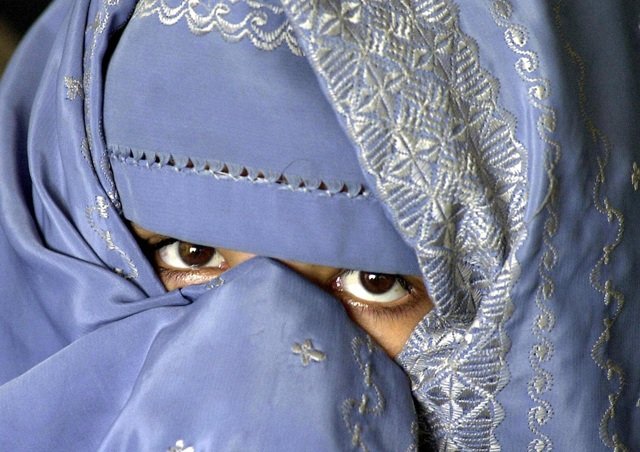
The violence is accompanied by systematic restrictions on women’s movement and public participation. On October 15, 2026, the United Nations Assistance Mission in Afghanistan (UNAMA) reported that Taliban inspectors had detained or threatened more than 50 women over hijab regulations between July and September 2026. A separate UNAMA account documented at least 443 cases of arbitrary detention and 97 cases of mistreatment of women and men by officials of the Taliban’s Ministry for the Propagation of Virtue and the Prevention of Vice (MPVPV) during the same quarter. The detentions were primarily linked to alleged violations of dress requirements for women and restrictions on men’s appearance. UNAMA said that women were detained for wearing colourful scarves, showing their hair, using makeup, not wearing a chador, or appearing in public without a male guardian (mahram). Many were released after several hours, but the arrests and threats reinforce the atmosphere of intimidation surrounding women’s everyday activities.
The enforcement campaign has repeatedly triggered public resistance. On June 9, 2026, Taliban forces opened fire on protesters in Herat City after residents demonstrated against the detention of women and girls over dress-code violations. At least two people, including a woman and a child, were killed and several others were wounded. The protest began in Jebrail township, a predominantly Hazara area, and spread as demonstrators demanded the release of detained women. Taliban forces fired near the Bahar-e Zendagi intersection to disperse the gathering. Further detentions in Herat continued during June and August, including women taken away in vehicles to undisclosed locations. In January 2026, the morality police reportedly intensified arrests across crowded areas of Herat, detaining women for wearing mantos (a traditional long flowing tunic) or other clothing considered inappropriate by Taliban authorities. Residents also reported a woman being beaten for wearing a manto.
The restrictions have increasingly been institutionalised through Taliban regulations and judicial measures. The Taliban’s Criminal Procedure Code for Courts has been criticised by Amnesty International for legitimising violence against women and imposing punitive restrictions on their autonomy. The organisation highlighted provisions permitting the beating of women and penalising those who regularly visit relatives without their husbands’ permission. Decree No. 18, concerning judicial separation of spouses, has similarly drawn concern from UNAMA, which warned in May 2026 that it further entrenches discrimination and weakens women’s access to justice. The decree, approved by Taliban leader Hibatullah Akhundzada, forms part of a broader trajectory in which women’s autonomy, opportunities and legal protections are being progressively diminished.
The expanding use of corporal punishment has become another defining feature of Taliban rule. On March 9, 2026, Afghanistan International reported that Taliban authorities had publicly flogged more than 2,000 people, including 291 women, since 2024. Official figures cited in the report recorded 567 people flogged in 2024, including 78 women; 1,110 in 2025, including 170 women; and 332 during the first two months of 2026, including 34 women. Women are principally punished for alleged extramarital relations or leaving home without permission. The Taliban Supreme Court announcements throughout 2026 documented women receiving lashes and prison sentences for alleged illicit relations, “running away from home” and other offences. In August, 2026, the Afghanistan Human Rights and Democracy Organization reported that 2,745 people had been flogged over four years, including through 634 public flogging incidents. These punishments are imposed without the safeguards of an independent judicial system and are frequently accompanied by imprisonment.
The expansion of women’s imprisonment offers another indication of the growing punitive environment. On January 28, 2026, Afghanistan International reported, citing Taliban Interior Ministry figures, that the number of women prisoners had reached 1,825, a 435 per cent increase, with women held in 34 prisons. Women accounted for 7.5 per cent of Afghanistan’s total prison population of 24,446. Kabul held 469 women, followed by Herat with 294 and Balkh with 141. The number of women prisoners had reportedly risen 18.7 per cent from the preceding year. By comparison, World Prison Brief data indicated that the number of women prisoners during the republic period, from 2001 to 2021, never exceeded 1,000; the figure stood at 840 in 2021. Although the figures do not establish the circumstances of every imprisonment, the increase is significant amid the criminalisation of women’s movement, conduct and relationships.
Sexual violence in Taliban custody has also emerged as a particularly grave dimension of repression. A February 2025 investigative report by Afghanistan International research unit, based on interviews with nearly 20 survivors, documented allegations of sexual assault, rape and sexual harassment by Taliban members during detention. Of the 10 women who agreed to have their testimonies published, eight reported rape, while two described being photographed naked during interrogations. The survivors included healthcare workers, former public servants, students, women’s rights activists and a model, many of whom believed they had been targeted for their participation in public life. Several described threats by Taliban personnel to release recordings of sexual abuse to discredit and intimidate them. The report also highlighted the social stigma, family rejection and psychological trauma experienced by survivors, alongside the absence of independent judicial mechanisms through which they could seek justice or accountability.
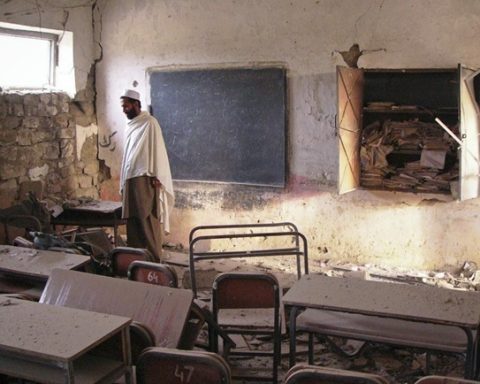
Restrictions on education remain among the most consequential instruments of exclusion. September 2026 marked five years since Afghan girls were barred from secondary education following the Taliban takeover. Millions continue to be denied access to education beyond grade six, while women have also been excluded from universities and numerous professional training programmes. The United Nations has repeatedly warned that the exclusion of girls from education damages Afghanistan’s future and deprives an entire generation of opportunities. The restrictions are not confined to classrooms: in May 2026, Taliban authorities reportedly refused to verify women’s academic documents for international institutions, further obstructing their educational and professional prospects.
Employment restrictions have similarly deepened women’s economic dependence. Taliban authorities have barred Afghan women from working for the United Nations and restricted their participation in humanitarian activities, undermining aid delivery to women and girls. September 2026 marked one year since Afghan female UN employees were prevented from entering UN offices and facilities across the country. UN Secretary-General António Guterres called for the restrictions to be lifted, warning that they undermine humanitarian operations and violate international law. Restrictions also extend to public-sector employment. Female employees of Afghanistan’s Ministry of Finance reportedly stated in January 2026, that payments of 5,000 Afghanis provided after restrictions on their work were to be discontinued, threatening the livelihoods of women who were often their families’ sole breadwinners.
Women’s exclusion extends across healthcare, sports, media and public life. The UN Special Rapporteur on Afghanistan, Richard Bennett, reported in February 2026 that Taliban restrictions and structural barriers were preventing women and girls from accessing healthcare and from making independent decisions about their bodies and health. Women have also been barred from sports, forcing female athletes to leave Afghanistan to continue their careers. Restrictions on female journalists and women-focused media have further narrowed public space. In June 2026, a female journalist and her male colleague were detained in Kabul for covering Ashura ceremonies; they were released later the same day after mediation. The Afghanistan Journalists Centre reported in February 2026 that women-focused radio stations had faced threats and closures, while journalists were detained for publishing images of women or reporting in ways deemed unacceptable by Taliban authorities.
Independent documentation suggests that violence and repression are not isolated incidents. Afghanistan Women’s Rights Watch, in cooperation with the Türkiye-based ARSA Association, documented 411 cases of rights violations against women and girls in 2025. Its report recorded around 300 cases of direct violence attributed to the Taliban, at least 76 intentional killings of women and girls, more than 30 cases of suicide and self-immolation, and three cases of sexual violence in Taliban detention facilities. The organisation acknowledged that the figures represented documented cases rather than the full scale of violations.
On March 3, 2026, Afghanistan ranked last among 181 countries in the latest global Women, Peace and Security Index among 181 countries in the Index, according to the Georgetown Institute for Women, Peace and Security. The Index, assessing women’s inclusion, justice and security across 13 indicators, placed Afghanistan 181st, underscoring the country’s worsening conditions for women.
International scrutiny has intensified, though it has yet to reverse any of the restrictions. On October 5, 2026, the International Criminal Court (ICC) made public arrest warrants for Taliban leader Hibatullah Akhundzada and chief justice Abdul Hakim Haqqani, along with officials Agha and Nadim, over alleged crimes against humanity, including gender persecution. The warrants concern policies that allegedly deprived women and girls of fundamental rights and freedoms. ICC’s action followed a referral submitted by six states in November 2024 and the prosecutor’s request for warrants in July 2025. The proceedings mark an important development in efforts to establish individual criminal responsibility for systematic discrimination against women and girls.
On October 5, 2026, The United Nations Human Rights Council (UNHRC) urged the Taliban to repeal policies violating women’s and girls’ fundamental rights, describing the repression as severe, widespread and systematic. In September 2026, France, on behalf of 43 countries, called for the immediate removal of restrictions on education, healthcare and employment. Representatives of 40 countries at the UN Security Council also condemned the Taliban’s restrictive policies in March 2026. Amnesty International, UN Women, UNAMA and the Special Rapporteur have consistently called for an end to discrimination and the restoration of women’s rights. Yet Taliban authorities have continued to enforce restrictions, while international engagement has increasingly faced the challenge of balancing humanitarian access with accountability.
Afghanistan’s women are confronting a system in which violence, arbitrary detention, corporal punishment and exclusion from public life reinforce one another. The latest killings cannot automatically be attributed to Taliban policy, and the available evidence does not establish a common perpetrator or motive in every case. However, the institutional restrictions documented by UN agencies and human rights organisations have created conditions in which women’s autonomy, protection and access to justice are severely diminished. The combination of enforced dress codes, criminalisation of movement, denial of education and employment, and punitive judicial practices constitute a sustained assault on women’s fundamental rights. Without the restoration of legal safeguards, independent accountability and meaningful access to public life, Afghanistan’s women and girls will remain exposed to entrenched discrimination, persecution, systemic violence and a deepening crisis of rights.