The United Nations General Assembly proclaimed 3 December as the annual observance of the International Day of Persons with Disabilities through a resolution adopted in 1992.
Men and women with different types of disabilities live in all parts of the world, and most countries observe this day, dedicating it to the welfare of these people. This day provides an opportunity to highlight the plight of persons with disabilities and create awareness among people around the world. It is true that, in view of such efforts, several steps have been initiated to understand and find remedies for the problems faced by persons with disabilities in their daily lives. It is also an undeniable fact that the overall distressing conditions faced by persons with disabilities are now reducing in intensity to some extent due to technological advances and proactive government measures.
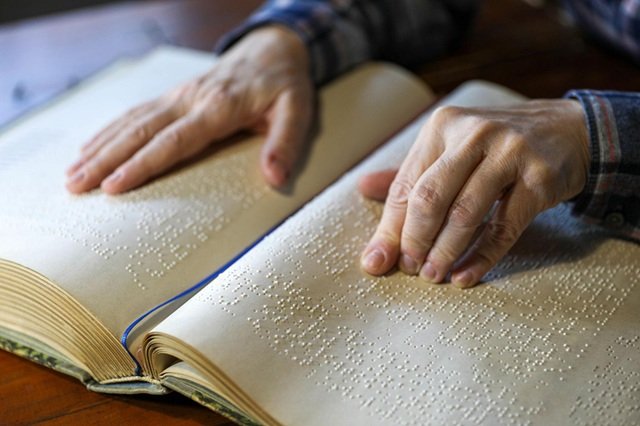
Disabilities affecting people include visual impairment, physical disabilities, hearing and speech impairments, mental illnesses and learning difficulties. While the problems faced by persons with disabilities are severe, they are particularly acute in the case of visually impaired women and have reached an unacceptable level that a civilised society should strive to eliminate as early as possible. Visually impaired people feel distressed that God has made them this way.
Among visually impaired persons, a few are born blind, while others become blind during their lifetime due to physical ailments and an inability to afford proper medical treatment at the appropriate time. Whatever the reason, the stressful mental conditions faced by visually impaired people, particularly women, make them lead lives filled with frustration and mental agony, as they are unable to lead normal lives like others.
It is seen that most persons with disabilities belong either to the lower-income group or to a group marginally above that level. Since their parents and family members face economic difficulties, they are unable to help visually impaired persons or address their problems in any significant way. While this is an issue for all visually impaired persons, visually impaired women are the worst affected under such difficult circumstances.
A few visually impaired persons, both men and women, manage to join educational institutions and obtain graduate or postgraduate qualifications. However, they find it extremely difficult to secure suitable jobs appropriate to their circumstances. While governments have reserved a certain percentage of positions to provide employment opportunities for visually impaired persons, on several occasions, this reserved quota is not fully utilised, as selection committees consider visually impaired persons unsuitable for the nature of the jobs for which they are being considered. While governments reserve a certain percentage of the overall employment quota for persons with disabilities for visually impaired persons, these positions also remain inadequately filled. Such reserved positions for visually impaired persons have to be shared between visually impaired men and women, and therefore, the number of jobs available to visually impaired women is reduced. Wherever jobs are offered, visually impaired men are preferred over visually impaired women.
As a result, several visually impaired women who have acquired the necessary qualifications fail to secure jobs in government institutions, public-sector organisations and educational institutions. In the case of the private sector, the less said, the better, since many private-sector organisations are reluctant to employ visually impaired women. Some have expressed the view that doing so could create problems due to security and safety concerns that may arise for visually impaired people in the workplace.
Facing economic distress, a lack of job opportunities and inadequate government welfare assistance, most visually impaired men and women resort to selling assorted items on moving trains, railway platforms and busy streets. They are often prevented by the police from engaging in such selling activities, particularly on moving trains and in busy, crowded streets. Such activities are particularly difficult for visually impaired women and considerably more challenging than for visually impaired men. During the monsoon and rainy days, selling is not possible for them.
Further, as reports of the molestation of women and incidents of rape involving even non-disabled women in different age groups frequently appear in the media, one can only imagine the plight of visually impaired women who are exposed to such hazards. Many times, they put up with these problems and suffer in silence because they feel afraid and ashamed and find it difficult to report such incidents to law enforcement authorities.
It is extremely rare for non-disabled men to agree to marry visually impaired women or come forward with marriage proposals, while visually impaired women readily agree to marry non-disabled men if they receive such proposals. In most cases, visually impaired men marry only visually impaired women. However, several instances have been reported in which such marriages between visually impaired couples have broken down due to economic difficulties and other reasons. When visually impaired women face such circumstances while having a few children to take care of, they become depressed and suffer beyond imagination. In many cases, it is seen that children born to visually impaired couples have normal vision. Being proud of their children, visually impaired couples do their utmost to provide them with a good education and ensure good living conditions to the extent of their financial means. However, it remains a moot question whether such children adequately care for their visually impaired parents in their old age.
Visually impaired women who have not married or have been deserted by their husbands and have children to support anxiously look forward to receiving support from society. They are often seen approaching people known to them, seeking assistance to save themselves from economic hardship and possible social difficulties.
Members of non-governmental organisations and discerning observers who interact with visually impaired women will readily agree that the problems mentioned above, faced by visually impaired women, are real and factual.
Who will support visually impaired women living under such sordid conditions if society does not respond to the issues they face by doing whatever it can to alleviate their distress? Certainly, the Government provides assistance through welfare funds and certain concessions. However, what the Government can do is limited, as it has commitments to several other governance-related issues.
In such circumstances, the gap must necessarily be filled by society and people with the financial means to help. Obviously, this is the objective of observing the International Day of Persons with Disabilities on 3 December every year. This day can particularly help make non-disabled people aware of these issues and awaken the conscience of society.
It is extremely important that whenever visually impaired women seek support, or non-governmental organisations providing assistance to them seek funds and other forms of help, members of the public should respond willingly, readily and convincingly, demonstrating a sense of social responsibility.