A failed CIA operation to overthrow Fidel Castro through a conspiracy among senior Cuban military and civilian officials was compromised by Cuba’s intelligence service, according to newly declassified documents published by the National Security Archive. The records detail Operation AMTRUNK, a clandestine programme launched in 1963 that sought to recruit disaffected members of the Cuban armed forces, organise an internal uprising and remove Castro and the Communists from power. After nearly three years of infiltrations, covert contacts and attempts to cultivate military conspirators, the CIA concluded that most of its recruited assets had been “controlled or monitored” by Cuba’s intelligence service, the DSE.
The release comes as the Trump administration intensifies pressure on Havana and signals renewed interest in encouraging divisions within the Cuban government. On November 12, President Donald Trump declared that “I want to get Cuba done before I leave [office].” Secretary of State Marco Rubio had openly urged Cubans, in an October post on X, to “form a discreet partnership with the CIA”. The Agency subsequently published a recruitment video explaining how potential sources could contact it securely. “We are anxious to work with you,” the 1 minute and 53 second guide concluded. The National Security Archive identifies these developments as closely resembling the strategy pursued under AMTRUNK more than six decades ago.
According to Peter Kornbluh, the Archive’s Cuba analyst, the current public appeal is intended to encourage distrust within the Cuban leadership and weaken its internal cohesion. “The CIA has dusted off its old playbook of trying to split the regime,” he said. “But the documented history of Operation AMTRUNK remains a cautionary tale of failure.”
AMTRUNK emerged in the aftermath of the Cuban Missile Crisis, when the Kennedy administration and the CIA continued to pursue Castro’s removal despite the US commitment not to invade Cuba following the Soviet withdrawal of nuclear missiles from the island. The settlement forced Washington to reconsider Operation Mongoose, which had sought to stimulate a popular uprising that could provide a pretext for direct American military intervention. CIA officials subsequently acknowledged that such an uprising was unlikely under the prevailing circumstances and that overt US military intervention was excluded from current policy.
In March 1963, Desmond Fitzgerald, head of the CIA’s Special Activities Staff, proposed an alternative strategy to Director of Central Intelligence John McCone. His plan combined economic pressure with clandestine efforts to identify and recruit dissatisfied military officers and civilian officials. Fitzgerald described it as a “pincers strategy”, combining “economic strangulation to weaken and undermine the regime” with efforts to establish communication channels with potentially dissident elements within its centres of power. The objective was to stimulate disaffection in the armed forces and create conditions for an internal coup.
The initiative, however, did not originate within the CIA. Its principal architect was Tad Szulc, the New York Times correspondent covering Cuba, who collaborated with US Information Agency officer George Volsky and Cuban exile Nestor Moreno. In early February 1963, the three prepared a six-page proposal called Operation Leonardo, advocating contact with members of the Cuban government, Rebel Army and militia to encourage an internal uprising against Castro. The document identified more than a dozen potential recruits within Cuba’s security apparatus.
Szulc presented the proposal to a special Cuba coordinating committee at the State Department on February 5, 1963. Officials referred him to the CIA, and a meeting followed the next evening at his Washington home. A classified CIA summary identified Szulc by the codename AMCAPE-1 and recorded his conviction that the Leonardo proposal offered the surest means of splitting the Cuban leadership. Three days later, senior CIA officials met Szulc and Volsky at a Washington safe house to examine the proposal. By April, the initiative had become Operation AMTRUNK, with the CIA’s Miami station, JMWAVE, responsible for operational planning.
The operation encountered serious objections almost immediately. Theodore Shackley, chief of the Miami station, recommended terminating it “at the earliest possible moment”, warning that its participants presented major security risks. He was particularly concerned about the involvement of Szulc and the New York Times, arguing that exposure could prove embarrassing for the CIA and implicate the State Department and USIA. The participants, Shackley noted, were openly anti-CIA and were cooperating with the Agency only because they had no alternative means of pursuing their objectives. Despite headquarters’ awareness that hostile Cuban elements might already know about the plan, the operation continued.
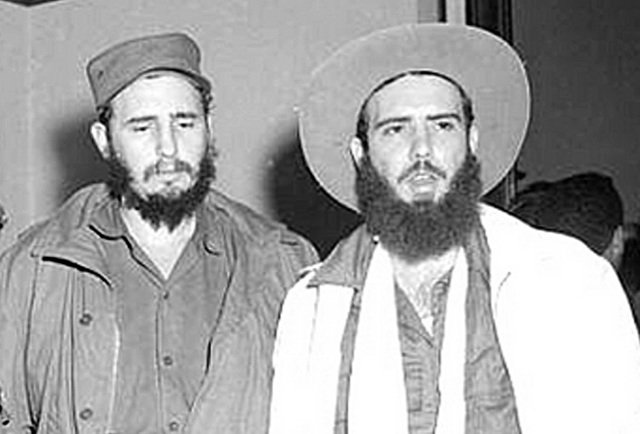
Fitzgerald placed particular importance on Major Rolando Cubela Sacades, a senior Cuban military officer recruited under the codename AMLASH. The CIA considered him central to the prospect of organising a military rebellion. During meetings in Brazil and Paris, American officers sought to persuade him to organise a coup or facilitate Castro’s assassination. At a meeting in Paris in October 1963, Fitzgerald, travelling under the alias James Clark and posing as an official close to Attorney General Robert Kennedy, assured Cubela that Washington was prepared to assist an anti-communist group capable of removing the Cuban leadership.
Cubela nevertheless acknowledged the difficulties of organising a coup. Although some military officers wanted Castro removed, he said, fear and the leader’s control over the government made such an operation extremely difficult. He subsequently indicated that assassination might offer a more practical route. On November 22, 1963, the day President John F. Kennedy was assassinated in Dallas, CIA operative Nestor Sanchez met Cubela in Paris and supplied him with a disguised BIC ballpoint pen containing a concealed hypodermic needle. The device became one of the Agency’s most notorious assassination instruments.
The CIA continued recruiting and infiltrating personnel into Cuba, planning more than 20 infiltration operations over three years. Some weapons reached Cubela and other assets in 1964, but suspicions about compromised agents intensified. By September 1965, an internal CIA chronology indicated that at least ten recruited assets should be regarded as controlled or monitored by Cuban intelligence. Cuban authorities detained Cubela and collaborator Ramon Tomas Guin Diaz, identified as AMTRUNK-10, in February 1966.
The operation continued briefly under the new codename STEAMER before the CIA cancelled its final planned infiltration on October 30, 1966, citing security problems. Subsequent CIA reviews in 1977 raised the possibility that the programme had itself been manipulated by Cuban intelligence, which may have used American financial and material assistance to identify and neutralise anti-Castro networks. One assessment suggested that the principals of the AMTRUNK network active during 1963 and 1964 had all been exposed.
Arturo Jimenez-Bacardi, director of the National Security Archive’s CIA history project, said the operation had ended like numerous other American covert programmes against Castro, without achieving regime change. He described Washington’s renewed reliance on the same strategy, now pursued without the secrecy that characterised AMTRUNK, as evidence of “hubris, recklessness, and a lack of imagination”.