by Our Correspondent in Colombo
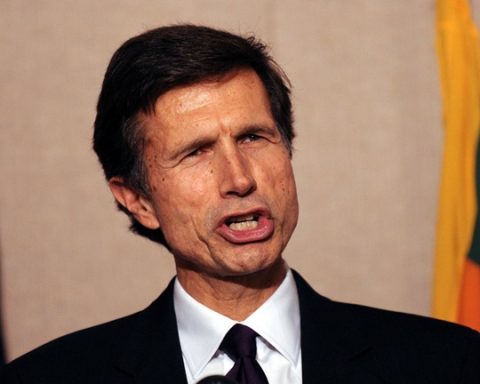
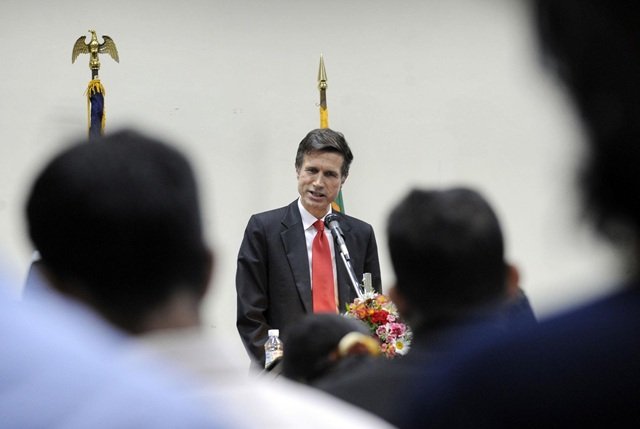
A change in the balance of power in the United States Congress could have consequences extending well beyond Washington, with Sri Lanka facing renewed pressure over trade policy, human rights and its longstanding relationship with the United States. Robert O. Blake Jr., a former US ambassador to Sri Lanka, has warned that the incoming Democratic majorities in the House of Representatives and Senate could alter the political environment in which the Trump administration conducts its foreign and trade policies, creating both opportunities and challenges for Colombo.
Speaking at a Pathfinder Foundation webinar titled “America Votes, South Asia Adjusts: Implications for Sri Lanka and the Region”, Blake argued that the next Congress would have several instruments at its disposal to influence the administration, particularly over the war involving Iran and the tariffs imposed by President Donald Trump. For Sri Lanka, however, the implications would be more immediate in the areas of market access, diplomatic representation and the scrutiny of human rights practices.
Blake, who served as US ambassador to Sri Lanka and the Maldives from 2006 to 2009, said the economic consequences of the Iran war were already becoming a concern for Sri Lanka. During an October visit as part of an Asia Foundation board delegation, he met Prime Minister Harini Amarasuriya, the Foreign Minister and other officials. He was told that tourism, remittances and tea exports had remained relatively resilient despite the conflict. Nevertheless, inflation and slower economic growth were emerging as significant concerns.
He referred to inflation of approximately 8 per cent and economic growth of 4.2 per cent in the second quarter of the year, compared with 5 per cent in the previous year. The effects of the conflict, combined with US tariff policies, were particularly important for Sri Lanka because the American market remains its most important export destination. Any sustained disruption to international trade or deterioration in market access could therefore have consequences for the country’s economic recovery.
Blake was sceptical that the Iran conflict would end quickly. He argued that the Trump administration had not articulated a sufficiently clear strategy for ending the war and appeared to be relying on economic pressure through a naval blockade of the Strait of Hormuz and extensive sanctions, while retaining the threat of further military action. Fundamental questions concerning control of the Strait, Iran’s nuclear programme and Tehran’s support for regional armed groups, including the Houthis, Hamas and Hezbollah, remained unresolved.
He suggested that Iran might calculate that prolonging the conflict would increase inflation and interest rates in the United States, creating domestic political pressure on Trump. A Democratic-controlled Congress could exploit that pressure through its legislative and oversight powers, although its ability to compel the president to change course would remain constrained by constitutional and political realities.
One particularly significant instrument would be Congress’s control over government spending. Blake explained that Democrats could seek to insert provisions into defence spending legislation prohibiting the use of federal funds for military hostilities against Iran. Trump could veto such legislation, but overriding a presidential veto would require two-thirds support in both chambers.
Blake cited projected Democratic representation of approximately 257 seats in the House, with the possibility of reaching 260, against the 290 required to override a presidential veto. In the Senate, he said Democrats would have 56 seats, including two independents who caucus with them, while Republicans would hold 44. Although these numbers would give Democrats considerable influence, they would not provide the 60 votes required to overcome a filibuster or the two-thirds majority necessary to override a veto.
Another possible route would involve congressional oversight. Democrats could organise hearings examining the financial and military costs of the conflict, including casualties and damage to US military installations in the region. Blake argued that such proceedings could strengthen public scrutiny of the administration’s decisions and build on existing bipartisan opposition to the war.
Trade policy presents a separate challenge. Although Trump has made tariffs a central feature of his economic agenda, Blake cautioned against assuming that Democrats would seek a wholesale reversal. He recalled that the Biden administration retained many trade measures introduced during Trump’s first presidency. Nevertheless, he identified the tariffs imposed on Canada in July as a possible early target for congressional action, given their reported effects on American consumers and businesses, particularly in states bordering Canada.
For Sri Lanka, the more direct question concerns the future of the Generalised System of Preferences (GSP), which provides duty-free access for thousands of products from designated developing countries. The programme has remained inactive since 2020. Blake said its renewal was unlikely to rank among the incoming Congress’s highest priorities, although it could be defended as a measure to reduce consumer costs through cheaper imports.
However, he warned that Democrats seeking to revive the programme could demand stronger labour protections and introduce additional eligibility requirements relating to environmental standards and human rights. Such conditions could subject Sri Lanka to renewed scrutiny and complicate its efforts to regain preferential access to the American market.
Blake consequently urged Colombo to strengthen its diplomatic engagement with Washington. His first recommendation was the appointment of a new ambassador to the United States, arguing that Sri Lanka needed a representative capable of maintaining an active presence in both the executive branch and Congress. He praised former ambassador Mahinda Samarasinghe for her engagement with American policymakers and said her successor would need comparable energy, particularly in cultivating relationships with newly elected legislators unfamiliar with Sri Lanka.
His second recommendation concerned domestic reforms. Blake acknowledged progress under President Anura Kumara Dissanayake in addressing corruption but argued that a Democratic-controlled Congress could place greater emphasis on the human rights records of America’s trading partners. He identified repeal of the Prevention of Terrorism Act as a priority, describing it as legislation whose continued existence had become a longstanding obstacle in Sri Lanka’s international relations. He also linked its repeal to the prospects of renewing the European Union’s GSP Plus trade arrangement.
Beyond legislative reform, Blake called for progress on reconciliation, including the possible demilitarisation of the Northern and Eastern provinces, the return of land and movement towards the devolution of power. He argued that these longstanding commitments were politically achievable given the government’s parliamentary support.
The broader message was that Sri Lanka’s relationship with Washington could no longer be approached primarily as a matter of diplomatic representation or trade negotiations. Congressional attitudes towards human rights, labour standards and regional security could increasingly shape the conditions under which economic cooperation takes place. For Colombo, the changing political balance in Washington presents an opportunity to strengthen its international engagement, but also places renewed importance on whether domestic commitments translate into measurable reforms.