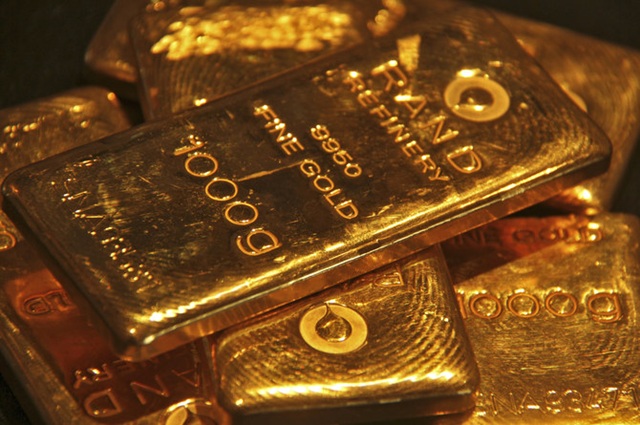
Gold prices have fallen sharply from their historic January peak, dropping below $3,700 an ounce on Thursday for the first time since September 2025, as rising US Treasury yields, a strengthening dollar and changing expectations over Federal Reserve policy undermine demand for the precious metal. The decline marks a dramatic reversal after an extraordinary rally that saw gold establish 53 record highs in 2025 and reach $5,589.38 an ounce on 28 January 2026.
The reversal reflects a significant shift in the factors influencing investor demand. Suki Cooper, global head of commodities research at Standard Chartered, said gold could behave either as a commodity or as a currency, depending on prevailing market conditions. Its recent decline, she argued, reflects a change in how investors are treating the metal, with currency-related considerations increasingly outweighing its appeal as a long-term store of value.
Cooper traced the previous rally to sustained physical demand beginning in 2022, followed by a broader reassessment of gold’s role in investment portfolios. Until early 2025, long-term investors, particularly those holding gold-backed exchange-traded funds (ETFs), had been reducing their exposure. That trend subsequently reversed, with ETF holdings increasing by approximately 800 tonnes during 2025, helping absorb excess market supply.
Global gold ETFs recorded their strongest annual inflows on record last year, attracting $89 billion, according to the World Gold Council. North American investors led the demand, while total ETF assets more than doubled to $559 billion. Net holdings exceeded 4,000 tonnes by the end of 2025, as limited selling and sustained buying pressure supported prices.
A weaker US dollar, declining bond yields and concerns over global debt further strengthened gold’s appeal. Evan Mills, a financial adviser at Scholar Financial Advising, said lower interest rates and expectations of additional Federal Reserve cuts had encouraged investors to move away from cash towards assets capable of preserving purchasing power.
Conditions changed after January, however. The rapid appreciation prompted concerns about excessive market positioning, while geopolitical developments in the Middle East triggered selling as investors sought liquidity. Cooper said gold temporarily ceased functioning as a portfolio safe haven and instead became a readily available source of cash.
Higher interest rates have since intensified the pressure. Federal Reserve governor Christopher Waller said this week that a 50-basis-point increase might be necessary to address inflation. Mills said higher Treasury yields and a stronger dollar had increased the opportunity cost of holding gold, which generates no income. Money market funds offering returns of 4% to 5% have consequently become more attractive to investors.
Analysts remain divided over the metal’s immediate direction. Marc Chandler, managing partner and chief market strategist at Bannockburn Capital Markets, expects gold to fall towards $3,500-$3,600 an ounce. He cautioned that technical indicators had yet to establish a convincing market bottom, describing the current decline as relatively orderly. He also noted that gold remained expensive against its historical averages, with its 10-year moving average at approximately $2,127 and its 20-year average at $1,666.
Despite the correction, some analysts maintain that the long-term investment case remains intact. Morgan Stanley metals and mining strategy head Amy Gower has identified several reasons for investors to retain exposure. Philip Diehl, former director of the US Mint, also argued that the fundamentals supporting the previous rally remained in place, despite what he described as exceptional geopolitical disruption.
Diehl expects prices to recover in 2027 as oil markets normalise and interest rates stabilise. Meanwhile, central banks continue purchasing gold, although their overall buying is 7% below the corresponding period last year. The divergence between institutional demand and declining retail enthusiasm illustrates the uncertainty surrounding the market.
For investors, the central question is increasingly whether gold should be treated as a short-term growth asset or as long-term portfolio protection. Mills argued that its principal purpose should be diversification and insurance against economic and geopolitical instability, rather than generating investment growth.