Latin America is increasingly looking to prisons as an answer to organised crime. Since 2023, at least 16 large-scale prison projects have been announced or initiated across the region, drawing inspiration from El Salvador President Nayib Bukele’s uncompromising campaign against criminal gangs. The expansion marks a significant shift in regional security policy, with governments embracing mass incarceration and high-security detention as visible demonstrations of their capacity to confront violence. Yet the growing enthusiasm for the model is exposing a difficult question: whether the construction of enormous prisons can deliver lasting security or simply expand the powers of states at the expense of fundamental rights.
According to InSight Crime’s Map of Latin America’s Megaprisons, countries including Honduras, Costa Rica, Peru, Ecuador, Panama, Colombia and Guatemala have announced or begun developing facilities on a scale associated with El Salvador’s prison system. Many remain at the planning or construction stage, however, raising questions about whether the projects represent substantive changes in criminal justice policy or politically attractive announcements designed to demonstrate toughness on crime.
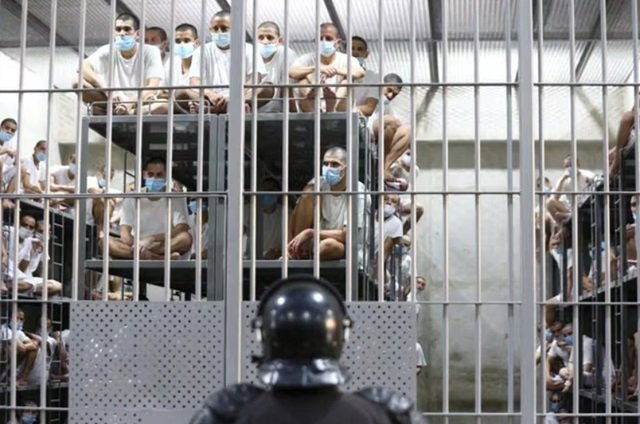
The appeal is understandable. Bukele’s strategy has been presented as delivering dramatic reductions in violence within a relatively short period. His government has made mass arrests and the confinement of suspected gang members central to its security campaign, while the country’s Centre for the Confinement of Terrorism, known as Cecot, has become the most recognisable symbol of the approach. For governments confronting public anxiety over insecurity, the model offers a highly visible response that can be communicated through prison construction, arrests and displays of state authority.
But the criminal environments in which these policies are being adopted are not identical. El Salvador’s campaign targeted domestic gangs operating within a relatively small territory and a government with limited resources. Ecuador, Honduras and Colombia face more complex criminal networks involving international drug trafficking, control of ports and corruption within state institutions. These differences raise doubts about whether a strategy developed against one particular form of criminal organisation can be transferred successfully to countries confronting more geographically extensive and institutionally entrenched criminal structures.
Costa Rica has already inaugurated the Centre for High Containment Against Organised Crime, known as Cacco, with capacity for 5,100 inmates. The facility draws inspiration from Cecot and represents one of the clearest examples of the regional movement towards high-security incarceration. Ecuador has also moved ahead with its plans. The Cárcel del Encuentro began operating in November 2025, while President Daniel Noboa’s government is planning another prison with capacity for 15,000 inmates. The existing Ecuadorian facility has already faced allegations of torture, denial of medical treatment and deaths among people held in state custody.
Elsewhere, Paraguay is developing the Minga Guazú Social Reintegration Centre for high-risk prisoners, while Argentina is constructing the Centre for High-Profile Inmates, known as Ceriap and popularly called “El Infierno”. Together, these initiatives illustrate how the prison model has moved beyond political discussion and into institutional planning and construction across several countries.
The influence is also evident in diplomatic engagement. Chilean President José Antonio Kast visited Cecot shortly before taking office, while Peruvian President Keiko Fujimori visited the facility in October as part of a study of the system for possible application in Peru. Such visits demonstrate that the Salvadoran approach is attracting interest not merely as a domestic security policy but as a model that other governments are actively examining.
However, the political visibility of these institutions has become inseparable from concerns about their human rights implications. Under the state of exception introduced in El Salvador in March 2022, more than 90,000 people have been detained. Reports of arbitrary arrests, torture and mistreatment have raised serious questions about the safeguards governing the campaign. The Salvadoran government has acknowledged releasing approximately 8,000 people it recognised as innocent and has considered granting parole to nearly half of those processed in October.
These figures complicate the presentation of mass detention as an uncomplicated security success. They raise questions about the reliability of arrests, the protection of defendants and the consequences of weakening judicial safeguards in the pursuit of rapid results. Human rights critics argue that the danger lies in exporting not simply a prison design but a broader approach to governance in which due process is treated as an obstacle to security.
There is also a practical problem that the construction of larger prisons cannot resolve by itself: organised crime has repeatedly demonstrated its capacity to operate from inside detention facilities. InSight Crime points to Brazil’s First Capital Command, known as PCC, and Ecuador’s Los Choneros as examples of criminal organisations that emerged or strengthened within prisons, using them as centres for recruitment and command. In this context, expanding incarceration without addressing the structures that allow criminal groups to operate inside prisons could reproduce the very problem governments claim to be eliminating.
The distinction matters particularly in countries where criminal networks extend across borders, influence economic activity and exploit institutional weaknesses. A prison can isolate individuals, but its existence does not automatically dismantle the financial, logistical and political connections sustaining criminal organisations. The regional differences in criminal structures also make it difficult to assume that a policy producing results against one category of gang activity will have comparable effects against transnational networks.
The expansion of megaprison projects therefore reflects more than a change in prison infrastructure. It reveals a growing political preference for highly visible security measures at a time when governments face pressure to demonstrate immediate results. The central challenge is whether these initiatives can be incorporated into broader strategies that address organised crime while maintaining judicial accountability and basic human rights protections.
For Latin America, the consequences extend beyond the walls of individual detention facilities. The decisions now being made will help determine how governments define public security, the limits of executive authority and the relationship between state power and individual rights. Sixteen prison projects may signal the growing popularity of the Bukele model, but their ultimate significance will depend on whether they weaken criminal organisations or merely institutionalise mass incarceration as the region’s preferred response to insecurity.