This special commentary argues political change in communist Cuba—accelerated by some combination of US pressure and military action—will likely occur in the near-term to midterm future and examines the implications for the region. This political change will necessitate a stabilization and transition plan with a new legal framework for addressing past disputes and future investments, as well as efforts to address Chinese and Russian military and intelligence facilities and operatives in Cuba. This special commentary argues the United States should prepare for postcommunist Cuba’s likely transformation into a hub for economic and political activity in the Western Hemisphere.
+++
The question is not whether political change will occur in Cuba’s communist government; rather, the question is when and how such change will occur. Now is the time for US political authorities, United States Southern Command, and US Army organizations such as US Army Western Hemisphere Command to begin planning for a postcommunist Cuba, as well as what political change in Cuba will imply for the Western Hemisphere more broadly.
The current US presidential administration has repeatedly highlighted the strategic threat Cuba poses by hosting military and other capabilities of extrahemispheric US adversaries such as China. The administration has also called out Cuba’s long-running espionage activities against the United States (which are exemplified by Ana Belén Montes and Victor Manuel Rocha), as well as Cuba’s support for anti-US governments and subversive movements throughout the region. Cuba, which is located just 90 miles off the coast of the United States, is within the Western Hemisphere (the region prioritized in the November 2025 National Security Strategy of the United States of America) and is squarely within the perimeter of the region Secretary of War Pete Hegseth calls “Greater North America”: a region that is key to the defense of the US homeland.
Although the United States has thus far used diplomatic pressure, sanctions, and negotiations to promote regime change in Cuba, the United States has also conducted numerous military operations around the island (including patrols and interceptions of shadow-fleet tankers) that demonstrate military options are not off the table. The United States has also regularly employed the US military in Cuba’s immediate neighborhood during the past year, most notably to strike drug-trafficking boats and to capture Venezuela’s de facto President Nicolás Maduro on January 3, 2026. If the protracted conflict with Iran has demonstrated the difficulties involved in using the military to change regimes or political behavior, Cuba is roughly 0.064 the size of Iran and is vastly closer to the continental United States, from which the US military can deploy and sustain assets.
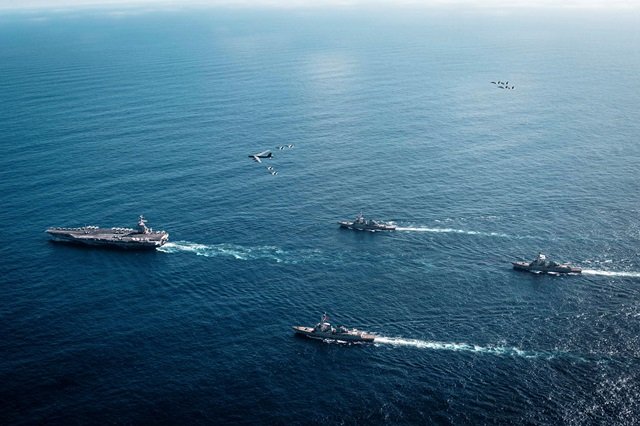
Analysts in the mainstream media often represent the US military’s choices regarding Cuba as a dichotomy between nonintervention and decisive military intervention. In reality, the president has a range of ways to support a negotiated settlement or impose regime change. These options span the gamut and include positioning military assets, heightening surveillance activities, and demonstrating force; conducting kinetic strikes against military, leadership, and other targets; using special operations forces to capture key leaders or achieve other effects; and seizing control of and occupying part of or the entire island. Such options can be employed progressively, in conjunction with ongoing negotiations and other forms of pressure, consistent with the administration’s efforts elsewhere.
American pressure has compounded past mismanagement by Cuba’s communist government and imposed extreme hardships on the island. Revenue from European and other tourists, which once generated foreign-currency earnings, has dried up. The island now suffers near-constant power outages; a lack of fuel for transport, electricity, and cooking; severe shortages of most goods; and the shutdown of most economic activity and basic services.
Still, aside from US back-channel conversations with the grandson of Raúl Castro and possibly other officials—as well as gestures by the regime, such as its implementation of a massive package of economic reforms—no indicators suggest the regime is about to collapse, leave, or agree to changes sufficient to satisfy the US government.
All signs indicate the US and Cuban governments are at a fundamental impasse. Yet the US government has indicated fundamental security issues are at stake, and the current US presidential administration has expressed determination on Cuba and other issues. Therefore, one can more easily imagine the current impasse being resolved through military action than through US acceptance of the status quo.
The number of variables is too great to predict what types of military action the United States might use in Cuba, how quickly the United States might escalate, or how far the United States might go before achieving acceptable change. Given the long-standing Cuban military doctrine for guerrilla resistance, plus the military capabilities Russia and China previously provided to Cuba, some US military courses of action could produce significant casualties and a protracted conflict. But Cuba is not Iran. In the context of modern surveillance capabilities, Cuba is too small to offer sustained resistance against a superior force from the geographically proximate United States. Nor does Cuba have large caches of drones and missiles to threaten high-value targets nearby, as Iran did in the Persian Gulf. Cuba also lacks the geography to hide such weapons for long.Additionally, Cuba’s geography does not enable the country to obtain new arms clandestinely from friends such as distant Iran, Russia, and China.
Furthermore, Russia and Iran are not in a position to provide such aid, and the restrained Chinese response to the January 3, 2026, US action in Venezuela suggests the People’s Republic of China would also be unlikely to provide Cuba with substantial military support to resist the United States. A conflict involving Cuba may thus be bloodier than the US operation against Maduro. But this possibility does not change the likely course of future events, which will involve some level of US military engagement in Cuba and significant changes in the governance of the island.
A political transition in Cuba would generate an array of strategic imperatives, opportunities, and consequences the United States should consider now.
First, Cuba will require a plan to achieve rapid stabilization and avert both a further humanitarian crisis and massive out-migration, as demonstrated in the authoritative RAND Corporation study of prior US interventions in Haiti and Panama. This plan would likely involve a humanitarian mission led by United States Southern Command, supported by US Army Western Hemisphere Command, and coordinated with other US government agencies and private donors. The rapid movement toward stabilization will also require the identification and neutralization of Cuban intelligence operatives and resistance fighters, who will seek to prolong and maximize chaos to impose costs and put international pressure on the United States.
Over the long term, Cuba will need a new legal framework that addresses claims of communist-era property confiscation and other damages and creates the legal security and administrative capacity to accommodate the massive investments that will flow into tourism, petroleum, mining, maritime logistics, finance, and information services, among other sectors. Cuba’s economic boom will be fueled by the energy and innovation of the Cuban people, Cuba’s proximity to the United States and Panama, and Cuba’s role as a bridge to Europe. Indeed, strategic planners in both business and politics should be prepared for the degree to which a reenergized, democratic, market-oriented Cuba will become an international hub and transform the dynamics of the Caribbean.
Even as the United States enables and participates in the transformation of the Cuban economy, the United States must decisively eliminate the presence of the military, intelligence, and other forces of the People’s Republic of China, Russia, and other extrahemispheric adversaries that operate in and from Cuba. From the beginning of any US military action, the United States should strategically prioritize the detainment,interrogation, and public exhibition of such operatives, including those masquerading as diplomats and businesspeople. Fulfilling this priority will help the United States expose and defeat adversary intelligence networks throughout the region, as well as strengthen the US case for military action at home and abroad.
Over the longer term, the US government, United States Southern Command, and supporting US Army organizations such as US Army Western Hemisphere Command should be prepared for Cuba’s rapid transition away from being the principal strategic liability of the West Indies to being a key asset for countering drug flows, other criminal flows, and irregular migration. This transition will, of course, require the United States to bolster Cuban governance to ensure Cuba becomes a bulwark against criminal and irregular migrant flows, not a hub for them.
As the United States helps Cuba strengthen its governance and expands US security cooperation with the island, United States Southern Command and US Army Western Hemisphere Command should examine Cuba’s position along critical maritime routes. These commands should also explore how conducting air and maritime operations from Cuba could strengthen maritime domain awareness and the protection of maritime routes for US forces and commercial shipping. The US government and United States Southern Command should plan their security engagement based on how they can best use Cuba to protect southeastern maritime access to the US homeland. Additionally, these plans should enable the United States to protect flows of US military forces and sustainment—from the US East Coast and the Atlantic Ocean, through the Panama Canal, and into the Pacific Ocean—in a potential conflict with the People’s Republic of China.
Finally, change in Cuba may also produce major US gains against leftist, subversive movements throughout the region, which will impact the mission of United States Southern Command,US Army Western Hemisphere Command, and other Army organizations.The coming change in Cuba will transform the region and the strategic position of the United States. The United States must plan for how it will capitalize on the opportunities and navigate the risks to come.
Click here to read the original paper