American pro-Palestinian activist James Chambers has accused the Trump administration of using criminal proceedings to intimidate political opponents, following his release from a Spanish prison after nearly four months in detention over a US extradition request. In an interview with the Spanish newspaper EL PAÍS, the 41-year-old millionaire described his arrest as an attempt to criminalise dissent and warned that the case could have implications far beyond his own circumstances. “It could happen to anyone. It is a tactic to terrorise people,” he said.
Chambers, known as Fergie, was arrested by Spain’s National Police in July while visiting Ibiza to find a school for his youngest child ahead of his family’s planned relocation to Spain. His detention followed an extradition request from Washington, which accused him of intending to provide financial support to illegal and terrorist organisations. Spain’s National Court subsequently ordered his provisional imprisonment while considering the American request. He was released last Friday after the United States acknowledged substantial errors in the translation of key documents submitted in support of the proceedings.
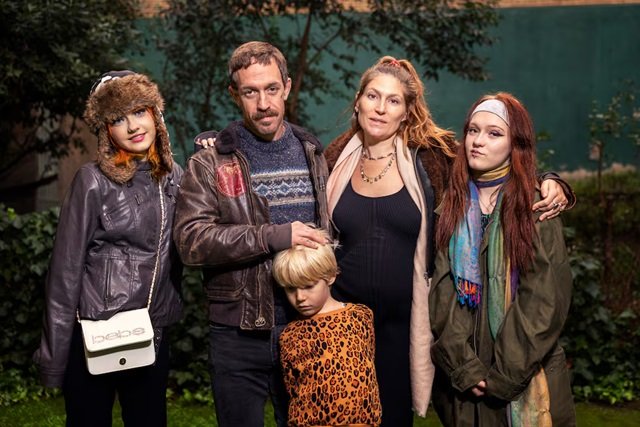
In his interview with EL PAÍS, Chambers described the four months in detention as a nightmare, despite praising the conduct of prison staff and saying he had been treated fairly. The most difficult moment came when his third application for provisional release was rejected. He said he realised then that he might remain imprisoned for an extended period, separated from his wife and children, and could even miss the birth of his unborn child. His wife, Stella Schnabel, is pregnant with their second child together and his fifth.
His release came unexpectedly while he was meeting his parents in person at the prison. Officials approached him and announced that they had good news. Chambers said he had not imagined that he would leave prison that day. The acknowledgement of translation errors has provided a significant development for his defence, which maintains that the extradition proceedings are politically motivated. However, Spain’s National Court has yet to decide whether he should be surrendered to the United States.
Chambers, who belongs to one of America’s wealthiest families, believes his political positions and financial resources contributed to making him a target. His foundation supports hospitals in Gaza, racial justice initiatives, community projects in the American South, climate programmes and independent media. He argues that these activities, combined with his outspoken criticism of American foreign policy and the Trump administration, have made him an unwelcome figure.
The allegations concern a purported intention to channel money to illegal organisations through a legitimate entity in Tunisia with which Chambers says he had close ties, a football team. He maintains that the money was never transferred to any illegal organisation and that prosecutors have produced no evidence of him expressing such an intention. He describes the allegations as false and insists that his financial contributions were made transparently and with careful attention to the law.
Chambers places his case within what he describes as a growing pattern of political repression and the criminalisation of protest in the United States, particularly concerning Palestine and immigration. He argues that activists who would be regarded as ordinary political protesters in countries such as Spain, Italy and France are increasingly characterised as extremists, anti-fascists, leftists or radicals by the Trump administration. He also rejects the suggestion that his political difficulties stem primarily from his family’s Democratic Party associations, saying his own views frequently conflict with both the party and his relatives.
He further argues that the suppression of pro-Palestinian activism is connected to American economic interests associated with the occupation of Palestine, rather than simply the influence of the Israeli lobby. These are his political interpretations, not findings established by the extradition proceedings.
Although his release has ended his immediate imprisonment, Chambers remains concerned about the possibility of extradition. He told EL PAÍS that he could not predict what might happen if the American administration succeeded in bringing him back, particularly given the publicity surrounding the case. He says his original intention in moving to Spain was not to seek asylum but to establish a home in a country where he believed he could maintain his political convictions.
For Chambers, the case is now about more than an individual extradition request. It raises questions about the boundaries between legitimate criminal prosecution and the use of legal proceedings against political dissent. His freedom in Spain remains provisional in a broader sense: the final decision on extradition has yet to be made.