The United States has proposed new tariffs on 14 trading partners, threatening duties of up to 35% on some economies while offering significantly lower rates to countries that conclude trade agreements with Washington. The measures, announced by the Office of the US Trade Representative (USTR), target what the administration describes as structural excess industrial capacity and could intensify pressure on China, India and Vietnam to accelerate negotiations.
The proposed tariffs range from 15% for the European Union, South Korea, Switzerland and Taiwan to 35% for Vietnam. However, Washington intends to cap duties at lower levels for countries that have already completed trade agreements or remain engaged in negotiations. US Trade Representative Jamieson Greer said on Wednesday that the policy was unlikely to take effect for several months, although a senior US official indicated that implementation could begin as early as January.
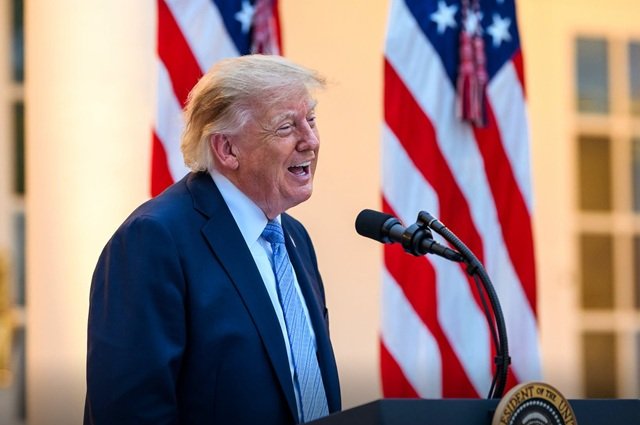
The immediate economic impact across the region is expected to be relatively limited, according to Mark Williams, chief Asia economist at Capital Economics. He said the proposals would largely return targeted economies to tariff levels that existed earlier in the year, following the US Supreme Court’s decision in February to strike down President Donald Trump’s emergency tariffs. Nevertheless, analysts said the prospect of substantially lower rates could encourage governments to conclude agreements with Washington.
China faces a proposed tariff cap of 20%, in addition to an existing 25% duty imposed during Trump’s first presidency. The combined pressure could increase if the trade truce reached in South Korea last October is not extended beyond January, with Washington warning that the new duties could rise to 40%.
Beijing has rejected the US allegations of excess industrial capacity. Chinese Commerce Ministry spokesperson He Yadong called on Washington on Thursday to correct what he described as its wrongful actions and return to resolving disputes through dialogue. Beijing also urged the United States to implement $30 billion in reciprocal tariff reductions agreed by the two countries in late September.
Despite renewed tensions, Chinese President Xi Jinping and Trump are expected to meet for a fourth time this year at the Group of 20 summit in Miami in December. Wendy Cutler, senior vice-president of the Asia Society Policy Institute, said Beijing appeared prepared to accept the proposed rates provided they did not exceed 20%. She argued that Washington was retaining the possibility of higher tariffs as leverage to secure supplies of critical minerals and rare earths, alongside additional Chinese purchases of American agricultural products.
India and Vietnam face particularly strong incentives to secure agreements. Their proposed tariff rates of 25% and 35%, respectively, could fall to 17% and 20% if ongoing negotiations produce reciprocal trade agreements. Vietnam’s trade ministry said on Thursday that it was working with Washington to complete an agreement as soon as possible. India could also gain a competitive advantage over regional rivals if it concludes its long-delayed negotiations with the United States.
Singapore faces a proposed maximum rate of 20%, potentially reducible to 10% through an agreement. Its Ministry of Energy, Trade and Industry rejected the findings, arguing that they failed to recognise the structure of the country’s economy. It highlighted the bilateral free trade agreement under which Singapore imposes no tariffs on US goods and noted that Washington recorded a $33 billion trade surplus with Singapore in 2025, up from $27 billion in 2024.
South Korea and Taiwan, meanwhile, could benefit from exemptions covering semiconductors and other electronic products. Although South Korea was criticised over its concentration in memory-chip production and government support, its semiconductor exports were excluded from the proposed duties. Taiwan faces a 15% tariff cap, with exemptions covering products including mobile phones and networking equipment. Its effective tariff rate is nevertheless expected to increase from approximately 6% to 9%, according to Williams.
The proposals therefore extend beyond conventional tariff increases, offering Washington an additional instrument to influence trade negotiations while placing particular pressure on economies whose access to the American market depends on reaching agreements with the Trump administration.