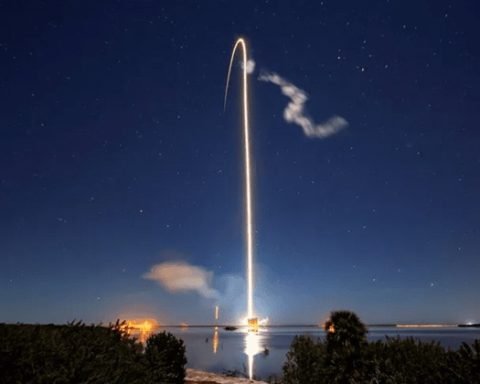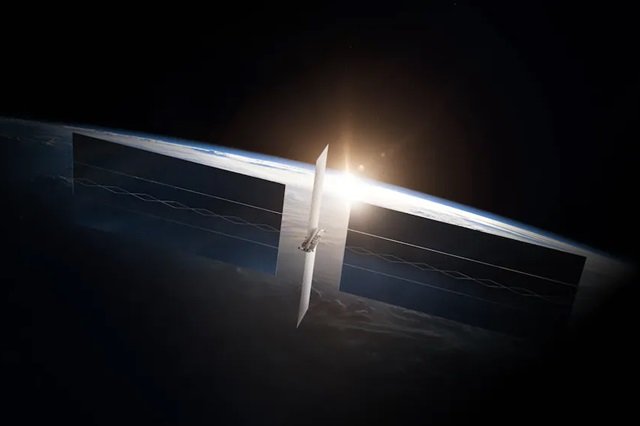
The expansion of commercial activity in space is confronting a fundamental question: how much of the night sky can be occupied by private infrastructure before scientific observation becomes seriously compromised? That question has acquired new urgency after the US Federal Communications Commission (FCC) authorised SpaceX, Elon Musk’s aerospace and artificial intelligence company, to proceed with plans to deploy one million satellites designed to operate as data centres in low Earth orbit. The decision has triggered an immediate backlash from the astronomical community, which warns that the proposed constellation could substantially obstruct humanity’s ability to observe, study and monitor the universe.
Known as Starmind, the project would increase the number of satellites orbiting Earth by approximately 50 times the current total, according to the source material. Its scale represents a significant expansion of the infrastructure being placed in orbit for commercial and technological purposes. While the FCC has presented the authorisation as an opportunity to advance computing infrastructure and strengthen American technological leadership, astronomers argue that the consequences extend far beyond the interests of a single company or national space programme. Their concern is that the increasingly crowded orbital environment could undermine decades of investment in scientific facilities and restrict access to observations that are essential to understanding the universe.
The American Astronomical Society (AAS) responded to the FCC decision by expressing itself as “deeply disappointed and dismayed”. In its assessment, the proposed constellation would considerably undermine decades of federal investment in astronomical facilities, while diminishing the ability of both professional astronomers and the public to enjoy and study the night sky. The organisation also described the project as incompatible with a spirit of cooperation and goodwill, signalling that the dispute is not simply about the technical consequences of additional satellites but also about the responsibilities of commercial operators in an increasingly congested orbital environment.
The objections are rooted in problems that astronomers have already identified with existing satellite constellations, particularly those operated by SpaceX. The growing number of artificial objects passing through the field of view of astronomical instruments has complicated observations, while researchers have previously warned that satellite trails could interfere with efforts to identify potentially hazardous asteroids. Such monitoring is significant because the detection of objects that could threaten Earth depends on the ability to observe the sky accurately and consistently. Any interference that makes observations more difficult could therefore have consequences extending beyond academic research.
The AAS argues that the proposed Starmind constellation could intensify these difficulties because its satellites would differ from existing systems in several important respects. The organisation points to their larger size, which would make them brighter, their vastly greater numbers, and their placement at higher altitudes and orbital inclinations. These characteristics could make the objects visible as extremely bright features for longer periods of the night. The concern is consequently not limited to the number of satellites entering orbit. Their physical characteristics and orbital distribution could increase the duration and extent of interference with astronomical observations.
The implications are particularly significant for the study of objects moving through the solar system. Astronomers have previously raised concerns that SpaceX satellites could obscure observations of asteroids potentially dangerous to humanity. The proposed expansion introduces a further challenge to that work, given the prospect of a much larger population of bright orbital objects occupying the observational environment. Although the source material does not establish that the new constellation would prevent the detection of dangerous asteroids, the warnings point to a conflict between the expansion of satellite infrastructure and the preservation of reliable astronomical monitoring.
The FCC, however, has defended its decision as part of a broader effort to secure American technological and economic advantages. Its chairman, Brendan Carr, said the United States was taking decisive action to ensure that the innovative technology created opportunities, encouraged investment and delivered lasting benefits to the American public. He described the authorisation as opening “a new and bold frontier” for the computing infrastructure required to support American leadership and growth. His statement places the project within the broader ambitions of technological development and national competitiveness, rather than treating it primarily as an expansion of commercial satellite operations.
That position highlights the central disagreement. For the FCC, the project represents an opportunity to develop a new form of computing infrastructure in space and reinforce the United States’ technological position. For astronomers, however, technological progress cannot be measured solely by the commercial opportunities or strategic advantages it creates. They argue that American innovation in space must not come at the expense of scientific research, which has itself been a foundation of the country’s technological development and international leadership for decades.
The implementation timetable gives the dispute a longer horizon. SpaceX could begin placing the satellites in orbit in 2033. The company has until 2035 to deploy 100,000 operational satellites, while the deadline for completing the full constellation is 2040. The authorisation therefore establishes a framework for a deployment extending over several years, rather than an immediate introduction of the entire network. Nevertheless, the scale of the approved plan has already prompted questions about how competing uses of Earth’s orbital environment will be reconciled.
At stake is more than the future of astronomical observation in the United States. The objections raised by the AAS concern the ability of scientists and the public to access a night sky increasingly crossed by commercial infrastructure. The proposed million-satellite constellation brings that tension into sharper focus: the same technological expansion being promoted as a source of innovation and economic opportunity could place additional pressure on scientific activities that depend on an unobstructed view of space. The challenge will be whether the expansion of orbital computing can proceed without imposing costs on research whose value extends well beyond national borders or commercial interests.