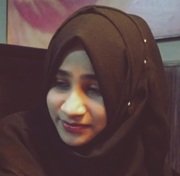
There is a particular cruelty in watching a militant group dress exploitation up as liberation. For two decades, the Baloch Liberation Army fought a low-intensity insurgency largely through men ambushes, attacks on infrastructure, hit-and-run raids on security convoys. Then, on April 26, 2022, that changed. A 30-year-old schoolteacher named Shari Baloch walked up to a van carrying Chinese language instructors outside the Confucius Institute at the University of Karachi and detonated a bag of explosives, killing herself and three Chinese nationals along with their driver. The BLA’s Majeed Brigade called her “the first female fidayeen (martyr) of the Brigade.”
That framing martyrdom, sacrifice, honor is the propaganda. The reality is grimmer. Shari Baloch was, by every account, an educated, middle-class woman from a non-militant family, a school teacher and mother of two who was working toward an MPhil after finishing a master’s degree in zoology. Her profile did not fit the old assumptions about who becomes a suicide bomber, and that was precisely the point: the BLA had discovered that a woman could walk past checkpoints and into crowded, unsuspecting spaces in ways a man could not. Her death was not empowerment. It was the exploitation of a life that, under different circumstances, might have gone on teaching Balochistan’s children instead of ending in a ball of fire on a Karachi street.
She was not the last. In June 2023, Sumaiya Qalandrani Baloch carried out an attack on a military convoy in Turbat. In August 2024, Mahal Baloch drove a car bomb into the gate of a Frontier Corps camp in Bela. In March 2025, Mahikan Baloch struck a paramilitary convoy in Kalat. By December 2025, a fifth woman, Zareena Rafiq, was named as the alleged bomber in the Nokkundi attack, reportedly the first female operative deployed by a rival group, the Baloch Liberation Front, through a newly formed unit built specifically for high-profile, symbolic operations. What began as an aberration has hardened into a deliberate recruitment pipeline.
The mechanics of that pipeline are what should trouble anyone who still wants to call this “empowerment.” Investigations by researchers who work directly with affected families describe a strategy built on coercion rather than conviction. According to reporting from More to Her Story, the BLA weaponizes shame in Balochistan’s conservative society, exploiting women’s socio-economic struggles through threats of dishonor, sexual violence, and blackmail to trap them into deadly roles. One case documented there involves a 27-year-old former World Health Organization worker, Adeela Baloch, who was identified and recruited by the BLA, then subjected to blackmail and psychological manipulation before being coerced into a failed suicide bombing attempt. Her father spent months searching for her before she was recovered. That is not a militant organization elevating women. It is an armed group identifying vulnerable women and engineering their destruction while calling it liberation for the cameras.
There is also the matter of who pays the price after the bomb goes off. Reporting from New Lines Magazine notes that Baloch women’s rights activists now fear the fallout will land on them too: after Shari Baloch’s attack, security forces detained a 40-year-old woman, Noor Jehan, in Kech district, alleging she belonged to the Majeed Brigade and was planning to target a Chinese convoy tied to CPEC. Every woman in Balochistan now lives under a heavier cloud of suspicion because a militant group decided her body was a useful delivery mechanism for its politics. That, too, is a cost the BLA imposes on the very community it claims to be fighting for.
None of this is happening in a vacuum of choice. Balochistan’s grievances over missing persons, resource extraction, and political marginalization are real and have been documented for years. But grievance does not launder method. A province with some of Pakistan’s lowest literacy and employment indicators does not need more graves; it needs classrooms, clinics, and jobs that give young women reasons to stay alive rather than reasons to be recruited into dying. Groups like the BLA and BLF are not offering Baloch women agency. They are offering them, per the pattern researchers now see repeating case after case, a script written entirely by men, in which a woman’s only starring role is her own death.
Calling that empowerment is not just wrong. It is one more indignity heaped on women who deserved so much more than to be turned into instruments of somebody else’s war.