


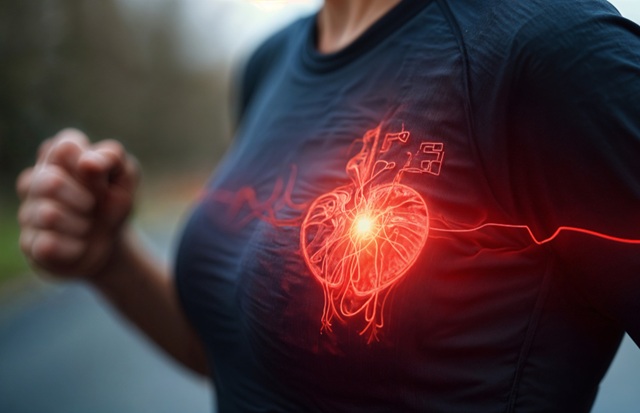
Shanghai has unveiled China’s first AI-powered cardiologist, a groundbreaking system designed to assist overburdened doctors in diagnosing heart conditions. Developed by Zhongshan Hospital and the Shanghai Academy of Artificial Intelligence for Science, CardioMind mimics the reasoning of top cardiologists by analyzing patient histories, test results, and global research to generate diagnostic recommendations.
According to Yicai Global News, the AI system is not intended to replace human doctors but rather to function as a “co-pilot”, allowing physicians to serve more patients while improving diagnostic accuracy. The urgency for such a tool is clear: Zhongshan Hospital’s cardiology department, staffed with only 136 physicians, handled 820,000 outpatient visits last year—a staggering workload.
Unlike open-source AI models such as China’s DeepSeek, CardioMind is specifically trained for cardiovascular diseases, drawing from decades of anonymized patient data, international research, and the latest treatment guidelines. The system synthesizes information from electrocardiograms, ultrasounds, and blood tests to draft medical reports and suggest diagnoses.
Despite its potential, the introduction of AI in healthcare raises ethical concerns. Patient privacy, algorithmic bias, and liability for AI-generated errors remain critical challenges, both in China and globally. As Yicai Global News notes, while rigorous testing has been conducted, real-world clinical validation is still limited.
China has aggressively expanded its AI presence in healthcare, with over 50 medical large-language models launched since 2023, according to Citic Securities. Though models like Google’s Med-Gemini currently lead in medical accuracy, China’s vast patient datasets and government-backed AI initiatives are rapidly closing the gap.









