


Sheffield Hallam University’s decision to halt a major body of research into forced labour in China — first revealed in materials obtained by Professor Laura Murphy and originally reported by The Times UK — has exposed a dramatic clash between academic freedom, financial pressures and foreign influence that played out behind closed doors for more than a year.
The trouble began when the university abruptly stopped the publication of Murphy’s research on Chinese forced labour, despite having championed her earlier work. What seemed at first to be an internal caution over controversial findings soon revealed itself to be something far more troubling. According to a 3,000-page dossier Murphy obtained through a subject access request, China had taken direct steps to punish the university — including blocking its website in the country and interrogating one of its Beijing-based employees for hours over the research. Internal emails showed administrators scrambling to manage the fallout, worried not only about staff safety but about the potential collapse of their Chinese recruitment pipeline. Some staff even framed the issue as a choice between academic integrity and millions in international student revenue.
Murphy found herself confronted with a narrative strikingly different from the one the university had presented to her. More alarming still was a memo from senior staff stating that the university’s decision not to publish her final report had been communicated to China’s Ministry of State Security, a step she had explicitly warned them not to take. She says she was stunned to see the admission buried in the final pages of the documents. From her view in Massachusetts, where she is currently working with Harvard, she described her reaction as a mixture of disbelief and deep frustration. She felt her concerns for the safety of researchers had been dismissed, and that the university had capitulated to pressure from an authoritarian state at the expense of principle.
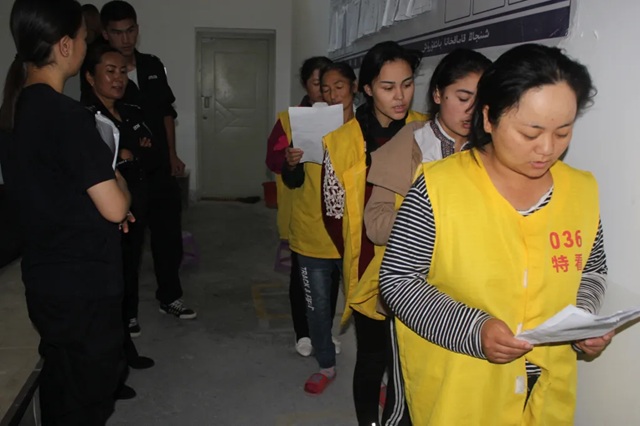
Her research into forced labour in Xinjiang had already made her a target. Murphy had lived in the region in the 2000s and had witnessed the early stages of repression against Uighurs, many of whom later vanished into China’s vast network of detention centres. Those risks had continually informed her work at Sheffield Hallam’s Helena Kennedy Centre. The stakes were personal for her team: one researcher had 23 family members imprisoned. She says that while her colleagues faced the possibility of family members disappearing into detention, the university seemed far more concerned with the future of the Chinese student market and the potential withdrawal of recognition for its degrees.
Internal correspondence documented how a crisis unfolded quietly. Administrators anticipated “blowback” early on, but the situation escalated sharply when Chinese security agents interrogated the university’s Beijing employee for hours. Staff in China were told to work from home. The university’s website was blocked, killing its recruitment portal. One memo admitted, bluntly, that continuing Murphy’s research and maintaining business ties in China were becoming “untenable bedfellows.” Behind the scenes, concerns about insurance coverage, threats from Beijing and a costly defamation suit added layers of anxiety. By late summer last year the decision was made: the final report would not be associated with Sheffield Hallam, then not published at all, and the grant would be returned.
To Murphy, the message was unmistakable: China had successfully pressured a British university into silence. What shocked her most was not the fear but the apparent willingness of administrators to appease the demands of a foreign security service. She pushed the university to alert the UK government or MI5, but internal emails show her warnings were dismissed as excessive. The experience left her feeling undermined, condescended to and placed in avoidable danger. As the case became public, South Yorkshire Police referred the matter to counterterrorism officers under the National Security Act, citing potential concerns about assisting a foreign intelligence service.
Sheffield Hallam has since apologised and pledged to protect her academic freedom. After dropping her legal action, Murphy is due to return to the university in the spring, though she says the toll has been immense. Her research team lost their jobs, months of work were buried and the chilling effect on colleagues across the UK — many of whom have since shared their own experiences — has become painfully clear. China experts quoted by The Times UK argued that institutions must show more backbone or face continued pressure from abroad. Murphy agrees, insisting that this confrontation is about more than institutional reputation or student numbers; it is about whether vital research into human rights abuses is allowed to continue without fear.
For her, the fight is not over. She plans to continue publishing research on forced labour in China, though the pace has slowed and the damage has been real. Her experience, she says, is a stark example of how foreign interference can suffocate scrutiny. And while Sheffield Hallam attempts to move past the controversy, Murphy remains determined to push forward. Slowing the work, she says, is precisely the point of such pressure — and precisely why she refuses to stop.










