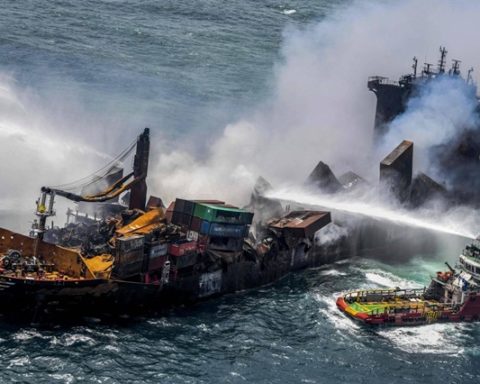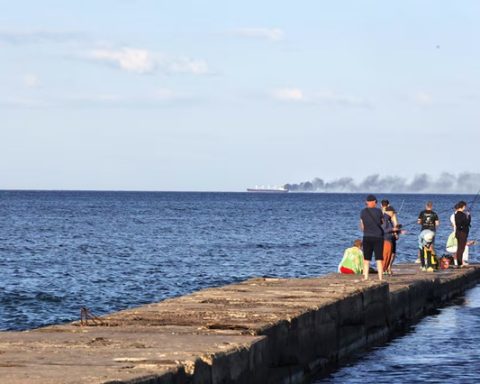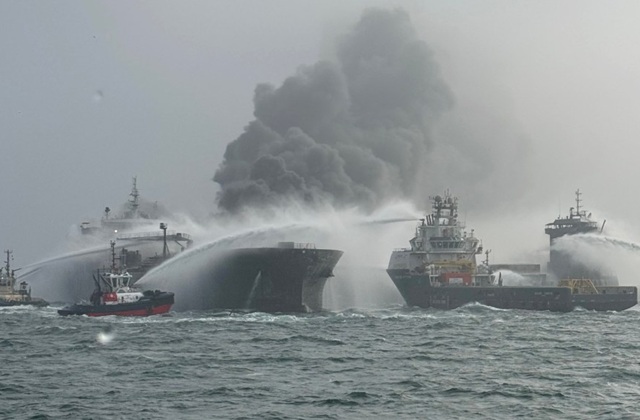
A catastrophic collision between a container ship and an oil tanker in the North Sea has triggered fears of a major environmental disaster, as emergency crews race to contain the fire and prevent a massive fuel spill.
The incident occurred early Monday morning when the Solong, a 140-meter container ship carrying 15 containers of highly toxic chemicals, collided with the Stena Immaculate, an oil tanker loaded with 18,000 tons of jet fuel. The tanker, chartered by the U.S. military, had been anchored off the UK’s east coast awaiting delivery to Immingham on the Humber estuary when the collision took place in thick fog.
According to shipping data, the Solong was traveling at 16 knots when it struck the Stena Immaculate at 9:45 AM, pushing the anchored tanker nearly 200 meters and setting both vessels ablaze. The Times UK reported that emergency responders, including lifeboats, firefighting vessels, and helicopters, were dispatched within minutes to the scene. However, the hazardous nature of the cargo and rough sea conditions have complicated efforts to control the situation.
One crew member from the Solong remains missing after search and rescue efforts were called off late Monday night. The remaining 13 crew members from the Solong and all 23 crew from the Stena Immaculate managed to evacuate, but multiple explosions have been reported onboard the tanker.
Crowley, the company that owns the Stena Immaculate, confirmed that jet fuel had leaked into the water and was on fire. Should the entire cargo spill into the North Sea, it could rank among Britain’s worst fuel spills, rivaling the 1967 Torrey Canyon disaster, which killed an estimated 30,000 seabirds.
Conservationists have expressed grave concerns about the potential impact on marine life along the East Yorkshire coast. The region is home to large populations of seabirds, including gannets and red-throated divers, as well as grey seals and porpoises. The Royal Society for the Protection of Birds (RSPB) has warned that if the oil reaches Bempton Cliffs or the Greater Wash Special Protection Area, it could devastate wildlife.
Efforts to battle the fire and contain the environmental fallout are ongoing. Svitzer, a major tugboat operator, has deployed seven vessels equipped with firefighting systems capable of pumping 2,400 liters per minute. However, with the toxic cargo onboard the Solong, including sodium cyanide, there is an additional risk of hazardous gas release, further complicating the emergency response.
Maritime safety experts stress that this disaster could take weeks, if not months, to mitigate fully. UK officials and international marine agencies are closely monitoring the situation as efforts to prevent a full-scale ecological catastrophe continue.