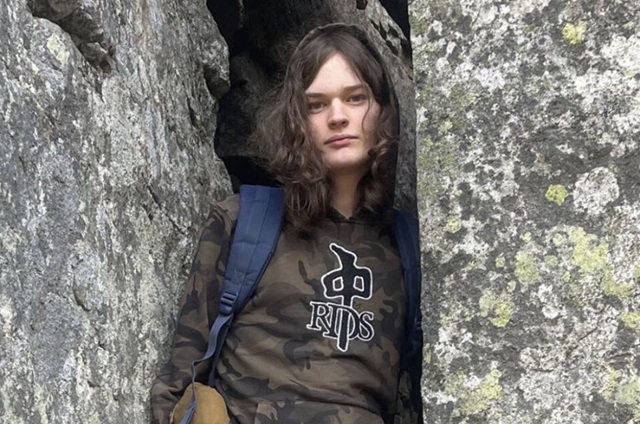
Investigators in Canada are examining a disturbing digital footprint left behind by 18-year-old Jesse Van Rootselaar, the suspect in what authorities describe as the deadliest school shooting in British Columbia in decades. Before carrying out the February 10 attack that left nine people dead, including members of his own family, the teenager had created an online video game simulating a mass shooting scenario, underscoring growing international concern about the convergence of online environments, mental health struggles, and acts of mass violence.
The attack unfolded in the small resource town of Tumbler Ridge, where Van Rootselaar, a former student of Tumbler Ridge Secondary School, allegedly killed nine victims, including his mother, his 11-year-old stepbrother, five students, and a teacher, before dying from a self-inflicted gunshot wound. The scale of the violence has shocked a country that has historically experienced far fewer school shootings than its southern neighbor, prompting renewed scrutiny of warning signs that may have been visible online but went unaddressed.
Among the most unsettling revelations is a game Van Rootselaar built on Roblox, one of the world’s most widely used user-generated gaming platforms, particularly among young audiences. The game allowed players to control a block-like avatar armed with various weapons inside a virtual shopping mall, where they could simulate shooting other characters. According to the company, the game was removed along with the suspect’s account shortly after the connection became known.
“We have removed the user account connected to this horrifying incident as well as any content associated with the suspect,” a Roblox spokesperson said in a public statement, adding that the game had received only seven visits before it was taken down. Yet even that limited exposure has intensified debate over how quickly violent or disturbing content can be created and shared in digital ecosystems designed for creativity and social interaction.
The simulation was first identified not by law enforcement but by users of Kiwi Farms, an internet forum known for combing through online histories and controversial content. Videos of the game circulated briefly before Roblox intervened, illustrating how decentralized online communities can sometimes surface information faster than official investigative channels.
Authorities from the Royal Canadian Mounted Police initially struggled to assemble a full picture of the suspect’s identity and background. In early briefings, police described the attacker as “a gunperson in a dress” and “an 18-year-old female.” Only after sustained questioning from reporters did an RCMP spokesperson clarify that Van Rootselaar “was born as a biological male,” a detail that added another layer to an already complex narrative involving gender identity, mental health, and online self-presentation.
Investigators and analysts say the suspect’s online activity extended well beyond gaming platforms. A review conducted by the ADL Center on Extremism found accounts allegedly linked to Van Rootselaar on websites known for hosting graphic content and glorifying mass casualty events. One account attributed to the suspect reportedly expressed fascination with first-person recordings of shootings, commenting that such footage was compelling when attackers documented their own actions.
On Reddit, posts believed to be written by Van Rootselaar painted a portrait of a teenager grappling with isolation, suicidal ideation, and identity struggles. In a February 2023 post, the user described starting a fire at home while under the influence of psychedelic mushrooms and referenced recent psychiatric hospitalizations. The same writings mentioned a diagnosis placing the individual on the autism spectrum, as well as feelings of alienation and distress that appeared to intensify over time.
Police confirmed they were frequently called to the family’s residence for mental health-related incidents, suggesting that the suspect had been known to authorities and healthcare systems prior to the violence. Van Rootselaar also possessed a minor’s firearms license that expired in 2024, raising questions about regulatory oversight and whether earlier interventions could have altered the trajectory that led to the killings.
For many experts, the case illustrates a pattern increasingly visible across multiple countries: perpetrators leaving behind fragmented but revealing digital trails that include violent fantasies, community validation, and cries for help. The accessibility of tools that allow users to design games, share content, and immerse themselves in niche online subcultures has expanded opportunities for creativity but also created pathways where troubling ideas can be rehearsed, normalized, or amplified.
Criminologists warn that simulated environments do not directly cause real-world violence but can become part of a feedback loop when combined with personal crises and exposure to extremist material. The Van Rootselaar case, they say, demonstrates how online expressions once dismissed as isolated or performative can take on new significance when viewed alongside behavioral warning signs and mental health deterioration.
Community members in Tumbler Ridge are now left grappling with grief and disbelief. The town, home to fewer than 3,000 residents, had little experience with large-scale violence, making the attack not only a national tragedy but a deeply personal rupture in a tightly knit community. Schools across the region temporarily closed, and counseling services were expanded as families struggled to process how such devastation could emerge from within their own neighborhood.
The massacre is already being compared to past watershed moments in Canadian history that reshaped national conversations about violence, identity, and prevention. Lawmakers, educators, and technology companies now face mounting pressure to evaluate how online behavior is monitored, how mental health systems respond to repeated warning signals, and how communities can better identify individuals at risk before harm occurs.
As investigators continue piecing together Van Rootselaar’s final months, the case stands as a stark example of how the boundaries between digital life and physical reality have become increasingly porous. What once unfolded separately in chat rooms, gaming platforms, and anonymous forums now forms an interconnected environment where personal turmoil, cultural influence, and technological access can converge with tragic consequences.
The challenge for governments and societies worldwide is determining how to respond without stifling the openness that defines the internet itself. The events in British Columbia have reignited a difficult global question: in an age when lives are lived simultaneously online and offline, how can warning signs in one realm be recognized in time to prevent catastrophe in the other.