After months of exhausting all options and with limited impact from Operation Economic Fury on Iran, the US now appears to be launching a full-scale economic offensive against Iran to up the ante on coercive measures and force the regime, which is now actively taken over by the IRCG hardliners. However, history tells a different story: massive sanctions and economic coercive measures have failed against regimes with hardline ideologies and institutional and structural resilience.
The Swift Shift
There is an element of a swift shift in the US’s operational response towards Iran. The US is actively re-engaging with a muscular military response and moving towards a more institutionalised, economic response, which differs from what was launched months back as Operation Economic Fury. While the shift is notable at the structural and operational level, the impact seems less significant. Operation Economic Outcast mounts an economic offensive on a full spectrum, meaning complete isolation of Iran and cutting off any direct and indirect economic support that Iran gets. The earlier operation, Economic Fury, did the same thing but with targeted and limited intensity.
But since conventional firepower is gradually failing to push Iran to the margins, the US security establishment has considered readjusting its strategic focus and applying non-kinetic options alongside kinetic power. In short, this means economic coercion with full force. This shift may offer two benefits. First, it slows exhaustion, and second, it recalibrates strategies by using the diplomatic window while maintaining sustained pressure on Iran.
The kinetic exhaustion of the US is real. According to reports, the U.S. military has burned through roughly 80% of its THAAD interceptor inventory and half of its Patriot supplies. The long-range missile stockpile is also under pressure, and some reports say months of sustained operations have sapped it heavily. This worrisome state of the US’s kinetic reserves, coupled with a hit to its capacity for sustained kinetic action, raises serious questions about its global readiness and ability to counter threats in other theatres.
Economic Attrition in the Cold War
This is not the first time the US has steered towards non-kinetic options. After the failed military intervention at the Bay of Pigs, the U.S. implemented a total trade embargo on Cuba to systematically restrict hard currency, creating domestic economic pressure over a sustained period. The US’s COMCOM playbook involved severely weaponising technology and imposing embargoes on dual-use tech meant for civilian use but capable of enhancing military capabilities. Cuba and Iraq are prime examples. The U.S. famously utilised secondary pressure to threaten European and Canadian companies under the Helms-Burton Act if they did business with nationalised Cuban properties. Following Operation Desert Storm, the U.S. enacted a total economic stranglehold. This targeted dual-use technologies, machinery, and oil sales, containing Saddam Hussein’s military modernisation for over a decade.
Though the US officially dissolved COMCOM in 1994, the Coordinating Committee for Multilateral Export Controls (COCOM) was a major instrument used by the US to isolate communist and dictatorial powers economically. Closely examined, COMCOM was a lethal non-kinetic option that acted as an invisible cage, artificially forcing economies into structural stagnation and financial exhaustion while turning Western technology into an absolute monopoly and systematically denying economies access to the global industrial revolution.
The most primary example is the Soviet Union. The US often used COMCOM to suffocate and stagnate the Soviet economy and technological progress during the Cold War, while keeping the primary aim of coercing states to join the Western-led trade bloc. COMCOM was used akin to kinetic force without actually pushing towards kinetic action against the Soviets when proxy wars and the arms race were at their peak.
The Impact Test
During the Cold War, the US’s COMCON delivered a massive blow to the adversary, especially the Soviet Union; however, it was not a complete success. The Soviet Union’s KGB ensured that it used its full might to pierce through the US’s economic onslaught. KGB used laundering networks where Soviets created thousands of front companies in neutral nations like Sweden, Switzerland, and Austria.
They would legally buy advanced Western hardware (such as mainframes or precision tools) and then illegally route it through complex global shipping networks to Moscow. In 1983, Soviet intelligence smuggled a high-powered DEC VAX 11/782 computer essential for advanced missile and aerospace design by routing it deceptively through South Africa, West Germany, and Sweden before U.S. authorities could flag it. Similarly, the Soviet Union was deeply integrated into COMECON (the Soviet Bloc’s alternative economic alliance). The Soviet Union effectively subsidised the Cuban economy for decades. Moscow purchased Cuban sugar at up to six times the global market price and supplied the island with virtually free oil.
Both the Soviet Union and Cuba managed to withstand the economic onslaught that dealt a huge blow to both economies over time. However, the US economic onslaught during the Cold War was a strategic success, but the Soviets’ counter-efforts and circumvention strategies limited its broader impact.
The Iran Test
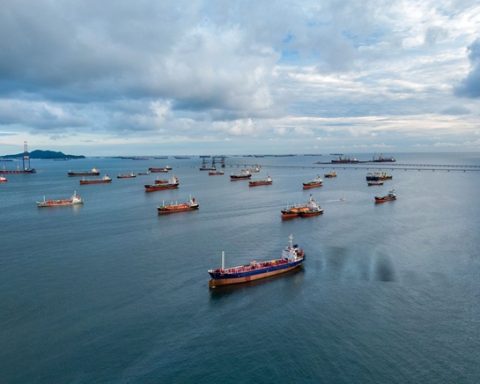
Iran has built a solid, resilient economy for decades, perhaps more than 40 years, by developing the economic survival blueprint Iranians call Ektashad- e- Moqavati (the “Resistance Economy”). The core strategy of Iran’ s resistance economy currently centres on shadow banking. Iran relies on a complex web of domestic exchange houses (sarrafis) linked to front companies registered in jurisdictions worldwide. Iran also relies on de- dollarisation, with major dealings with China.
China purchases roughly 90% of Iran’ s oil. Crucially, these massive energy transactions are settled entirely outside the U.S. financial system using the Chinese Renminbi (RMB). Iran has mastered the classic shadow- fleet strategy, moving its oil via a massive, untraceable fleet of black- market tankers. However, the key feature of Iran’ s economic resistance is still its self- reliance, where decades of embargoes have forced Iran to become highly self- sufficient in heavy industries, automotive manufacturing, and military assembly.
US’s Reading Or Misreading
The US may be misreading Iran’ s resilient economic structure and is currently under the impression that heavy sanctions, active financial containment, and attrition can pierce its shadow or parallel economy and break its structural resilience. The US Cold War playbook that crippled the Soviet Union may still be embedded in US strategic thinking, with few adjustments. The US’ s maximum pressure campaign and Operation Economic Fury both failed to realise the larger goal of severely crippling Iran, though they have done serious economic damage.
They still didn’t fully cripple Iran or, more appropriately, lead to the collapse of the survival economics Iran pursued. This time, the US launched Operation Economic Outcast, and instead of a targeted economic onslaught, the US is going after enablers of the Iranian economy. However, even this strategy is limited, as the US is still driving it with a unilateral, Western financial net against an adversary that has built a multilateral, Eastern security blanket. The US perhaps has had a late realisation of an expansive economic attrition operation against Iran, and this delay has already given rise to a solid, resilient economic web, especially front companies, that is spread across the globe with strong support from China.
The loop of “sanctions insanity”, as many analysts criticise the US’s economic attrition strategy against Iran, is resurfacing with Operation Economic Outcast, which is old wine in a new bottle. The main goal is to severely cripple the Iranian resistance economy, not to inflict small, temporary damage through inflation and secondary sanctions that Iran can recover from in the long term. The core goal remains unfulfilled, i.e., credible damage or a threat to Iran’s capability for economic survival. Unless this credibility is achieved, whatever economic attrition is planned and executed is just another piece of rhetoric in fury.