Editor’s Note: The following essay is based on the paper titled “Towards Ecotourism Development: Opportunities and Challenges in Delft Island, Jaffna District, Sri Lanka,” authored by Piratheepa Vipulan of the University of Jaffna, Suriati Ghazali of the University of Science Malaysia, and Ngai Weng Chan of the University of Science Malaysia. This study delves into the potential and obstacles surrounding the development of ecotourism on Delft Island, exploring both the opportunities presented by the region’s unique features and the challenges faced by local authorities. Through a comprehensive analysis of government policies, community engagement, and environmental considerations, the paper offers insightful recommendations for fostering sustainable tourism on this pristine island.
Ecotourism plays a vital role in promoting sustainable development while preserving the environmental and cultural integrity of a region. This study focuses on the opportunities and challenges associated with ecotourism development in Delft Island, located in the Northern Province of Sri Lanka. It draws upon both primary and secondary data sources, including interviews with key stakeholders, field observations, and a review of existing literature and policy documents. The findings reveal that Delft Island possesses significant ecological, historical, and cultural resources that can be leveraged to promote ecotourism. However, a range of administrative, environmental, socio-economic, and infrastructural challenges need to be addressed to ensure the successful implementation of sustainable tourism initiatives. The paper concludes by offering recommendations to strengthen stakeholder collaboration, enhance community engagement, and improve infrastructure and conservation efforts to support long-term ecotourism development on the island.
The Sri Lankan government has prioritized the tourism sector as a key driver of economic growth. Recognizing its potential, both the central and provincial administrations have developed strategic tourism plans targeting various regions. In this context, Delft Island has emerged as a focal point for ecotourism development. Identified as a high-potential area in the National Tourism Strategic Plan (2017), the Northern Provincial Tourism Strategic Plan (2018), and the Jaffna District Sustainable Tourism Development Plan (2018–2022), Delft Island is now considered a milestone project for tourism advancement in the Jaffna District—a region historically excluded from such initiatives due to internal conflict.
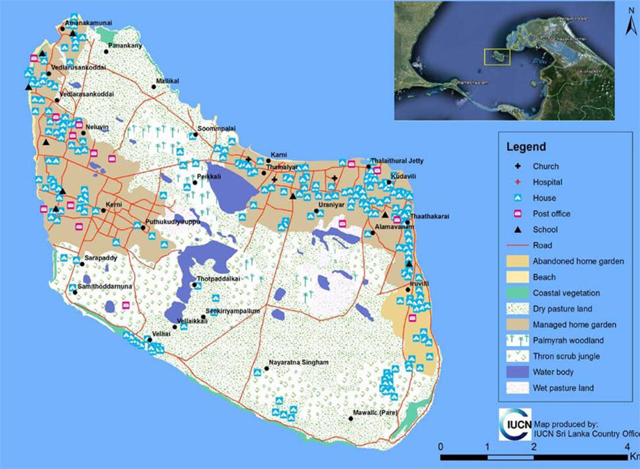
The island’s biological and physical assets make it an ideal candidate for ecotourism. According to the International Union for Conservation of Nature (IUCN), Delft Island is home to 209 species of flowering plants and 146 animal species, including 101 bird species—of which 37 are migratory. This diversity, combined with the island’s significance as a resting point for migratory birds, creates ample opportunity for birdwatching and wildlife observation. Notably, Delft is the only habitat in Sri Lanka where wild horses roam freely. In recognition of this ecological value, a 1,864-hectare portion of the island was declared a national park in 2015, marking a significant step toward biodiversity preservation.
The island also features medicinal plants such as Aloe Vera, which grow abundantly along the coastal belt and have potential for use in Ayurvedic treatments. Unique botanical and historical landmarks, including the Baobab tree introduced by Arab traders and the sprawling Banyan tree, serve as attractions for both ecological and heritage tourism. Palmyra trees, which dominate the landscape, support a variety of traditional food and craft industries that are gaining popularity among visitors. Despite the rich natural resources, the local supply of goods and services remains limited. Optimizing resource use can create opportunities for small-scale, eco-friendly industries, particularly in fishing and Palmyra-based production. Fishing remains a predominant livelihood for over half the population, making it a critical element in any tourism development strategy.
Additionally, Delft Island offers ideal conditions for recreational water activities such as sea bathing, boating, snorkeling, windsurfing, and kite surfing. The pristine beaches, coral walls, limestone structures, and unique natural phenomena like growing stones and massive footprints enhance the island’s appeal. The picturesque sunset views further contribute to its tourism potential.
Tourism development in Delft Island also presents a viable pathway for improving local livelihoods. The island’s limited resources for large-scale development make it well-suited for community-based, small-scale tourism initiatives. Homestays, cottage industries—particularly those run by women’s development societies—and local crafts can provide income while preserving the region’s cultural authenticity. Following resettlement after the civil conflict, Delft Island is home to 4,587 residents across 1,441 families. With one-third of these families living below the poverty line and 225 being women-headed households, tourism offers a valuable economic lifeline. Engaging these communities in tourism can empower them socially and economically.
Beyond natural attractions, the island also boasts a wealth of colonial-era historical and archaeological sites. Landmarks such as the Pigeon Nest, Queen’s Tower, Meekman Dutch Fort, Horse Stable, Vediyarasan Fort, and various ancient temples and churches have been recognized and protected by the Department of Archaeology. These monuments, along with vibrant cultural traditions such as Naddu Kuthu, Sinthu-style drama, musical plays, Villisai, and Kummi, present rich opportunities for cultural tourism.
Despite the numerous opportunities, several challenges hinder ecotourism development in Delft Island. One major obstacle is the fragmented administrative structure. While the Sri Lanka Tourism Development Authority (SLTDA) operates under central government jurisdiction, the Northern Province Tourism Bureau functions at the regional level. A lack of coordination between these bodies has led to delays in establishing necessary tourist infrastructure, including basic comfort zones. Interviews with government officers highlighted insufficient interdepartmental collaboration among key agencies such as the Divisional Secretariat, Central Environmental Authority, Coastal Conservation Department, Wildlife Conservation Department, Land Use Planning Division, and Fisheries Department.
Environmental conservation efforts also face hurdles. The designation of one-third of the island, including areas earmarked for development, as a national park occurred without proper stakeholder consultation. This has led to resistance from both government officials and the public, who fear land encroachment. Additionally, wild horses suffer during drought seasons due to inadequate food and water supplies, with reported fatalities and no existing contingency plans. Although IUCN has studied the region’s biodiversity, concrete conservation measures have yet to be implemented. Climate change further exacerbates the situation, demanding urgent mitigation efforts to protect both the physical environment and tourism prospects.
Resource utilization presents another challenge. Although tourism initiatives aim to engage the fishing community, their willingness remains limited. Many cite the seasonal nature of tourism income and competition from illegal fishing operations by Indian trawlers as deterrents. Likewise, Palmyra, a high-demand resource among tourists, remains underutilized due to a lack of structured development and market access.
Infrastructure and service deficits further restrict tourism growth. The current sea route from Kurikadduvan to Delft Island is unreliable and insecure, and internal road networks remain underdeveloped due to wartime destruction. Although the island’s size makes it suitable for eco-friendly transport like bicycles, poor road conditions make this impractical. Moreover, the absence of trained local guides forces tourists to rely on guides unfamiliar with the region, limiting the quality of their experience.
Perhaps most crucially, the local population suffers from limited awareness and participation in tourism development. Decades of ethnic conflict have left residents socially and economically vulnerable, with little understanding of tourism’s potential benefits. Interviews with officials revealed that local traditions, values, and post-conflict trauma hinder service quality and adaptability. A significant portion of the population relies on government assistance, and despite rehabilitation efforts, many are hesitant to embrace tourism as a livelihood strategy.
This study underscores both the promising potential and the multifaceted challenges associated with ecotourism development on Delft Island. While both national and provincial governments have prioritized the promotion of ecotourism in the region, the progress has been notably slow. The steady rise in tourist arrivals signals growing interest; however, the lack of coordinated environmental conservation efforts, insufficient infrastructure and services, and limited local community awareness and engagement threaten to undermine the island’s long-term tourism viability. To ensure sustainable development, it is imperative to conduct comprehensive preliminary assessments addressing ecotourism potential, environmental sensitivities, facility requirements, and local attitudes. The promotion of ecotourism must align with the island’s unique cultural heritage and ecological integrity, ensuring that development does not compromise the intrinsic character of the region.
Equally important is the need for transformative community engagement. Local residents, many of whom are still recovering from the effects of conflict and displacement, must be supported through targeted capacity-building initiatives. Intensive training programs and incentive-driven support structures will be critical in fostering community participation and ownership. With a collaborative, inclusive, and culturally sensitive approach, Delft Island holds significant potential to emerge as a model of eco-friendly tourism, benefiting both its residents and visitors while preserving its natural and cultural legacy.