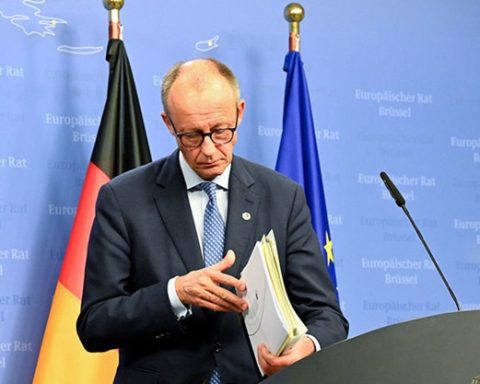
Friedrich Merz’s first 100 days as German chancellor have been overshadowed by public discontent, economic stagnation, and coalition infighting, with new polling suggesting his early performance rates even worse than that of predecessor Olaf Scholz.
Merz, 69, leader of the centre-right Christian Democratic Union (CDU), entered office three months ago after a turbulent parliamentary battle, narrowly overcoming resistance from rebel MPs within his own coalition. In his first address to the Bundestag, Merz acknowledged the country’s “grim” challenges — from geopolitical instability to a prolonged economic downturn — and pledged that by summer, citizens would “feel things are progressing.”
However, that optimism has yet to materialize. A Bild am Sonntag poll shows only 30% of Germans are satisfied with Merz’s work, compared with 43% for Scholz at the same point in 2021. Sixty-eight percent believe Merz is no better than Scholz, and just over a quarter see him as an improvement.
The discontent extends to the private sector. A WirtschaftsWoche survey of 1,000 executives found 59% dissatisfied with Merz’s leadership, despite his strong corporate ties. Most expect the economy to worsen over the next year, with GDP contracting by 0.1% between April and June — leaving output stagnant at pre-pandemic levels.
Merz’s image has also taken a hit. According to ARD’s DeutschlandTrend, 42% believe he is fit for the job, but 66% consider him untrustworthy and 56% doubt his crisis-management abilities. Critics accuse him of acting as an Außenkanzler (“foreign affairs chancellor”), overly focused on international matters while delegating domestic issues to aides such as Chancellery Chief Thorsten Frei and Economic Affairs Minister Katherina Reiche.
Meanwhile, political tensions have flared within the CDU-SPD-CSU coalition. A protracted and highly public dispute over the SPD’s nomination of law professor Frauke Brosius-Gersdorf to the constitutional court — ultimately withdrawn amid fierce opposition from conservatives — has drawn rebukes from figures including President Frank-Walter Steinmeier, who warned of damage to public trust and institutional credibility.