


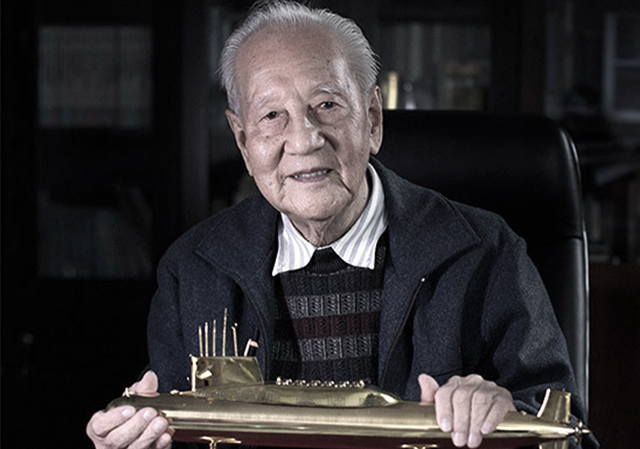
Huang Xuhua, the chief designer behind China’s first-generation nuclear submarines and a recipient of the prestigious Medal of the Republic, passed away on Thursday at the age of 99, according to an official obituary released on Friday. Despite receiving medical treatment, Huang succumbed to illness in Wuhan, Hubei Province.
Huang’s contributions to China’s naval defense were monumental. From the 1950s to the 1980s, he spearheaded the research and development of the nation’s first nuclear-powered submarines, including the Type 09I nuclear-powered attack submarine and the Type 09II nuclear-powered ballistic missile submarine. His work was conducted in utmost secrecy for three decades, only coming to light in recent years as China gradually declassified information regarding its early nuclear submarine program.
A Life of Silent Dedication
Born in Guangdong Province in 1926, Huang studied shipbuilding engineering at National Chiao Tung University (now Shanghai Jiao Tong University) from 1945 to 1949. Shortly after graduating, he joined the Communist Party of China (CPC) and dedicated his career to the nation’s scientific and defense advancements. His life mirrored the very submarines he built—silent, yet immensely powerful.
In 1958, Huang was discreetly summoned to Beijing due to his exceptional technical expertise and political integrity. From then on, he vanished from the public eye, immersing himself in top-secret research that would alter the course of China’s military capabilities. His team worked under immense pressure, overcoming technical hurdles, scarce resources, and international embargoes to successfully launch China’s first nuclear submarine in 1970. According to Chinese media reports, its performance exceeded that of the first U.S. nuclear submarine built in 1954.
National Recognition and Legacy
Despite the secrecy surrounding his work, Huang’s achievements did not go unrecognized. In his later years, he was honored as one of China’s most distinguished scientists. Between 2017 and 2020, he received national-level accolades three times from President Xi Jinping. In 2019, he was awarded the Medal of the Republic, the country’s highest honor, and in 2020, he received China’s top science and technology award.
Beyond his scientific and military contributions, Huang was deeply committed to fostering the next generation of researchers and scientists. He donated over 20 million yuan of his earnings to scientific research, education, and public science initiatives, reflecting his unwavering belief in the power of knowledge and innovation.
A Humble Hero
Although his work was shrouded in secrecy for decades, stories of Huang’s perseverance and patriotism have since emerged, further cementing his status as a national hero. His humility was evident throughout his life—despite being one of the most pivotal figures in China’s defense industry, he never sought fame or personal gain.
Huang Xuhua’s legacy is one of dedication, sacrifice, and extraordinary vision. His contributions not only transformed China’s naval capabilities but also ensured the nation’s strategic security for generations to come. His passing marks the end of an era, but his life’s work will continue to inspire future scientists, engineers, and patriots.











