Humans have long considered themselves separate from the rest of the natural world, a view embedded in philosophy, religion, and modern science. Yet emerging research is challenging this assumption, revealing that the perceived boundary between humans and other animals is neither fixed nor ancient. As the environmental consequences of human activity increasingly threaten life on Earth, science writers and researchers alike are emphasizing that humans are not masters of nature but participants in it, subject to the same evolutionary pressures and social dynamics as other species.
In his book Animate, science writer Michael Bond explores the historical and cultural roots of human exceptionalism, arguing that the belief in a strict human–animal divide emerged only in the last few millennia. Cave art from prehistoric sites vividly preserves animals in far greater numbers than humans, suggesting that our ancestors perceived themselves as part of a broader ecological community. It was only under the influence of classical philosophy, Christian theology, and Enlightenment rationalism that humans began to define themselves as distinct, endowed with reason, language, and a soul. Bond argues that this conceptual separation served multiple purposes: it helped ease anxieties about mortality, justified the widespread use of animals for labor, warfare, and entertainment, and legitimized human dominance over the natural world.
The divide between humans and animals also shaped human societies. As cosmologies that once saw humans, animals, and spirits as interconnected gave way to hierarchical worldviews, people applied similar logic to interactions among humans. Dehumanization, portraying some groups as “animal-like,” justified exclusion, domination, and selective empathy. Moral concern became conditional, inequality normalized, and animal metaphors were often used to rationalize colonialism, imperialism, and so-called “civilizing” missions. In this sense, distancing ourselves from animals created social and ethical chasms that persist today.
Yet the recognition of humans as distinct from animals also created space for modern scientific inquiry. Naturalist E. O. Wilson’s biophilia hypothesis, articulated in his 1984 book Biophilia, proposed that humans possess an innate attraction to life and life-like processes, a theory that has since received empirical support. Studies show that children naturally pay more attention to animals than to objects and prefer interacting with live animals over toys. Bond documents a similar evolutionary attentional bias toward animals, arguing that the long periods our ancestors lived among wild animals shaped human perception and emotional responses.
However, recognizing these evolved sensitivities highlights the inconsistencies in human attitudes toward animals. Psychologist Hal Herzog observes, and Bond reiterates, that humans display selective empathy: “Some we love, some we hate, some we eat.” Research on the “meat paradox” demonstrates how people reconcile concern for animal welfare with meat consumption by downplaying animals’ mental capacities when exploitation is involved. Similar patterns are evident in laboratory research and product testing, where a firm cognitive boundary between humans and animals justifies the use of animals as tools rather than as sentient beings.
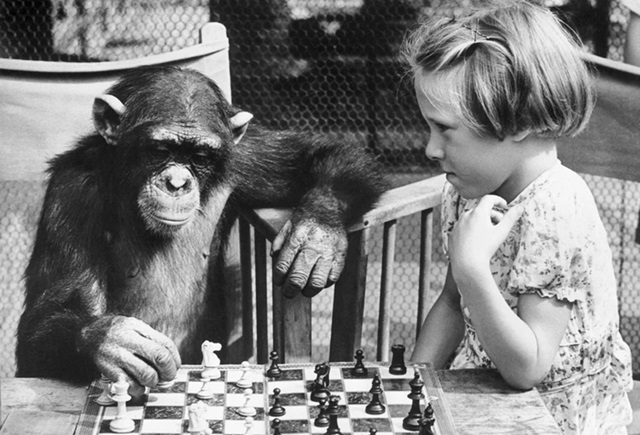
Despite centuries of underestimation, scientific evidence shows that many animals exhibit sophisticated cognitive and social behaviors. They form lasting social bonds, collaborate to solve problems, display mourning behavior, use tools, remember complex information, learn flexibly, and communicate with intention. Bond argues that this evidence challenges the notion of human exceptionalism and suggests that humans are deeply embedded within the broader tapestry of life.
Animate also underscores the environmental imperative of this realization. As humans exploit ecosystems and drive climate change, it becomes increasingly clear that our survival is inseparable from that of other species. By blending psychology, anthropology, and sociology, Bond demonstrates that rethinking the human–animal relationship is not merely philosophical—it is essential for ecological sustainability and ethical responsibility.
Yet bridging the gap between scientific insight and moral action is complex. Research published in journals including Nature shows that emphasizing the similarities between humans and other animals does not necessarily increase empathy or conservation behavior. In some cases, framing humans as “just another animal” can even heighten speciesism, reducing the likelihood of protective action for other species. Nonetheless, acknowledging animals’ intelligence, social complexity, and emotional capacities is a crucial step toward a more inclusive, less human-centric worldview.
Bond’s work is a timely reminder that humans are animals, but that animals are far more “human” than historically assumed. From influencing human perception to shaping culture, cognition, and ethical systems, other species have played a profound role in human development. Recognizing this interconnectedness is not only a scientific insight but also a moral challenge, asking society to reconsider how it interacts with the natural world.
The findings highlighted in Animate reinforce a growing consensus in science: human exceptionalism is a cultural construct, not a biological fact. By dismantling the myth of human supremacy, researchers hope to inspire a deeper respect for the intelligence, agency, and significance of other species. This perspective may prove vital as humanity confronts ecological crises that demand cooperation with, rather than domination over, the living world.