


An international team of archaeologists and scientists has uncovered the first direct chemical evidence of anaesthetic use on ancient surgical instruments, offering remarkable new insight into the sophistication of medical practices in early Ming dynasty China. The findings, published in the respected archaeological journal Antiquity, point to an advanced understanding of pharmacology, surgery and patient safety more than six centuries ago.
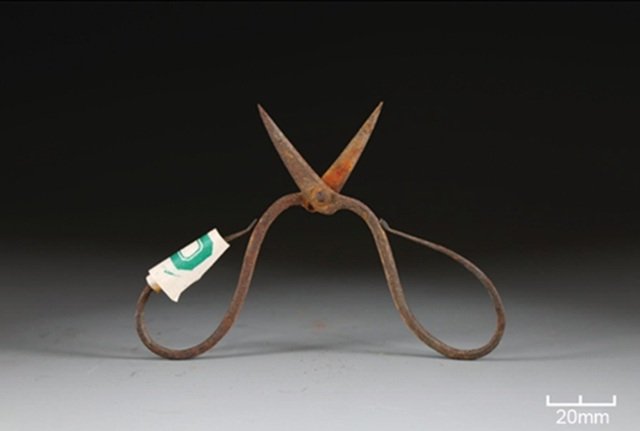
The study focused on a pair of iron surgical scissors and tweezers recovered from the tomb of physician Xia Quan in Jiangyin, eastern China. The tomb dates from 1348 to 1411 CE, a period marking the rise of the Ming dynasty. Researchers used a cutting-edge microscopic imaging method to analyse tiny residues preserved on the tools, overcoming a longstanding challenge in the study of ancient Chinese medicine.
Unlike many archaeological investigations where larger traces of substances survive, residues linked to Chinese medical practices are often almost impossible to detect. Over centuries, compounds degrade or disappear entirely, leaving little evidence behind. Conventional chemical testing methods also require larger sample sizes that can damage delicate artefacts.
To solve this problem, researchers employed a sophisticated non-destructive technology known as stimulated Raman scattering microscopic imaging. The method uses laser light to identify the molecular composition of substances at extremely small scales while preserving the integrity of the archaeological objects themselves.
Professor Congcang Zhao of Northwest University, one of the study’s co-authors, said the technology allowed scientists to overcome the dual challenge of preserving precious artefacts while accurately identifying ancient medical compounds. The imaging revealed traces of aconitine, a toxic alkaloid extracted from the Aconitum plant, also known globally as wolfsbane or monkshood.
The discovery is especially significant because Aconitum is one of the most poisonous plants known in traditional medicine. Ingested improperly, it can cause severe neurological and cardiac complications and can easily become fatal. Yet historical Chinese medical texts describe elaborate methods developed to neutralise or reduce its toxicity, including boiling the substance in vinegar or combining it with ingredients such as mung beans.
Researchers believe Ming physicians transformed the processed plant into a powder that acted as a topical anaesthetic. Applied carefully to the skin before surgery, the compound would have numbed targeted areas and reduced pain during operations. The presence of aconitine residue directly on surgical tools strongly suggests the substance was used in real medical procedures rather than existing solely in written prescriptions.
For historians of medicine, the implications are profound. Ancient Chinese medical literature has long documented sophisticated surgical techniques and herbal treatments, but direct physical evidence linking those practices to surgical operations has remained elusive. This new discovery bridges that gap for the first time.
The research suggests Ming dynasty doctors understood not only how to harness the medicinal properties of dangerous compounds but also how to administer them safely. According to Professor Zhao, physicians combined topical application, strict dosing procedures and compound prescriptions to carefully control the toxicity of the anaesthetic while ensuring patient relief.
Such findings challenge outdated assumptions that advanced surgical anaesthesia developed primarily in the modern West. While ether and chloroform transformed surgery in Europe during the 19th century, the evidence from Jiangyin indicates that Chinese practitioners had already developed sophisticated approaches to pain management centuries earlier using botanical compounds and precise medical techniques.
The tools themselves also offer a glimpse into the practical realities of medieval Chinese surgery. The iron scissors and tweezers found in Xia Quan’s tomb indicate that physicians conducted invasive procedures requiring specialised instruments and considerable anatomical knowledge. The successful use of aconitine-based anaesthesia would have demanded exceptional precision, as even slight dosage errors could prove deadly.
Archaeologists say the study also demonstrates how modern technology is transforming the understanding of ancient civilisations. Laser-based imaging methods now allow scientists to recover hidden chemical histories from artefacts once considered impossible to analyse. In this case, microscopic traces invisible to the naked eye have rewritten part of the global history of medicine.
The findings were published by Antiquity, one of the world’s leading peer-reviewed archaeology journals. Founded in 1927 by O.G.S. Crawford, the journal is currently edited by Professor Robin Skeates in the Department of Archaeology at Durham University and published in partnership with Cambridge University Press. The publication has long served as a major platform for research reshaping understanding of ancient societies.
For the researchers involved, the discovery carries both scientific and human significance. Professor Zhao described the moment as a powerful intersection between ancient craftsmanship and modern science. Six hundred years after a Ming surgeon carried out an operation using iron tools, researchers have now been able to identify the microscopic remnants of the medicine used to ease a patient’s suffering.
The study ultimately paints a picture of a medical culture far more advanced than many historical narratives have acknowledged. It reveals a world in which physicians balanced risk and healing with sophisticated chemical knowledge, long before the emergence of modern anaesthesia in the industrial age.
As archaeologists continue to apply advanced scientific techniques to ancient artefacts, more hidden evidence of early medical innovation may yet emerge. For now, the surgical tools of Xia Quan stand as extraordinary proof that medieval Chinese doctors possessed not only technical surgical skill but also a refined understanding of how to relieve pain safely using some of nature’s most dangerous substances.











