


Editorial
What does it mean for a nation to call itself Vishwa Guru while celebrating fire, fury, and fatalism? The BJP has long exalted Prime Minister Narendra Modi as the chosen helmsman to lead India into a new era of global moral leadership. Yet, when the world looked for wisdom, it found warplanes. When diplomacy demanded patience, it got payloads. If this is the pedagogy of a guru, then the scriptures of peace have been burnt in full view. When India dropped bombs under the saffron-drenched banner of Operation Sindoor, it was not merely responding to terror—it was scripting the next chapter of South Asia’s ruin. In myth, sindoor symbolises sacredness, union, and sanctity. But in Modi’s geopolitical imagination, it has become the colour of conquest—painted with the blood of civilians, the pyres of nationalism, and the ashes of regional diplomacy.
Related Stories: Pakistan Downs Five Indian Fighter Jets in Retaliation to Overnight Airstrikes
After India launched Operation Sindoor, targeting alleged terror sites deep inside Pakistan, India’s war-drunk media wasted no time converting grief into nationalistic theatre. The bereaved were thrust in front of cameras, not for mourning, but for messaging. The wife of Shubham Dwivedi, a 31-year-old businessman killed in the April 22 Pahalgam terror attack, thanked Prime Minister Narendra Modi for the retaliation. “I want to thank PM Modi for taking revenge for my husband’s death,” she told an Indian news agency. “My entire family had trust in him, and the way he replied (to Pakistan), he has kept our trust alive. This is the real tribute to my husband. Wherever my husband is, he will be at peace today,” she added. Her pain was echoed by Sanjay Dwivedi, Shubham’s father, who declared, “I salute the Indian army and thank PM Modi, who listened to the pain of the country’s people… My entire family has been feeling light since we heard this news…” The cameras rolled. The ratings soared. The blood dried.
When human anguish becomes a script for ratings, when sorrow is choreographed into soundbites, the line between news and necromancy is shattered. This is not journalism. This is emotional statecraft wrapped in saffroned spectacle, broadcast under the guise of justice but fuelled by hunger for vengeance and validation.
This is no war against terrorism—it is a war for televised vengeance, a pyrotechnic display designed to ignite electoral passions and divert a restless populace from the deeper failures of governance. This is no mere strategic strike; it is a well-scripted political opera where the victims are real, the bombs are real, but the justice is illusory. Modi has not retaliated—he has detonated a region already on edge. In doing so, he has opened South Asia’s very own Pandora’s box, from which demons of ethno-religious extremism, media hysteria, water wars, and nuclear brinkmanship now crawl freely.
The Indian media, once the supposed conscience of a secular democracy, now performs like a jingoistic militia in studio lights. Screaming anchors with saffron ties chant war cries as though primetime were a military briefing room. Their collective amnesia over false flag operations, extra-judicial actions, and fake encounters is not just dangerous—it is complicit. The few who remember the ghosts of Pulwama, or the strategic utility of orchestrated ambiguity in politics, are drowned out by the volume of nationalist hysteria.
No doubt, Pakistan has its sins. It has harboured actors who traffic in blood and destabilisation. It has used proxies as extensions of policy. But Pakistan’s flaws do not sanctify India’s descent into hubris. To equate justice with annihilation, to conflate surgical retaliation with electoral theatre, is to degrade both the state and its citizens. More than terrorists, it is now the democracies themselves that are imploding.
Now, with the Modi government’s move to suspend the Indus Waters Treaty—a treaty that has withstood four wars and the weight of partition—we stare into the abyss of eco-politics. Water is no longer a shared right; it is a weapon. Is this what Gandhi’s heirs have become? Vengeance dealers who punish civilians by drying their wells? How is this different from the very terror tactics they claim to oppose?
And where are the South Asian journalists in this moment of reckoning? Silenced, sold, or sermonised into submission. In Colombo recently, a prominent Indian media figure—a veritable apostle of armchair militarism—lectured a room of Sri Lankan reporters on how to “think like a South Asian journalist.” Translated: adopt New Delhi’s worldview, demonise Pakistan and China, dismiss nuance, and amplify the Hindu Rashtra narrative. This is not journalism; it is imperial evangelism in disguise.
Most Sri Lankan media outlets, captured by Indian investments or seduced by promises of market access, won’t call this out. But someone must. Because what’s at stake is not just Pakistan’s sovereignty or Kashmir’s agony—it is the future of South Asia. A region that has always teetered between progress and paranoia, between Nehruvian vision and nativist rage, between Gandhi and Godse. And in Modi’s India, it is Godse’s ghost that grins the widest today.
The Pahalgam attack, brutal and inexcusable, claimed the lives of 26 innocents. The perpetrators deserve punishment—but what we witnessed was not justice, it was theatre. We watched as a grieving widow was paraded before the cameras, thanking the Prime Minister for “avenging” her husband’s death. One cannot but wonder: is this catharsis or coercion? Is this grief or grooming?
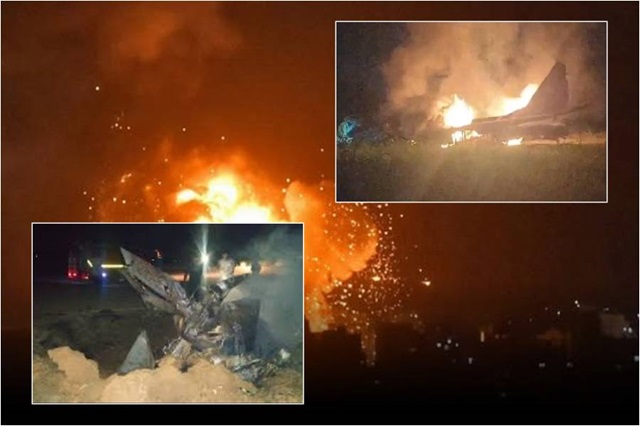
And what of the supposed “terror targets” India struck in Bahawalpur, Kotli, and Muzaffarabad? What of the mosque reduced to rubble? Are we to believe that these were all nests of militant plots? Or were they chosen for symbolic impact, to provoke, to punish, to posture? The truth, as always, lies buried beneath bomb craters and PR briefings.
Pakistan, of course, responded with customary bravado: jets in the skies, ministers in pressers, denials polished to diplomatic shine. But amidst the noise, one truth remains unspoken—both states are spiralling into a cycle of retribution that has no ethical mooring. This is not defence; this is delusion.
False flag operations have long been the open secret of South Asian intelligence playbooks. From Kaluchak to Uri, the possibility that terror has become a tool of statecraft rather than its enemy must be entertained—however inconvenient, however uncomfortable. If we do not scrutinise our own states with the same vigour we reserve for their enemies, we are not citizens—we are cattle.
And let us be unequivocal: there is no sanctity in war. There is no nobility in a missile strike that kills children, no honour in a retaliatory raid that levels a mosque, no “real tribute” in a widow’s grief turned into campaign footage.
Modi may speak of Vishwa Shanti (world peace) on foreign podiums, but his domestic script reads like a fascist manifesto—where history is rewritten, dissent is sedition, and vengeance is policy. He is no Kennedy. And Pakistan, for all its flaws, is no Cuba. This is not 1962, and Modi is not negotiating peace to avert nuclear war. He is navigating populist rage to win an election. In that journey, truth, restraint, and humanity are all collateral damage. We are not apologists for terror. But we are resisters of hypocrisy. We are witnesses to the slow, gleeful cremation of diplomacy in South Asia. And we know that history will not be kind.










Where was Osama bin Laden caught? Pakistan- killed by US Navy seals without informing Pakistan
Khalid Sheik Mohammad, mastermind of 9/11? Pakistan – captured by CIA without informing Pakistan
Taliban supporters? Pakistan
Mumbai attackers? Pakistan
If someone enters your home and tries to kill you, you have every right to hit them back.
Get real
Twice while reading this article, I scrolled up to confirm if I was on a Pakistan news website. Surprising it is coming from Sri Lanka, which has been a victim of terrorism for decades. You did not flinch on killing your own countrymen, some of whom were terrorists, but you have sermons for India to restrain itself. Why, to give Pakistan and its terror fronts a free run? It is the epicenter of terror, as the previous reader has also mentioned.