From parasitic worms and disease-carrying insects to the intimate partnerships between fungi, algae and the human microbiome, two books reviewed by Nature explore how every species exists within a web of biological relationships. Together, they present contrasting but complementary perspectives on the interconnectedness of life, arguing that understanding both cooperation and parasitism is essential to appreciating the natural world.
The idea that humans exist as independent beings, largely separate from the rest of nature, is deeply embedded in modern society. Yet, as a review published by Nature argues, that perception quickly dissolves when bacteria cause disease, wildlife encroaches on human settlements or microscopic organisms living inside the body quietly sustain everyday life. Two new books—Togetherness by biologist and science journalist Rowan Hooper and Hidden Creatures by entomologist and evolutionary biologist Dino Martins—offer distinct but complementary explorations of the relationships that bind every living organism on Earth.
Although the authors approach the subject from markedly different perspectives, both arrive at a common conclusion: life cannot be understood through isolated species alone. Instead, survival, evolution and ecological stability are shaped by an intricate network of interactions ranging from mutually beneficial partnerships to relentless exploitation.
In Togetherness, Hooper argues that cooperation between species has been one of the fundamental forces driving evolution. Hidden Creatures, by contrast, examines the darker realities of biological existence, focusing on parasites that depend upon other organisms for survival. As Martins observes, “Half of all living things are mooching off others!”, highlighting the extraordinary prevalence of parasitism throughout the natural world.
Martins begins with humanity’s long history of living alongside parasites. Among the earliest written evidence of this relationship is an inscription in ancient Canaanite carved onto an ivory comb reading, “May this tusk root out the lice of the hair and the beard.” The sentence, regarded as the oldest known alphabetic inscription, demonstrates that parasites have troubled humans for nearly four millennia, and continue to do so today.
Rather than portraying parasites solely as villains, Martins encourages readers to reconsider their place within nature. He argues that many people who claim to appreciate the natural world selectively embrace only its more appealing aspects while ignoring organisms they find disturbing. Such an approach, he contends, prevents a genuine understanding of biodiversity. To understand nature fully, he insists, requires acknowledging every organism, regardless of whether it inspires admiration or discomfort.
His account is filled with vivid and often unsettling examples. Readers encounter parasitic wasps whose larvae consume caterpillars from within, worms that inhabit the urinary tracts of pigs, the eyes of mice and voles, and the lungs of birds. Others infect humans directly. According to the review, approximately one-third of the global population carries nematode worms, with hookworms alone capable of draining their hosts’ strength over many years. Elsewhere in nature, tsetse flies transmit the protozoan parasites responsible for sleeping sickness in Africa, brain worms infect moose, deer and elk, while enormous tapeworms measuring up to thirty metres have been discovered inside whales.
Some parasites exert even more extraordinary influence over their hosts. Martins describes the Gordian worm, which infects praying mantises and alters gene expression in a manner that compels the insects to leap into water and drown. Only after reaching water can the parasite complete its reproductive cycle by laying eggs that hatch in the aquatic environment.
Yet Hidden Creatures also demonstrates that these relationships are not entirely one-sided. Many species have evolved sophisticated methods to defend themselves against parasites. Some birds, for example, rid themselves of feather parasites by rubbing against ants whose bites release formic acid. Leeches, meanwhile, have found a place in modern medicine. Their secretions possess anti-inflammatory, anaesthetic and anti-clotting properties, enabling their use in specialised microsurgery, skin grafts and the treatment of osteoarthritis.
Martins argues that parasites perform indispensable ecological functions. By helping to decompose dead organisms and recycle nutrients, they contribute to processes essential for the continued functioning of ecosystems. Without these often-overlooked organisms, the review notes, life on Earth would operate very differently.
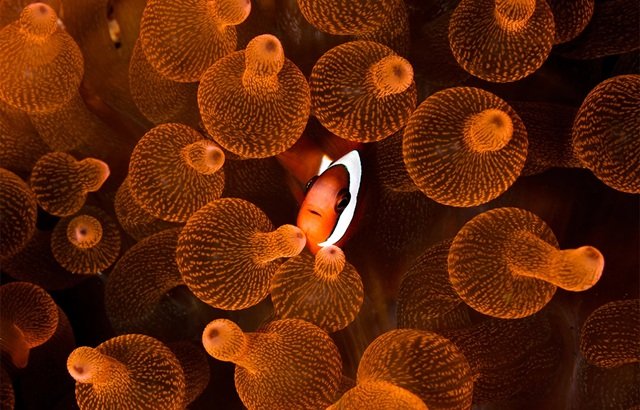
Where Martins focuses on conflict and dependency, Hooper turns attention to cooperation. His book examines symbiosis, in which different species live together in ways that benefit all participants. Although such partnerships have been central to the evolution of life, Hooper argues that they have historically received less scientific attention because they are more difficult to observe than competition. As he writes, “Cooperation is much harder to see than competition. Fights are easier to measure than favors.”
Lichens provide one of the clearest illustrations of this hidden cooperation. What appears to be a single organism is, in reality, a partnership between algae and fungi. The algae produce sugars through photosynthesis, while the fungi supply water, minerals and structural support. Although lichens have been recognised since ancient times, scientists did not fully understand their composite nature until the nineteenth century.
Hooper argues that such mutualistic relationships are not unusual exceptions but fundamental features of life itself. Humans are no exception. The trillions of bacteria, fungi and viruses inhabiting the intestinal microbiome enable digestion while protecting against harmful microorganisms, demonstrating that even the human body depends upon intimate biological partnerships.
The book also revisits the legacy of Charles Darwin. Hooper contends that although Darwin correctly identified competition as a significant evolutionary force, later thinkers interpreted his work in ways that reinforced the dominant social and economic ideologies of the nineteenth century. The phrase “survival of the fittest”, Hooper argues, came to overshadow the equally important role of cooperation. Darwin himself, the review notes, never used the word “symbiosis”, largely because little was then understood about such relationships. He admired lichens and studied orchids but could not have known the biological partnerships underlying their success. He also recognised altruistic behaviour among social insects, although he struggled to explain it within his theoretical framework.
According to Hooper, overlooking symbiosis has consequences extending beyond biology. Failure to appreciate humanity’s dependence upon other living systems has contributed to environmental degradation and poor policymaking. “The crisis of nature we are engulfed in has been caused by a failure to see in ecological terms, a failure set up by our philosophical and economic systems,” he writes. “We are symbiotic creatures at the deepest level of our cells.”
Hooper envisages a future shaped by symbiotic thinking. He explores possibilities including construction materials derived from fungal mycelia and bacteria, carbon-sequestering artificial islands supported by microbial communities, and advanced artificial intelligence working alongside mycelial networks to monitor environmental change. He describes this possible future as the “symbiocene”, an era in which humanity lives in partnership with, rather than dominance over, the natural world.
Togetherness and Hidden Creatures ultimately present different perspectives on the same scientific reality. One celebrates cooperation, the other examines parasitism, yet both demonstrate that the boundaries separating one organism from another are far less distinct than they appear. Whether through mutual benefit or biological dependence, every species participates in a complex web of relationships that sustains life on Earth. Echoing William Blake’s eighteenth-century observation that “Every thing that lives / Lives not alone,” the books argue that interconnectedness is not simply a poetic idea but a scientific principle whose importance is becoming ever clearer as humanity confronts the future of the living planet.