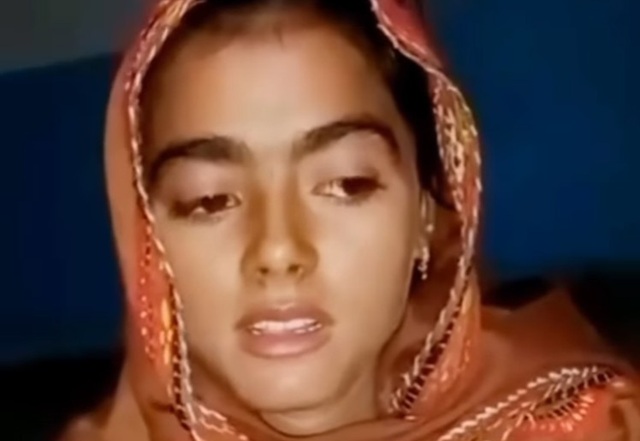
On December 26, 2025, a 15-year-old Hindu girl, Premi Bhil was abducted from Tando Jan Muhammad town in the Mirpur Khas District of Sindh Province. She was forcibly converted to Islam, renamed Kulsoom Sheikh, and married to Shehbaz Mahar, a man over 30 years old who was already married.
On December 6, 2025, a Hindu woman and her minor daughter were kidnapped by unknown armed men in the Sindhi neighborhood of the Sher Shah area of Karachi, the provincial capital of Sindh.
On December 5, 2025, a Pastor, Kamran Salamat, was shot dead by unidentified assailants in the Gujranwala District of Punjab. This was the second targeted attack on Kamran, who was previously shot on September 21, 2025, and severely injured in the leg.
On October 10, 2025 in Rabwah/Chiniot town in the Chinab Nagar District of Punjab, three gunmen attacked an Ahmadi place of worship, Bait-ul-Mehdi, during Friday prayers, injuring at least six worshippers.
On August 8, 2025, a mob attacked 80 Christian families in the Sahiwal District of Punjab. Many victims were subsequently charged under the Anti-Terrorism Act and subjected to Police brutality.
According to the US Commission on International Religious Freedom’s Annual Report, 2025, out of Pakistan’s estimated population of 252 million, 96.5 per cent are Muslim (85-90 per cent Sunni and 10-15 per cent Shi’a) and just 3.5 per cent identify with other religious communities, including Christians, Hindus, and Sikhs.
Religious minorities in Pakistan face systemic discrimination and suffer harassment, entrapment in fabricated blasphemy allegations, physical assault, lynching, mob violence, targeted killings, land grabbing, forced conversions, arbitrary detention, and destruction of property, including their places of worship and cemeteries.
According to “Human Rights Observer 2025”, published in April, 2025 by the Centre for Social Justice (CSJ), UK, at least 421 cases were reported in Pakistan between January 2021 and December 2024, of abduction and forced conversion of minority girls and women. Among the victims, 282 were Hindu girls, followed by 137 Christian girls and two Sikh girls. The age distribution of the victims reveals a disturbing trend, indicating that 22 per cent of girls were under the age of 14, while 49 per cent were between 14 and 18 years. Only 13 per cent of victims were adults, and age of 16 per cent of the victims remained unverified.
Over the past decade, there have been dozens of incidents of mob violence related to blasphemy in Pakistan, often resulting in gruesome lynchings of the accused. The most high-profile among these incidents were the 2021 lynching of Priyantha Kumara Diyawadana, a Christian Sri Lankan citizen working in Sialkot; the 2023 lynching of Muhammad Waris at a Police Station in Nankana Sahib; and the 2025 lynching of Laeeq Ahmad Cheema, an Ahmadi man in Karachi. Ominously, the absence of a strong rule of law and a history of impunity for those who engage in mob violence and lynchings contribute to a culture where these actions have been normalized. According to the National Commission for Human Rights, Pakistan, there has been a stark rise in blasphemy-related incarcerations over recent years, with numbers surging from just 11 cases in 2020 to 767 by mid-2024.
Places of worship of the minorities suffer destruction and severe administrative neglect. On December, 2025, a report presented before the Parliamentary Committee on the Minority Caucus revealed that, out of 1,285 Hindu temples and 532 Sikh gurudwaras, only 37 were functional, showing a dismally low number of active places of worship belonging to minorities. Numerous temples and gurudwaras have been converted into schools, shops, restaurants, government offices, or private residences. For instance, as reported on April 12, 2024, a historic Hindu temple, at the Landi Kotal Bazaar in the Khyber District of Khyber Pakhtunkhwa Province was demolished to make way for a commercial complex. Places of religious worship have been targeted and vandalised by mobs. On January 3, 2020, a violent mob pelted stones at Gurudwara Nankana Sahib (the birthplace of Guru Nanak and one of the holiest sites for Sikhs) and shouted that they would destroy the Gurudwara and change its name to Ghulam-e-Mustafa. Likewise, according to the report titled, “Systemic Persecution of Religious Minorities in Pakistan”, published in 2025 by the Center for the Study of Organized Hate, in 2024 alone, 20 Ahmadi houses of worship were demolished, and in 2025, 17 were demolished (till August 17, 2025).
Religious minorities, especially Christians, also face systemic humiliation because of their occupation as sanitary workers and scavengers, something forced on them because of their religious affiliation. In Pakistan, Christian minorities (mostly converted from poor and low caste Hindus) are overrepresented among sanitation workers. While Pakistan does not have a particular law outlawing manual scavenging, its Constitution (Articles 11 and 25) outlaws forced labour and guarantees equality. Municipalities, on the other hand, continue to hire manual sweepers. The Australian Government in its “DFAT Country Information Report Pakistan”, published on April 30, 2025, noted that, according to Pakistan’s National Human Rights Commission, Christians held more than 80 per cent of jobs involving refuse collection, sewage work and street sweeping across Pakistan. Deutsche Welle reported that 90 per cent of Islamabad’s sanitation workforce was Christian.
On December 2, 2025, a joint session of Pakistan’s Parliament passed the National Commission for Minorities Bill 2025, under which an 18-member Commission comprising three Hindus, two from lower caste backgrounds, three Christians, one Sikh, one Baha’i, one Parsi, and two Muslim human rights experts, will investigate minority rights violations, monitor policy implementation, and advise government departments on minority welfare. The revised legislation, however, strips the Commission of the authority to summon witnesses, inspect detention centers, or initiate inquiries on its own, powers included in the earlier May 12, 2025, Bill which was sent back to the Parliament by President Asif Ali Zardari for a wider discussion. The Government objected to the granting of suo motu powers to the body and, in practice, this Commission is expected to act as a cosmetic, state-managed initiative, leaving the underlying menace of minority victimization as it was.
Minority persecution in Pakistan persists amid systemic intolerance, weak law enforcement, and entrenched impunity, steadily eroding social cohesion, internal stability, constitutional guarantees, and the country’s international standing.