


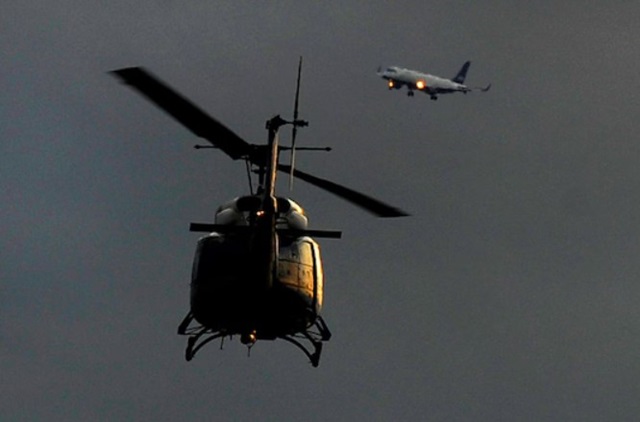
In a detailed examination published by The Washington Post, it has been revealed that airline pilots received more than 100 cockpit warnings over the past decade alerting them to the danger of midair collisions with helicopters near Reagan National Airport (DCA). These warnings, triggered by the Traffic Alert and Collision Avoidance System (TCAS), highlight the recurring risks associated with the crowded airspace near the airport, which have been well-documented by air traffic controllers and flight data before the tragic crash on January 29 that killed 67 people.
The Washington Post investigation revealed that these 104 warnings were part of an ongoing pattern of close calls. Each warning prompted pilots to take evasive action, such as aborting landings or altering flight paths, to avoid potential collisions with helicopters. The FAA requires such incidents to be documented for safety analysis, underscoring concerns about the increasing frequency of these alerts.
Air traffic controllers had raised similar concerns over the proximity of helicopters and airliners in the National Airport’s airspace, writing to FAA managers in 2020 to suggest changes that could improve safety. These included altering helicopter routes to reduce the chances of conflict with flight paths used by commercial airliners. However, it remains unclear whether any significant changes were made to address the issue before the deadly January crash.
The collision involved an Army Black Hawk helicopter and an American Airlines regional jet, which collided over the Potomac River. The incident occurred in a helicopter corridor that crosses directly beneath the flight paths used by airliners approaching National Airport’s Runway 33, where only a 15-foot margin separated the two routes at their closest point.
Despite these documented risks, the FAA has not publicly responded to questions about the warnings or the concerns raised by air traffic controllers, stating that it cannot comment on an ongoing crash investigation. However, the agency did announce that it had curtailed helicopter traffic pending the investigation’s outcome.
Former air traffic controller Al Castillo, reacting to the crash, expressed frustration, stating that the site of the accident was a known “hot spot” for potential conflicts. He called for a reassessment of the helicopter flight routes in the area, arguing that such a catastrophic event could have been prevented with better management of airspace.
Data compiled by The Washington Post also showed that nearly a quarter of the warnings involved military helicopters, with the rest stemming from medical flights, police departments, and private operators. The TCAS system, which automatically warns pilots of potential collisions, has been a critical tool in preventing accidents, but experts have noted that it has limitations, particularly in the final minutes before landing.
The Washington Post’s investigation sheds light on a decade of repeated safety risks in the airspace near National Airport. With both pilots and air traffic controllers documenting numerous close calls, the findings raise critical questions about whether enough has been done to mitigate these dangers before the fatal crash in January.












